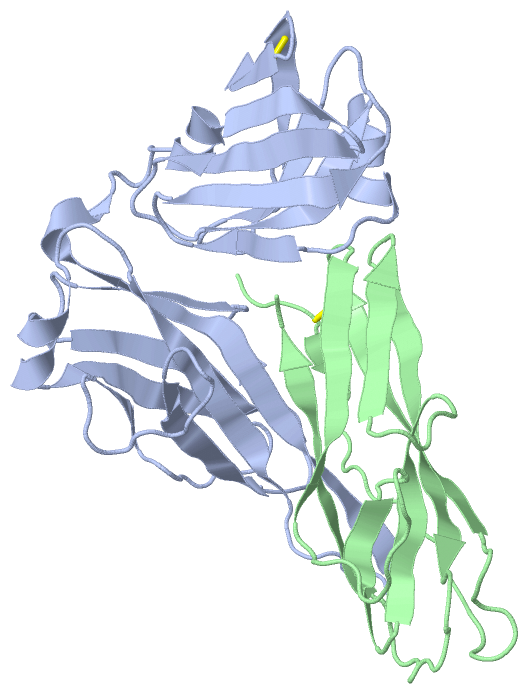
Asymmetric/Biological Unit(hide GO term definitions)
Chain A ( Q1R2W9_ECOUT | Q1R2W9)
| biological process |
|---|
| | GO:0071555 | | cell wall organization | | A process that results in the assembly, arrangement of constituent parts, or disassembly of the cell wall, the rigid or semi-rigid envelope lying outside the cell membrane of plant, fungal and most prokaryotic cells, maintaining their shape and protecting them from osmotic lysis. |
| | GO:0061077 | | chaperone-mediated protein folding | | The process of inhibiting aggregation and assisting in the covalent and noncovalent assembly of single chain polypeptides or multisubunit complexes into the correct tertiary structure that is dependent on interaction with a chaperone. |
| | GO:0043711 | | pilus organization | | A process that is carried out at the cellular level which results in the assembly, arrangement of constituent parts, or disassembly of a pilus, a short filamentous structure on a bacterial cell, flagella-like in structure and generally present in many copies. |
| cellular component |
|---|
| | GO:0030288 | | outer membrane-bounded periplasmic space | | The region between the inner (cytoplasmic or plasma) membrane and outer membrane of organisms with two membranes such as Gram negative bacteria. These periplasmic spaces are relatively thick and contain a thin peptidoglycan layer (PGL), also referred to as a thin cell wall. |
| | GO:0042597 | | periplasmic space | | The region between the inner (cytoplasmic) and outer membrane (Gram-negative Bacteria) or cytoplasmic membrane and cell wall (Fungi and Gram-positive Bacteria). |
Chain A ( PAPD_ECOLX | P15319)
| biological process |
|---|
| | GO:0071555 | | cell wall organization | | A process that results in the assembly, arrangement of constituent parts, or disassembly of the cell wall, the rigid or semi-rigid envelope lying outside the cell membrane of plant, fungal and most prokaryotic cells, maintaining their shape and protecting them from osmotic lysis. |
| | GO:0061077 | | chaperone-mediated protein folding | | The process of inhibiting aggregation and assisting in the covalent and noncovalent assembly of single chain polypeptides or multisubunit complexes into the correct tertiary structure that is dependent on interaction with a chaperone. |
| | GO:0043711 | | pilus organization | | A process that is carried out at the cellular level which results in the assembly, arrangement of constituent parts, or disassembly of a pilus, a short filamentous structure on a bacterial cell, flagella-like in structure and generally present in many copies. |
| cellular component |
|---|
| | GO:0030288 | | outer membrane-bounded periplasmic space | | The region between the inner (cytoplasmic or plasma) membrane and outer membrane of organisms with two membranes such as Gram negative bacteria. These periplasmic spaces are relatively thick and contain a thin peptidoglycan layer (PGL), also referred to as a thin cell wall. |
| | GO:0042597 | | periplasmic space | | The region between the inner (cytoplasmic) and outer membrane (Gram-negative Bacteria) or cytoplasmic membrane and cell wall (Fungi and Gram-positive Bacteria). |
Chain B ( Q47445_ECOLX | Q47445)
| molecular function |
|---|
| | GO:0030246 | | carbohydrate binding | | Interacting selectively and non-covalently with any carbohydrate, which includes monosaccharides, oligosaccharides and polysaccharides as well as substances derived from monosaccharides by reduction of the carbonyl group (alditols), by oxidation of one or more hydroxy groups to afford the corresponding aldehydes, ketones, or carboxylic acids, or by replacement of one or more hydroxy group(s) by a hydrogen atom. Cyclitols are generally not regarded as carbohydrates. |
| biological process |
|---|
| | GO:0007155 | | cell adhesion | | The attachment of a cell, either to another cell or to an underlying substrate such as the extracellular matrix, via cell adhesion molecules. |
|

 Description