| molecular function |
|---|
| | GO:0035325 | | Toll-like receptor binding | | Interacting selectively and non-covalently with a Toll-like protein, a pattern recognition receptor that binds pattern motifs from a variety of microbial sources to initiate an innate immune response. |
| | GO:0042498 | | diacyl lipopeptide binding | | Interacting selectively and non-covalently with a lipopeptide containing a nonprotein moiety consisting of two acyl groups. |
| | GO:0001530 | | lipopolysaccharide binding | | Interacting selectively and non-covalently with lipopolysaccharide. |
| | GO:0070891 | | lipoteichoic acid binding | | Interacting selectively and non-covalently with lipoteichoic acid. |
| | GO:0042834 | | peptidoglycan binding | | Interacting selectively and non-covalently, in a non-covalent manner, with peptidoglycan, any of a class of glycoconjugates found in bacterial cell walls. |
| | GO:0005515 | | protein binding | | Interacting selectively and non-covalently with any protein or protein complex (a complex of two or more proteins that may include other nonprotein molecules). |
| | GO:0046982 | | protein heterodimerization activity | | Interacting selectively and non-covalently with a nonidentical protein to form a heterodimer. |
| | GO:0004872 | | receptor activity | | Combining with an extracellular or intracellular messenger to initiate a change in cell activity. |
| | GO:0008329 | | signaling pattern recognition receptor activity | | Combining with a pathogen-associated molecular pattern (PAMP), a structure conserved among microbial species, or damage-associated molecular pattern (DAMP), an endogenous molecule released from damaged cells), and transmitting a signal to initiate a change in cell activity. |
| | GO:0004888 | | transmembrane signaling receptor activity | | Combining with an extracellular or intracellular signal and transmitting the signal from one side of the membrane to the other to initiate a change in cell activity or state as part of signal transduction. |
| | GO:0042497 | | triacyl lipopeptide binding | | Interacting selectively and non-covalently with a lipopeptide containing a nonprotein moiety consisting of three acyl groups. |
| biological process |
|---|
| | GO:0007252 | | I-kappaB phosphorylation | | The process of introducing a phosphate group into an inhibitor of kappa B (I-kappaB) protein. Phosphorylation of I-kappaB targets I-kappaB for ubiquitination and proteasomal degradation, thus releasing bound NF-kappaB dimers, which can translocate to the nucleus to bind DNA and regulate transcription. |
| | GO:0002755 | | MyD88-dependent toll-like receptor signaling pathway | | Any series of molecular signals generated as a consequence of binding to a toll-like receptor where the MyD88 adaptor molecule mediates transduction of the signal. Toll-like receptors directly bind pattern motifs from a variety of microbial sources to initiate innate immune response. |
| | GO:0002752 | | cell surface pattern recognition receptor signaling pathway | | Any series of molecular signals generated as a consequence of a cell surface pattern recognition receptor (PRR) binding to one of its physiological ligands. PRRs bind pathogen-associated molecular pattern (PAMPs), structures conserved among microbial species, or damage-associated molecular pattern (DAMPs), endogenous molecules released from damaged cells. |
| | GO:0071221 | | cellular response to bacterial lipopeptide | | Any process that results in a change in state or activity of a cell (in terms of movement, secretion, enzyme production, gene expression, etc.) as a result of a bacterial lipopeptide stimulus. |
| | GO:0071726 | | cellular response to diacyl bacterial lipopeptide | | Any process that results in a change in state or activity of a cell (in terms of movement, secretion, enzyme production, gene expression, etc.) as a result of a diacylated bacterial lipopeptide stimulus. |
| | GO:0071223 | | cellular response to lipoteichoic acid | | Any process that results in a change in state or activity of a cell (in terms of movement, secretion, enzyme production, gene expression, etc.) as a result of a lipoteichoic acid stimulus; lipoteichoic acid is a major component of the cell wall of gram-positive bacteria and typically consists of a chain of glycerol-phosphate repeating units linked to a glycolipid anchor. |
| | GO:0071224 | | cellular response to peptidoglycan | | Any process that results in a change in state or activity of a cell (in terms of movement, secretion, enzyme production, gene expression, etc.) as a result of a peptidoglycan stimulus. Peptidoglycan is a bacterial cell wall macromolecule. |
| | GO:0071727 | | cellular response to triacyl bacterial lipopeptide | | Any process that results in a change in state or activity of a cell (in terms of movement, secretion, enzyme production, gene expression, etc.) as a result of a triacylated bacterial lipopeptide stimulus. |
| | GO:0042892 | | chloramphenicol transport | | The directed movement of chloramphenicol, a broad-spectrum antibiotic that inhibits bacterial protein synthesis, into, out of or within a cell, or between cells, by means of some agent such as a transporter or pore. |
| | GO:0002374 | | cytokine secretion involved in immune response | | The regulated release of cytokines from a cell that contributes to an immune response. |
| | GO:0050830 | | defense response to Gram-positive bacterium | | Reactions triggered in response to the presence of a Gram-positive bacterium that act to protect the cell or organism. |
| | GO:0042496 | | detection of diacyl bacterial lipopeptide | | The series of events in which a diacylated bacterial lipopeptide stimulus is received by a cell and converted into a molecular signal. Diacylated bacterial lipoproteins are lipopeptides of bacterial origin containing a nonprotein moiety consisting of two acyl groups. |
| | GO:0042495 | | detection of triacyl bacterial lipopeptide | | The series of events in which a triacylated bacterial lipoprotein stimulus is received by a cell and converted into a molecular signal. Triacylated bacterial lipoproteins are lipopeptides of bacterial origin containing a nonprotein moiety consisting of three acyl groups. |
| | GO:0006955 | | immune response | | Any immune system process that functions in the calibrated response of an organism to a potential internal or invasive threat. |
| | GO:0002376 | | immune system process | | Any process involved in the development or functioning of the immune system, an organismal system for calibrated responses to potential internal or invasive threats. |
| | GO:0052063 | | induction by symbiont of defense-related host nitric oxide production | | The activation by an organism of the production of nitric oxide as part of the defense response of the host organism. The host is defined as the larger of the organisms involved in a symbiotic interaction. |
| | GO:0006954 | | inflammatory response | | The immediate defensive reaction (by vertebrate tissue) to infection or injury caused by chemical or physical agents. The process is characterized by local vasodilation, extravasation of plasma into intercellular spaces and accumulation of white blood cells and macrophages. |
| | GO:0045087 | | innate immune response | | Innate immune responses are defense responses mediated by germline encoded components that directly recognize components of potential pathogens. |
| | GO:0032613 | | interleukin-10 production | | The appearance of interleukin-10 due to biosynthesis or secretion following a cellular stimulus, resulting in an increase in its intracellular or extracellular levels. |
| | GO:0044130 | | negative regulation of growth of symbiont in host | | Any process in which the symbiont stops, prevents or reduces its increase in size or mass within the cells or tissues of the host organism. The host is defined as the larger of the organisms involved in the symbiotic interaction. |
| | GO:0032695 | | negative regulation of interleukin-12 production | | Any process that stops, prevents, or reduces the frequency, rate, or extent of interleukin-12 production. |
| | GO:0032700 | | negative regulation of interleukin-17 production | | Any process that stops, prevents, or reduces the frequency, rate, or extent of production of any member of the interleukin-17 family of cytokines. |
| | GO:0070374 | | positive regulation of ERK1 and ERK2 cascade | | Any process that activates or increases the frequency, rate or extent of signal transduction mediated by the ERK1 and ERK2 cascade. |
| | GO:0042346 | | positive regulation of NF-kappaB import into nucleus | | Any process that activates or increases the frequency, rate or extent of transfer of NF-kappaB, a transcription factor for eukaryotic RNA polymerase II promoters, from the cytoplasm into the nucleus, across the nuclear membrane. |
| | GO:0051092 | | positive regulation of NF-kappaB transcription factor activity | | Any process that activates or increases the frequency, rate or extent of activity of the transcription factor NF-kappaB. |
| | GO:1901224 | | positive regulation of NIK/NF-kappaB signaling | | Any process that activates or increases the frequency, rate or extent of NIK/NF-kappaB signaling. |
| | GO:0030177 | | positive regulation of Wnt signaling pathway | | Any process that activates or increases the frequency, rate or extent of Wnt signal transduction. |
| | GO:0032722 | | positive regulation of chemokine production | | Any process that activates or increases the frequency, rate, or extent of chemokine production. |
| | GO:0050715 | | positive regulation of cytokine secretion | | Any process that activates or increases the frequency, rate or extent of the regulated release of cytokines from a cell. |
| | GO:0010628 | | positive regulation of gene expression | | Any process that increases the frequency, rate or extent of gene expression. Gene expression is the process in which a gene's coding sequence is converted into a mature gene product or products (proteins or RNA). This includes the production of an RNA transcript as well as any processing to produce a mature RNA product or an mRNA or circRNA (for protein-coding genes) and the translation of that mRNA or circRNA into protein. Protein maturation is included when required to form an active form of a product from an inactive precursor form. |
| | GO:0050729 | | positive regulation of inflammatory response | | Any process that activates or increases the frequency, rate or extent of the inflammatory response. |
| | GO:0032728 | | positive regulation of interferon-beta production | | Any process that activates or increases the frequency, rate, or extent of interferon-beta production. |
| | GO:0032735 | | positive regulation of interleukin-12 production | | Any process that activates or increases the frequency, rate, or extent of interleukin-12 production. |
| | GO:0032741 | | positive regulation of interleukin-18 production | | Any process that activates or increases the frequency, rate, or extent of interleukin-18 production. |
| | GO:0032755 | | positive regulation of interleukin-6 production | | Any process that activates or increases the frequency, rate, or extent of interleukin-6 production. |
| | GO:0032757 | | positive regulation of interleukin-8 production | | Any process that activates or increases the frequency, rate, or extent of interleukin-8 production. |
| | GO:0002687 | | positive regulation of leukocyte migration | | Any process that activates or increases the frequency, rate, or extent of leukocyte migration. |
| | GO:0060907 | | positive regulation of macrophage cytokine production | | Any process that increases the rate, frequency or extent of macrophage cytokine production. Macrophage cytokine production is the appearance of a chemokine due to biosynthesis or secretion following a cellular stimulus, resulting in an increase in its intracellular or extracellular levels. |
| | GO:0045429 | | positive regulation of nitric oxide biosynthetic process | | Any process that activates or increases the frequency, rate or extent of the chemical reactions and pathways resulting in the formation of nitric oxide. |
| | GO:0051770 | | positive regulation of nitric-oxide synthase biosynthetic process | | Any process that activates or increases the frequency, rate or extent of the chemical reactions and pathways resulting in the formation of a nitric oxide synthase enzyme. |
| | GO:0034123 | | positive regulation of toll-like receptor signaling pathway | | Any process that activates or increases the frequency, rate, or extent of toll-like receptor signaling pathway. |
| | GO:0045944 | | positive regulation of transcription from RNA polymerase II promoter | | Any process that activates or increases the frequency, rate or extent of transcription from an RNA polymerase II promoter. |
| | GO:0042535 | | positive regulation of tumor necrosis factor biosynthetic process | | Any process that activates or increases the frequency, rate or extent of the chemical reactions and pathways resulting in the formation of tumor necrosis factor, an inflammatory cytokine produced by macrophages/monocytes during acute inflammation and which is responsible for a diverse range of signaling events within cells, leading to necrosis or apoptosis. |
| | GO:0032760 | | positive regulation of tumor necrosis factor production | | Any process that activates or increases the frequency, rate, or extent of tumor necrosis factor production. |
| | GO:1904417 | | positive regulation of xenophagy | | Any process that activates or increases the frequency, rate or extent of xenophagy. |
| | GO:0050707 | | regulation of cytokine secretion | | Any process that modulates the frequency, rate or extent of the regulated release of cytokines from a cell. |
| | GO:0002730 | | regulation of dendritic cell cytokine production | | Any process that modulates the frequency, rate, or extent of dendritic cell cytokine production. |
| | GO:0009617 | | response to bacterium | | Any process that results in a change in state or activity of a cell or an organism (in terms of movement, secretion, enzyme production, gene expression, etc.) as a result of a stimulus from a bacterium. |
| | GO:0002237 | | response to molecule of bacterial origin | | Any process that results in a change in state or activity of an organism (in terms of movement, secretion, enzyme production, gene expression, etc.) as a result of a stimulus by molecules of bacterial origin such as peptides derived from bacterial flagellin. |
| | GO:0002238 | | response to molecule of fungal origin | | Any process that results in a change in state or activity of an organism (in terms of movement, secretion, enzyme production, gene expression, etc.) as a result of a stimulus by molecules of fungal origin such as chito-octamer oligosaccharide. |
| | GO:0032494 | | response to peptidoglycan | | Any process that results in a change in state or activity of an organism (in terms of movement, secretion, enzyme production, gene expression, etc.) as a result of a peptidoglycan stimulus. Peptidoglycan is a bacterial cell wall macromolecule. |
| | GO:0007165 | | signal transduction | | The cellular process in which a signal is conveyed to trigger a change in the activity or state of a cell. Signal transduction begins with reception of a signal (e.g. a ligand binding to a receptor or receptor activation by a stimulus such as light), or for signal transduction in the absence of ligand, signal-withdrawal or the activity of a constitutively active receptor. Signal transduction ends with regulation of a downstream cellular process, e.g. regulation of transcription or regulation of a metabolic process. Signal transduction covers signaling from receptors located on the surface of the cell and signaling via molecules located within the cell. For signaling between cells, signal transduction is restricted to events at and within the receiving cell. |
| | GO:0034134 | | toll-like receptor 2 signaling pathway | | Any series of molecular signals generated as a consequence of binding to toll-like receptor 2. |
| | GO:0002224 | | toll-like receptor signaling pathway | | Any series of molecular signals generated as a consequence of binding to a toll-like receptor. Toll-like receptors directly bind pattern motifs from a variety of microbial sources to initiate innate immune response. |
| cellular component |
|---|
| | GO:0005794 | | Golgi apparatus | | A compound membranous cytoplasmic organelle of eukaryotic cells, consisting of flattened, ribosome-free vesicles arranged in a more or less regular stack. The Golgi apparatus differs from the endoplasmic reticulum in often having slightly thicker membranes, appearing in sections as a characteristic shallow semicircle so that the convex side (cis or entry face) abuts the endoplasmic reticulum, secretory vesicles emerging from the concave side (trans or exit face). In vertebrate cells there is usually one such organelle, while in invertebrates and plants, where they are known usually as dictyosomes, there may be several scattered in the cytoplasm. The Golgi apparatus processes proteins produced on the ribosomes of the rough endoplasmic reticulum; such processing includes modification of the core oligosaccharides of glycoproteins, and the sorting and packaging of proteins for transport to a variety of cellular locations. Three different regions of the Golgi are now recognized both in terms of structure and function: cis, in the vicinity of the cis face, trans, in the vicinity of the trans face, and medial, lying between the cis and trans regions. |
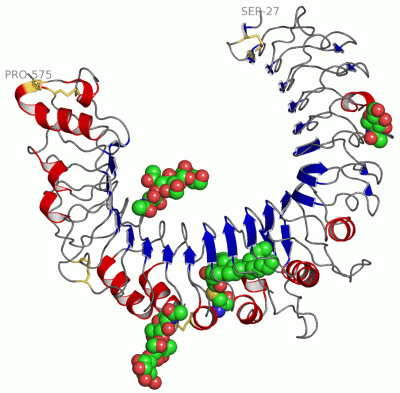
| | GO:0035354 | | Toll-like receptor 1-Toll-like receptor 2 protein complex | | A heterodimeric protein complex containing Toll-like receptor 1 (TLR1) and Toll-like receptor 2 (TLR2). |
| | GO:0035355 | | Toll-like receptor 2-Toll-like receptor 6 protein complex | | A heterodimeric protein complex containing Toll-like receptor 2 (TLR2) and Toll-like receptor 6 (TLR6). |
| | GO:0009986 | | cell surface | | The external part of the cell wall and/or plasma membrane. |
| | GO:0005737 | | cytoplasm | | All of the contents of a cell excluding the plasma membrane and nucleus, but including other subcellular structures. |
| | GO:0031410 | | cytoplasmic vesicle | | A vesicle found in the cytoplasm of a cell. |
| | GO:0009897 | | external side of plasma membrane | | The leaflet of the plasma membrane that faces away from the cytoplasm and any proteins embedded or anchored in it or attached to its surface. |
| | GO:0016021 | | integral component of membrane | | The component of a membrane consisting of the gene products and protein complexes having at least some part of their peptide sequence embedded in the hydrophobic region of the membrane. |
| | GO:0031226 | | intrinsic component of plasma membrane | | The component of the plasma membrane consisting of the gene products and protein complexes having either part of their peptide sequence embedded in the hydrophobic region of the membrane or some other covalently attached group such as a GPI anchor that is similarly embedded in the membrane. |
| | GO:0016020 | | membrane | | A lipid bilayer along with all the proteins and protein complexes embedded in it an attached to it. |
| | GO:0045121 | | membrane raft | | Any of the small (10-200 nm), heterogeneous, highly dynamic, sterol- and sphingolipid-enriched membrane domains that compartmentalize cellular processes. Small rafts can sometimes be stabilized to form larger platforms through protein-protein and protein-lipid interactions. |
| | GO:0030670 | | phagocytic vesicle membrane | | The lipid bilayer surrounding a phagocytic vesicle. |
| | GO:0005886 | | plasma membrane | | The membrane surrounding a cell that separates the cell from its external environment. It consists of a phospholipid bilayer and associated proteins. |

 Description