Show PDB file:   
         Plain Text   HTML   (compressed file size)
QuickSearch:   
by PDB,NDB,UniProt,PROSITE Code or Search Term(s)  
(-)Asymmetric Unit
(-)Asym. Unit - sites
(-)Biological Unit 1
(-)Biol. Unit 1 - sites
collapse expand < >
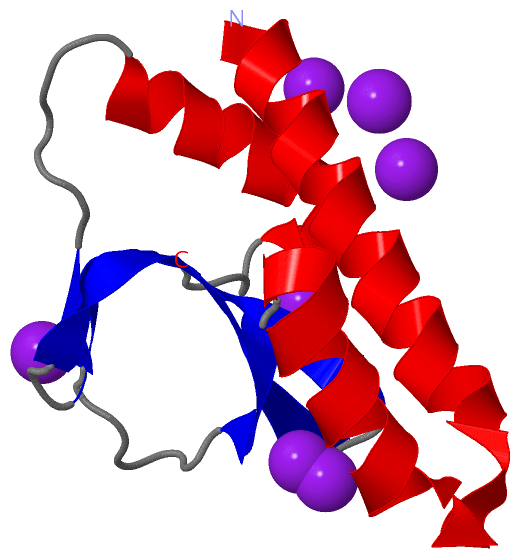
Image Asymmetric Unit
Asymmetric Unit  (Jmol Viewer)
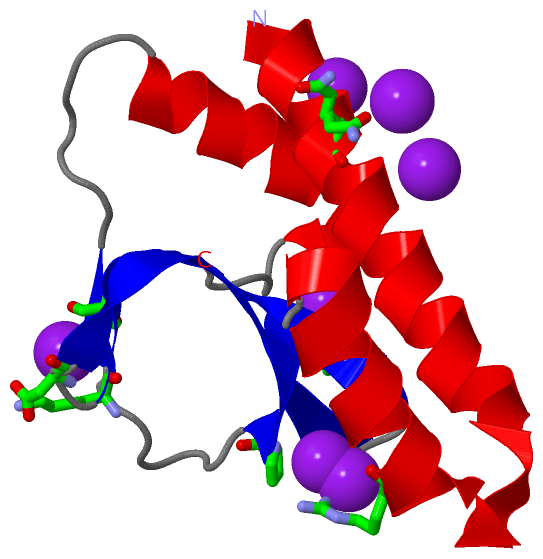
Image Asym. Unit - sites
Asym. Unit - sites  (Jmol Viewer)
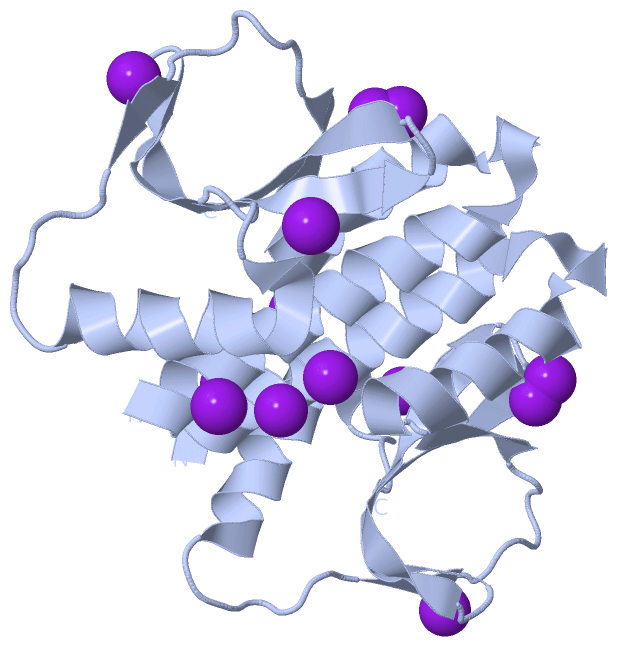
Image Biological Unit 1
Biological Unit 1  (Jmol Viewer)
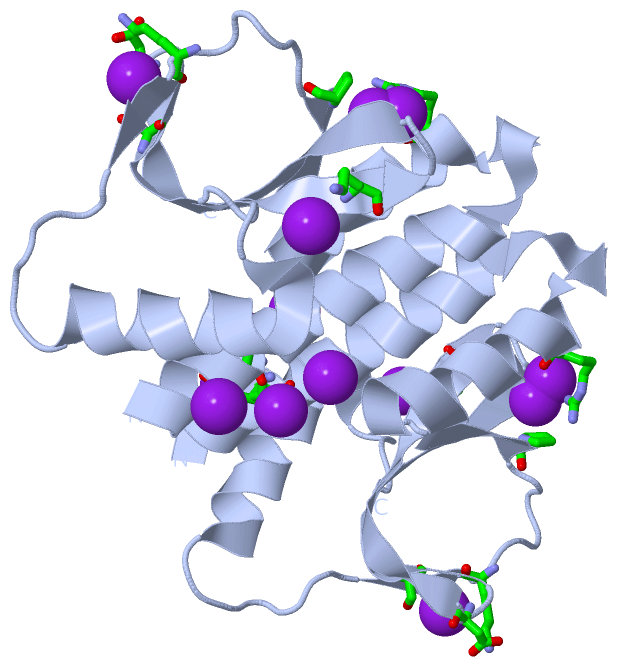
Image Biol. Unit 1 - sites
Biol. Unit 1 - sites  (Jmol Viewer)

(-) Description

Title :  PERIPLASMIC DOMAIN OF THE RISS SENSOR PROTEIN FROM BURKHOLDERIA PSEUDOMALLEI, IODIDE PHASED AT LOW PH
 
Authors :  Seattle Structural Genomics Center For Infectious Disease (S
Date :  10 Feb 10  (Deposition) - 16 Jun 10  (Release) - 13 Jul 11  (Revision)
Method :  X-RAY DIFFRACTION
Resolution :  1.90
Chains :  Asym. Unit :  A
Biol. Unit 1:  A  (2x)
Keywords :  Niaid, Seattle Structural Genomics Center For Infectious Disease, Ssgcid, Ph, Sensor Protein, Riss, Iodide Phased, Burkholderia, Melioidosis, Atp-Binding, Kinase, Membrane, Nucleotide-Binding, Phosphoprotein, Transferase, Transmembrane, Two-Component Regulatory System (Keyword Search: [Gene Ontology, PubMed, Web (Google))
 
Reference :  T. E. Edwards, J. Abendroth, B. L. Staker, I. Phan, P. Myler, R. Stacy, L. Stewart, S. I. Miller, Seattle Structural Genomics Center For Infectious Disease (Ssgcid)
Structural Basis For Ph Sensing By The Periplasmic Domain O The Riss Histidine Kinase From Bukholderia Pseudomallei
To Be Published
PubMed: search

(-) Compounds

Molecule 1 - SENSOR PROTEIN
    ChainsA
    EC Number2.7.13.3
    EngineeredYES
    Expression SystemESCHERICHIA COLI
    Expression System Taxid562
    Expression System Vector TypeAVA0421
    GeneBPSL2095
    Organism CommonPSEUDOMONAS PSEUDOMALLEI
    Organism ScientificBURKHOLDERIA PSEUDOMALLEI
    Organism Taxid28450
    Strain1710B

 Structural Features

(-) Chains, Units

  1
Asymmetric Unit A
Biological Unit 1 (2x)A

Summary Information (see also Sequences/Alignments below)

(-) Ligands, Modified Residues, Ions  (1, 6)

Asymmetric Unit (1, 6)
No.NameCountTypeFull Name
1IOD6Ligand/IonIODIDE ION
Biological Unit 1 (1, 12)
No.NameCountTypeFull Name
1IOD12Ligand/IonIODIDE ION

(-) Sites  (4, 4)

Asymmetric Unit (4, 4)
No.NameEvidenceResiduesDescription
1AC1SOFTWAREGLN A:46BINDING SITE FOR RESIDUE IOD A 2
2AC2SOFTWARELYS A:89 , SER A:119 , ASP A:122BINDING SITE FOR RESIDUE IOD A 4
3AC3SOFTWAREARG A:67 , PRO A:83BINDING SITE FOR RESIDUE IOD A 5
4AC4SOFTWARELYS A:131BINDING SITE FOR RESIDUE IOD A 6

(-) SS Bonds  (0, 0)

(no "SS Bond" information available for 3LR0)

(-) Cis Peptide Bonds  (0, 0)

(no "Cis Peptide Bond" information available for 3LR0)

 Sequence-Structure Mapping

(-) SAPs(SNPs)/Variants  (0, 0)

(no "SAP(SNP)/Variant" information available for 3LR0)

(-) PROSITE Motifs  (0, 0)

(no "PROSITE Motif" information available for 3LR0)

(-) Exons   (0, 0)

(no "Exon" information available for 3LR0)

(-) Sequences/Alignments

Asymmetric Unit
   Reformat: Number of residues per line =  ('0' or empty: single-line sequence representation)
  Number of residues per labelling interval =   
  UniProt sequence: complete  aligned part    
   Show mapping: SCOP domains CATH domains Pfam domains Secondary structure (by author)
SAPs(SNPs) PROSITE motifs Exons
(details for a mapped element are shown in a popup box when the mouse pointer rests over it)
Chain A from PDB  Type:PROTEIN  Length:102
 aligned with Q63T74_BURPS | Q63T74 from UniProtKB/TrEMBL  Length:452

    Alignment length:102
                                    56        66        76        86        96       106       116       126       136       146  
         Q63T74_BURPS    47 AQRVALQLVAIVKLTRTALLYSDPDLRRALLQDLESNEGVRVYPREKTDKFKLQPDESVNRLIEHDIRSRLGDDTVIAQSVNDIPGVWISFKIDDDDYWVAL 148
               SCOP domains ------------------------------------------------------------------------------------------------------ SCOP domains
               CATH domains ------------------------------------------------------------------------------------------------------ CATH domains
               Pfam domains ------------------------------------------------------------------------------------------------------ Pfam domains
         Sec.struct. author hhhhhhhhhhhhhhhhhhhhhhhhhhhhhhhhhhhhhhh.eeee......ee......hhhhhhhhhhhhhh....eeeee..eeeeeeeeee..eeeeeee Sec.struct. author
                 SAPs(SNPs) ------------------------------------------------------------------------------------------------------ SAPs(SNPs)
                    PROSITE ------------------------------------------------------------------------------------------------------ PROSITE
                 Transcript ------------------------------------------------------------------------------------------------------ Transcript
                 3lr0 A  40 AQRVALQLVAIVKLTRTALLYSDPDLRRALLQDLESNEGVRVYPREKTDKFKLQPDESVNRLIEHDIRSRLGDDTVIAQSVNDIPGVWISFKIDDDDYWVAL 141
                                    49        59        69        79        89        99       109       119       129       139  

   Legend:   → Mismatch (orange background)
  - → Gap (green background, '-', border residues have a numbering label)
    → Modified Residue (blue background, lower-case, 'x' indicates undefined single-letter code, labelled with number + name)
  x → Chemical Group (purple background, 'x', labelled with number + name, e.g. ACE or NH2)
  extra numbering lines below/above indicate numbering irregularities and modified residue names etc., number ends below/above '|'

 Classification and Annotation

(-) SCOP Domains  (0, 0)

(no "SCOP Domain" information available for 3LR0)

(-) CATH Domains  (0, 0)

(no "CATH Domain" information available for 3LR0)

(-) Pfam Domains  (0, 0)

(no "Pfam Domain" information available for 3LR0)

(-) Gene Ontology  (14, 14)

Asymmetric Unit(hide GO term definitions)
Chain A   (Q63T74_BURPS | Q63T74)
molecular function
    GO:0005524    ATP binding    Interacting selectively and non-covalently with ATP, adenosine 5'-triphosphate, a universally important coenzyme and enzyme regulator.
    GO:0016301    kinase activity    Catalysis of the transfer of a phosphate group, usually from ATP, to a substrate molecule.
    GO:0000166    nucleotide binding    Interacting selectively and non-covalently with a nucleotide, any compound consisting of a nucleoside that is esterified with (ortho)phosphate or an oligophosphate at any hydroxyl group on the ribose or deoxyribose.
    GO:0000155    phosphorelay sensor kinase activity    Catalysis of the phosphorylation of a histidine residue in response to detection of an extracellular signal such as a chemical ligand or change in environment, to initiate a change in cell state or activity. The two-component sensor is a histidine kinase that autophosphorylates a histidine residue in its active site. The phosphate is then transferred to an aspartate residue in a downstream response regulator, to trigger a response.
    GO:0004871    signal transducer activity    Conveys a signal across a cell to trigger a change in cell function or state. A signal is a physical entity or change in state that is used to transfer information in order to trigger a response.
    GO:0016740    transferase activity    Catalysis of the transfer of a group, e.g. a methyl group, glycosyl group, acyl group, phosphorus-containing, or other groups, from one compound (generally regarded as the donor) to another compound (generally regarded as the acceptor). Transferase is the systematic name for any enzyme of EC class 2.
    GO:0016772    transferase activity, transferring phosphorus-containing groups    Catalysis of the transfer of a phosphorus-containing group from one compound (donor) to another (acceptor).
biological process
    GO:0000160    phosphorelay signal transduction system    A conserved series of molecular signals found in prokaryotes and eukaryotes; involves autophosphorylation of a histidine kinase and the transfer of the phosphate group to an aspartate that then acts as a phospho-donor to response regulator proteins.
    GO:0016310    phosphorylation    The process of introducing a phosphate group into a molecule, usually with the formation of a phosphoric ester, a phosphoric anhydride or a phosphoric amide.
    GO:0007165    signal transduction    The cellular process in which a signal is conveyed to trigger a change in the activity or state of a cell. Signal transduction begins with reception of a signal (e.g. a ligand binding to a receptor or receptor activation by a stimulus such as light), or for signal transduction in the absence of ligand, signal-withdrawal or the activity of a constitutively active receptor. Signal transduction ends with regulation of a downstream cellular process, e.g. regulation of transcription or regulation of a metabolic process. Signal transduction covers signaling from receptors located on the surface of the cell and signaling via molecules located within the cell. For signaling between cells, signal transduction is restricted to events at and within the receiving cell.
    GO:0023014    signal transduction by protein phosphorylation    A process in which the transfer of one or more phosphate groups to a substrate transmits a signal to the phosphorylated substrate.
cellular component
    GO:0016021    integral component of membrane    The component of a membrane consisting of the gene products and protein complexes having at least some part of their peptide sequence embedded in the hydrophobic region of the membrane.
    GO:0005622    intracellular    The living contents of a cell; the matter contained within (but not including) the plasma membrane, usually taken to exclude large vacuoles and masses of secretory or ingested material. In eukaryotes it includes the nucleus and cytoplasm.
    GO:0016020    membrane    A lipid bilayer along with all the proteins and protein complexes embedded in it an attached to it.

 Visualization

(-) Interactive Views

Asymmetric Unit
  Complete Structure
    Jena3D(integrated viewing of ligand, site, SAP, PROSITE, SCOP information)
    WebMol | AstexViewer[tm]@PDBe
(Java Applets, require no local installation except for Java; loading may be slow)
    STRAP
(Java WebStart application, automatic local installation, requires Java; full application with system access!)
    RasMol
(require local installation)
    Molscript (VRML)
(requires installation of a VRML viewer; select preferred view via VRML and generate a mono or stereo PDF format file)
 
  Ligands, Modified Residues, Ions
    IOD  [ RasMol | Jena3D ]  +environment [ RasMol | Jena3D ]
 
  Sites
    AC1  [ RasMol ]  +environment [ RasMol ]
    AC2  [ RasMol ]  +environment [ RasMol ]
    AC3  [ RasMol ]  +environment [ RasMol ]
    AC4  [ RasMol ]  +environment [ RasMol ]
 
  Cis Peptide Bonds
(no "Cis Peptide Bonds" information available for 3lr0)
 
Biological Unit
  Complete Structure
    Biological Unit 1  [ Jena3D ]

(-) Still Images

Jmol
  protein: cartoon or spacefill or dots and stick; nucleic acid: cartoon and stick; ligands: spacefill; active site: stick
Molscript
  protein, nucleic acid: cartoon; ligands: spacefill; active site: ball and stick

 Databases and Analysis Tools

(-) Databases

Access by PDB/NDB ID
  3lr0
    Family and Domain InformationProDom | SYSTERS
    General Structural InformationGlycoscienceDB | MMDB | NDB | OCA | PDB | PDBe | PDBj | PDBsum | PDBWiki | PQS | PROTEOPEDIA
    Orientation in MembranesOPM
    Protein SurfaceSURFACE
    Secondary StructureDSSP (structure derived) | HSSP (homology derived)
    Structural GenomicsGeneCensus
    Structural NeighboursCE | VAST
    Structure ClassificationCATH | Dali | SCOP
    Validation and Original DataBMRB Data View | BMRB Restraints Grid | EDS | PROCHECK | RECOORD | WHAT_CHECK
 
Access by UniProt ID/Accession number
  Q63T74_BURPS | Q63T74
    Comparative Protein Structure ModelsModBase
    Genomic InformationEnsembl
    Protein-protein InteractionDIP
    Sequence, Family and Domain InformationInterPro | Pfam | SMART | UniProtKB/TrEMBL
 
Access by Enzyme Classificator   (EC Number)
  2.7.13.3
    General Enzyme InformationBRENDA | EC-PDB | Enzyme | IntEnz
    PathwayKEGG | MetaCyc
 
Access by Disease Identifier   (MIM ID)
  (no 'MIM ID' available)
    Disease InformationOMIM
 
Access by GenAge ID
  (no 'GenAge ID' available)
    Age Related InformationGenAge

(-) Analysis Tools

Access by PDB/NDB ID
    Domain InformationXDom
    Interatomic Contacts of Structural UnitsCSU
    Ligand-protein ContactsLPC
    Protein CavitiescastP
    Sequence and Secondary StructurePDBCartoon
    Structure AlignmentSTRAP(Java WebStart application, automatic local installation, requires Java; full application with system access!)
    Structure and Sequence BrowserSTING
 
Access by UniProt ID/Accession number
  Q63T74_BURPS | Q63T74
    Protein Disorder PredictionDisEMBL | FoldIndex | GLOBPLOT (for more information see DisProt)

 Related Entries

(-) Entries Sharing at Least One Protein Chain (UniProt ID)

UniProtKB/TrEMBL
        Q63T74_BURPS | Q63T743lr3 3lr4 3lr5

(-) Related Entries Specified in the PDB File

3lr3 LOW PH NATIVE STRUCTURE
3lr4 LOW PH BARIUM STRUCTURE
3lr5 NEUTRAL PH STRUCTURE RELATED ID: BUPSA.00863.I RELATED DB: TARGETDB