Show PDB file:   
         Plain Text   HTML   (compressed file size)
QuickSearch:   
by PDB,NDB,UniProt,PROSITE Code or Search Term(s)  
(-)Asym./Biol. Unit
(-)Asym./Biol. Unit - sites
collapse expand < >
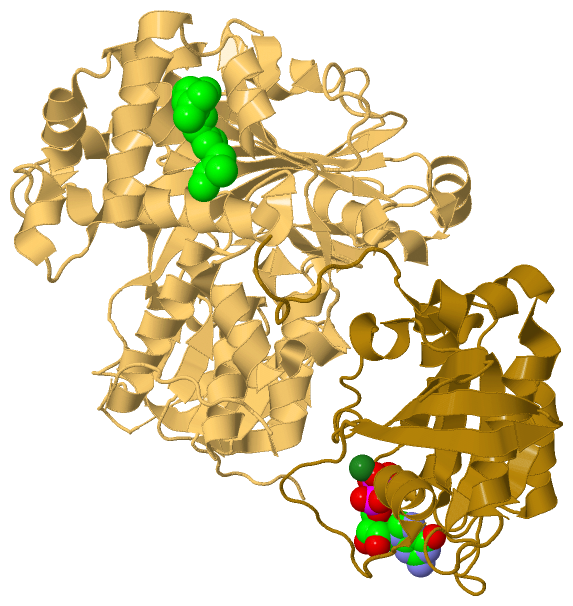
Image Asym./Biol. Unit
Asym./Biol. Unit  (Jmol Viewer)
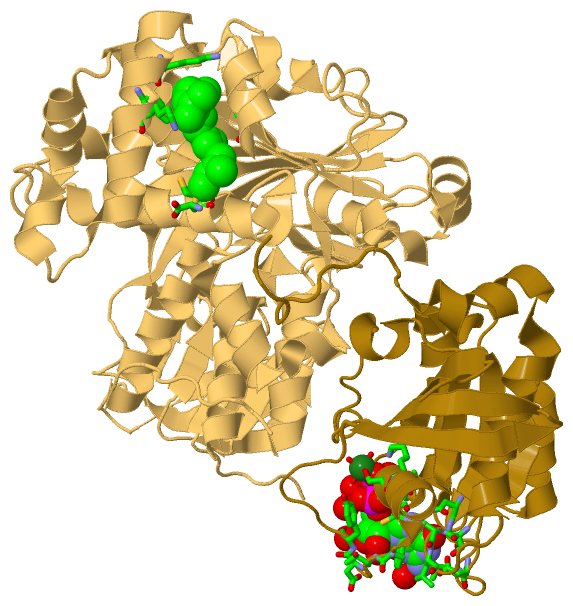
Image Asym./Biol. Unit - sites
Asym./Biol. Unit - sites  (Jmol Viewer)

(-) Description

Title :  STRUCTURE OF RABGDP-DISSOCIATION INHIBITOR IN COMPLEX WITH PRENYLATED YPT1 GTPASE
 
Authors :  A. Rak, O. Pylypenko, T. Durek, A. Watzke, S. Kushnir, L. Brunsveld, H. Waldmann, R. S. Goody, K. Alexandrov
Date :  01 Sep 03  (Deposition) - 01 Sep 04  (Release) - 24 Feb 09  (Revision)
Method :  X-RAY DIFFRACTION
Resolution :  1.50
Chains :  Asym./Biol. Unit :  G,Y
Keywords :  Gtpase, Hydrolase, Gdp Dissociation Inhibitor, Vesicular Transport, Protein Transport (Keyword Search: [Gene Ontology, PubMed, Web (Google))
 
Reference :  A. Rak, O. Pylypenko, T. Durek, A. Watzke, S. Kushnir, L. Brunsveld, H. Waldmann, R. S. Goody, K. Alexandrov
Structure Of Rab Gdp-Dissociation Inhibitor In Complex With Prenylated Ypt1 Gtpase
Science V. 302 646 2003
PubMed-ID: 14576435  |  Reference-DOI: 10.1126/SCIENCE.1087761
(for further references see the PDB file header)

(-) Compounds

Molecule 1 - SECRETORY PATHWAY GDP DISSOCIATION INHIBITOR
    ChainsG
    EngineeredYES
    Expression SystemESCHERICHIA COLI BL21(DE3)
    Expression System PlasmidPET19TEV
    Expression System StrainBL21(DE3)
    Expression System Taxid469008
    Expression System Vector TypePLASMID
    Organism CommonBAKER'S YEAST
    Organism ScientificSACCHAROMYCES CEREVISIAE
    Organism Taxid4932
    SynonymRAB GDP-DISSOCIATION INHIBITOR
 
Molecule 2 - GTP-BINDING PROTEIN YPT1
    ChainsY
    EngineeredYES
    Expression SystemESCHERICHIA COLI BL21(DE3)
    Expression System PlasmidPTWIN
    Expression System StrainBL21(DE3)
    Expression System Taxid469008
    Expression System Vector TypePLASMID
    Organism CommonBAKER'S YEAST
    Organism ScientificSACCHAROMYCES CEREVISIAE
    Organism Taxid4932
    SynonymYPT1 GTPASE

 Structural Features

(-) Chains, Units

  12
Asymmetric/Biological Unit GY

Summary Information (see also Sequences/Alignments below)

(-) Ligands, Modified Residues, Ions  (3, 3)

Asymmetric/Biological Unit (3, 3)
No.NameCountTypeFull Name
1GDP1Ligand/IonGUANOSINE-5'-DIPHOSPHATE
2GER1Ligand/IonGERAN-8-YL GERAN
3MG1Ligand/IonMAGNESIUM ION

(-) Sites  (3, 3)

Asymmetric Unit (3, 3)
No.NameEvidenceResiduesDescription
1AC1SOFTWARESER Y:22 , GDP Y:1207 , HOH Y:1363 , HOH Y:1364 , HOH Y:1365 , HOH Y:1366BINDING SITE FOR RESIDUE MG Y 1208
2AC2SOFTWAREPRO G:128 , LYS G:145 , MET G:148 , LYS G:149 , TYR G:220 , CYS G:221 , CYS Y:206BINDING SITE FOR RESIDUE GER Y 1206
3AC3SOFTWAREGLY Y:18 , VAL Y:19 , GLY Y:20 , LYS Y:21 , SER Y:22 , CYS Y:23 , TYR Y:33 , THR Y:34 , ASP Y:36 , TYR Y:37 , ASN Y:121 , LYS Y:122 , ASP Y:124 , LEU Y:125 , SER Y:151 , ALA Y:152 , LEU Y:153 , MG Y:1208 , HOH Y:1215 , HOH Y:1221 , HOH Y:1225 , HOH Y:1230 , HOH Y:1246 , HOH Y:1283 , HOH Y:1363 , HOH Y:1364 , HOH Y:1366BINDING SITE FOR RESIDUE GDP Y 1207

(-) SS Bonds  (0, 0)

(no "SS Bond" information available for 1UKV)

(-) Cis Peptide Bonds  (0, 0)

(no "Cis Peptide Bond" information available for 1UKV)

 Sequence-Structure Mapping

(-) SAPs(SNPs)/Variants  (0, 0)

(no "SAP(SNP)/Variant" information available for 1UKV)

(-) PROSITE Motifs  (1, 1)

Asymmetric/Biological Unit (1, 1)
 PROSITEUniProtKBPDB
No.IDACDescriptionIDLocationCountLocation
1RABPS51419 small GTPase Rab1 family profile.YPT1_YEAST4-206  1Y:4-206

(-) Exons   (2, 2)

Asymmetric/Biological Unit (2, 2)
 ENSEMBLUniProtKBPDB
No.Transcript IDExonExon IDGenome LocationLengthIDLocationLengthCountLocationLength
1.1YER136W1YER136W.1V:439612-4409671356GDI1_YEAST1-4514511G:5-446442

2.1YFL038C1YFL038C.1VI:55985-55365621YPT1_YEAST1-2062061Y:3-206 (gaps)204

(-) Sequences/Alignments

Asymmetric/Biological Unit
   Reformat: Number of residues per line =  ('0' or empty: single-line sequence representation)
  Number of residues per labelling interval =   
  UniProt sequence: complete  aligned part    
   Show mapping: SCOP domains CATH domains Pfam domains Secondary structure (by author)
SAPs(SNPs) PROSITE motifs Exons
(details for a mapped element are shown in a popup box when the mouse pointer rests over it)
Chain G from PDB  Type:PROTEIN  Length:442
 aligned with GDI1_YEAST | P39958 from UniProtKB/Swiss-Prot  Length:451

    Alignment length:442
                                    14        24        34        44        54        64        74        84        94       104       114       124       134       144       154       164       174       184       194       204       214       224       234       244       254       264       274       284       294       304       314       324       334       344       354       364       374       384       394       404       414       424       434       444  
           GDI1_YEAST     5 TIDTDYDVIVLGTGITECILSGLLSVDGKKVLHIDKQDHYGGEAASVTLSQLYEKFKQNPISKEERESKFGKDRDWNVDLIPKFLMANGELTNILIHTDVTRYVDFKQVSGSYVFKQGKIYKVPANEIEAISSPLMGIFEKRRMKKFLEWISSYKEDDLSTHQGLDLDKNTMDEVYYKFGLGNSTKEFIGHAMALWTNDDYLQQPARPSFERILLYCQSVARYGKSPYLYPMYGLGELPQGFARLSAIYGGTYMLDTPIDEVLYKKDTGKFEGVKTKLGTFKAPLVIADPTYFPEKCKSTGQRVIRAICILNHPVPNTSNADSLQIIIPQSQLGRKSDIYVAIVSDAHNVCSKGHYLAIISTIIETDKPHIELEPAFKLLGPIEEKFMGIAELFEPREDGSKDNIYLSRSYDASSHFESMTDDVKDIYFRVTGHPLVLKQRQ 446
               SCOP domains d1ukvg1 G:5-301 Guanine nucleotide dissociation inhibitor, GDI                                                                                                                                                                                                                                           d1ukvg3 G:302-399 Guanine nucleotide dissociation inhibitor, GDI                                  d1ukvg2 G:400-446                               SCOP domains
               CATH domains 1ukvG01 G:5-61,G:232-305,G:398-446                       1ukvG02 G:62-126,G:306-397                                       1ukvG03 G:127-231 Guanine Nucleotide Dissociation Inhibitor, domain 1                                    1ukvG01 G:5-61,G:232-305,G:398-446  [code=3.50.50.60, no name defined]    1ukvG02 G:62-126,G:306-397 Guanine Nucleotide Dissociation Inhibitor, domain 2              1ukvG01 G:5-61,G:232-305,G:398-446                CATH domains
               Pfam domains -GDI-1ukvG01 G:6-446                                                                                                                                                                                                                                                                                                                                                                                                                                       Pfam domains
         Sec.struct. author .......eeee..hhhhhhhhhhhhhh...eeee......hhhh.eehhhhhhhhhh....hhhhhhhhhhhhhhh.ee.....ee..hhhhhhhhhhhhhhh..eee...eeeee..eeee...hhhhhhhh...hhhhhhhhhhhhhhhhhh...hhhhh........hhhhhhhhh..hhhhhhhhhhhh.....hhhhhh.hhhhhhhhhhhhhhhhhhh...eeee....hhhhhhhhhhhhhh..eee......eeee......eeeeee..eeee...eee.hhhhhh.eeeeeeeeeeeeeee............eeeeehhhhh.....eeeeeee.hhh......eeeeeeee....hhhhhhhhhhhh.....eeeeeeeeeeee........eee.........hhhhhhhhhhhhhhhhh......... Sec.struct. author
                 SAPs(SNPs) ---------------------------------------------------------------------------------------------------------------------------------------------------------------------------------------------------------------------------------------------------------------------------------------------------------------------------------------------------------------------------------------------------------------------------------------------------------- SAPs(SNPs)
                    PROSITE ---------------------------------------------------------------------------------------------------------------------------------------------------------------------------------------------------------------------------------------------------------------------------------------------------------------------------------------------------------------------------------------------------------------------------------------------------------- PROSITE
               Transcript 1 Exon 1.1  PDB: G:5-446 UniProt: 1-451 [INCOMPLETE]                                                                                                                                                                                                                                                                                                                                                                                                         Transcript 1
                 1ukv G   5 TIDTDYDVIVLGTGITECILSGLLSVDGKKVLHIDKQDHYGGEAASVTLSQLYEKFKQNPISKEERESKFGKDRDWNVDLIPKFLMANGELTNILIHTDVTRYVDFKQVSGSYVFKQGKIYKVPANEIEAISSPLMGIFEKRRMKKFLEWISSYKEDDLSTHQGLDLDKNTMDEVYYKFGLGNSTKEFIGHAMALWTNDDYLQQPARPSFERILLYCQSVARYGKSPYLYPMYGLGELPQGFARLSAIYGGTYMLDTPIDEVLYKKDTGKFEGVKTKLGTFKAPLVIADPTYFPEKCKSTGQRVIRAICILNHPVPNTSNADSLQIIIPQSQLGRKSDIYVAIVSDAHNVCSKGHYLAIISTIIETDKPHIELEPAFKLLGPIEEKFMGIAELFEPREDGSKDNIYLSRSYDASSHFESMTDDVKDIYFRVTGHPLVLKQRQ 446
                                    14        24        34        44        54        64        74        84        94       104       114       124       134       144       154       164       174       184       194       204       214       224       234       244       254       264       274       284       294       304       314       324       334       344       354       364       374       384       394       404       414       424       434       444  

Chain Y from PDB  Type:PROTEIN  Length:197
 aligned with YPT1_YEAST | P01123 from UniProtKB/Swiss-Prot  Length:206

    Alignment length:204
                                    12        22        32        42        52        62        72        82        92       102       112       122       132       142       152       162       172       182       192       202    
           YPT1_YEAST     3 SEYDYLFKLLLIGNSGVGKSCLLLRFSDDTYTNDYISTIGVDFKIKTVELDGKTVKLQIWDTAGQERFRTITSSYYRGSHGIIIVYDVTDQESFNGVKMWLQEIDRYATSTVLKLLVGNKCDLKDKRVVEYDVAKEFADANKMPFLETSALDSTNVEDAFLTMARQIKESMSQQNLNETTQKKEDKGNVNLKGQSLTNTGGGCC 206
               SCOP domains d1ukvy_ Y: GTPase Ytp1                                                                                                                                                                                       SCOP domains
               CATH domains 1ukvY00 Y:3-206 P-loop containing nucleotide triphosphate hydrolases                                                                                                                                         CATH domains
               Pfam domains -------Ras-1ukvY01 Y:10-171                                                                                                                                              ----------------------------------- Pfam domains
         Sec.struct. author ....eeeeeeeee....hhhhhhhhhhhh.............eeeeeeee..eeeeeeee...........hhhhhh...eeeeeee..hhhhhhhhhhhhhhhhhhh....eeeeeee..........hhhhhhhhhhhh...eee.......hhhhhhhhhhhhhhhhhhhhhhhhhhhhhh............-------. Sec.struct. author
                 SAPs(SNPs) ------------------------------------------------------------------------------------------------------------------------------------------------------------------------------------------------------------ SAPs(SNPs)
                    PROSITE -RAB  PDB: Y:4-206 UniProt: 4-206                                                                                                                                                                            PROSITE
               Transcript 2 Exon 2.1  PDB: Y:3-206 (gaps) UniProt: 1-206 [INCOMPLETE]                                                                                                                                                    Transcript 2
                 1ukv Y   3 SEYDYLFKLLLIGNSGVGKSCLLLRFSDDTYTNDYISTIGVDFKIKTVELDGKTVKLQIWDTAGQERFRTITSSYYRGSHGIIIVYDVTDQESFNGVKMWLQEIDRYATSTVLKLLVGNKCDLKDKRVVEYDVAKEFADANKMPFLETSALDSTNVEDAFLTMARQIKESMSQQNLNETTQKKEDKGNVNLKGQSL-------C 206
                                    12        22        32        42        52        62        72        82        92       102       112       122       132       142       152       162       172       182       192     |   -   |
                                                                                                                                                                                                                             198     206

   Legend:   → Mismatch (orange background)
  - → Gap (green background, '-', border residues have a numbering label)
    → Modified Residue (blue background, lower-case, 'x' indicates undefined single-letter code, labelled with number + name)
  x → Chemical Group (purple background, 'x', labelled with number + name, e.g. ACE or NH2)
  extra numbering lines below/above indicate numbering irregularities and modified residue names etc., number ends below/above '|'

 Classification and Annotation

(-) SCOP Domains  (3, 4)

Asymmetric/Biological Unit

(-) CATH Domains  (4, 4)

Asymmetric/Biological Unit
(-)
Class: Alpha Beta (26913)

(-) Pfam Domains  (2, 2)

Asymmetric/Biological Unit

(-) Gene Ontology  (44, 50)

Asymmetric/Biological Unit(hide GO term definitions)
Chain G   (GDI1_YEAST | P39958)
molecular function
    GO:0005092    GDP-dissociation inhibitor activity    Prevents the dissociation of GDP from a GTPase, thereby preventing GTP from binding.
    GO:0005096    GTPase activator activity    Binds to and increases the activity of a GTPase, an enzyme that catalyzes the hydrolysis of GTP.
    GO:0005093    Rab GDP-dissociation inhibitor activity    Prevents the dissociation of GDP from the small GTPase Rab, thereby preventing GTP from binding.
    GO:0016491    oxidoreductase activity    Catalysis of an oxidation-reduction (redox) reaction, a reversible chemical reaction in which the oxidation state of an atom or atoms within a molecule is altered. One substrate acts as a hydrogen or electron donor and becomes oxidized, while the other acts as hydrogen or electron acceptor and becomes reduced.
    GO:0005515    protein binding    Interacting selectively and non-covalently with any protein or protein complex (a complex of two or more proteins that may include other nonprotein molecules).
biological process
    GO:0055114    oxidation-reduction process    A metabolic process that results in the removal or addition of one or more electrons to or from a substance, with or without the concomitant removal or addition of a proton or protons.
    GO:0043547    positive regulation of GTPase activity    Any process that activates or increases the activity of a GTPase.
    GO:0015031    protein transport    The directed movement of proteins into, out of or within a cell, or between cells, by means of some agent such as a transporter or pore.
    GO:0050790    regulation of catalytic activity    Any process that modulates the activity of an enzyme.
    GO:0007264    small GTPase mediated signal transduction    Any series of molecular signals in which a small monomeric GTPase relays one or more of the signals.
    GO:0006810    transport    The directed movement of substances (such as macromolecules, small molecules, ions) or cellular components (such as complexes and organelles) into, out of or within a cell, or between cells, or within a multicellular organism by means of some agent such as a transporter, pore or motor protein.
    GO:0016192    vesicle-mediated transport    A cellular transport process in which transported substances are moved in membrane-bounded vesicles; transported substances are enclosed in the vesicle lumen or located in the vesicle membrane. The process begins with a step that directs a substance to the forming vesicle, and includes vesicle budding and coating. Vesicles are then targeted to, and fuse with, an acceptor membrane.
cellular component
    GO:0005575    cellular_component    The part of a cell, extracellular environment or virus in which a gene product is located. A gene product may be located in one or more parts of a cell and its location may be as specific as a particular macromolecular complex, that is, a stable, persistent association of macromolecules that function together.
    GO:0005737    cytoplasm    All of the contents of a cell excluding the plasma membrane and nucleus, but including other subcellular structures.

Chain Y   (YPT1_YEAST | P01123)
molecular function
    GO:0005525    GTP binding    Interacting selectively and non-covalently with GTP, guanosine triphosphate.
    GO:0003924    GTPase activity    Catalysis of the reaction: GTP + H2O = GDP + phosphate.
    GO:0000149    SNARE binding    Interacting selectively and non-covalently with a SNARE (soluble N-ethylmaleimide-sensitive factor attached protein receptor) protein.
    GO:0000166    nucleotide binding    Interacting selectively and non-covalently with a nucleotide, any compound consisting of a nucleoside that is esterified with (ortho)phosphate or an oligophosphate at any hydroxyl group on the ribose or deoxyribose.
    GO:0005515    protein binding    Interacting selectively and non-covalently with any protein or protein complex (a complex of two or more proteins that may include other nonprotein molecules).
biological process
    GO:0090114    COPII-coated vesicle budding    The evagination of an endoplasmic reticulum membrane, resulting in formation of a COPII-coated vesicle.
    GO:0006888    ER to Golgi vesicle-mediated transport    The directed movement of substances from the endoplasmic reticulum (ER) to the Golgi, mediated by COP II vesicles. Small COP II coated vesicles form from the ER and then fuse directly with the cis-Golgi. Larger structures are transported along microtubules to the cis-Golgi.
    GO:0048194    Golgi vesicle budding    The evagination of the Golgi membrane, resulting in formation of a vesicle.
    GO:0048211    Golgi vesicle docking    The initial attachment of a Golgi transport vesicle membrane to a target membrane, mediated by proteins protruding from the membrane of the Golgi vesicle and the target membrane.
    GO:0035494    SNARE complex disassembly    The disaggregation of the SNARE protein complex into its constituent components. The SNARE complex is a protein complex involved in membrane fusion; a stable ternary complex consisting of a four-helix bundle, usually formed from one R-SNARE and three Q-SNAREs with an ionic layer sandwiched between hydrophobic layers.
    GO:0006914    autophagy    The process in which cells digest parts of their own cytoplasm; allows for both recycling of macromolecular constituents under conditions of cellular stress and remodeling the intracellular structure for cell differentiation.
    GO:0034498    early endosome to Golgi transport    The directed movement of substances from early endosomes to the Golgi.
    GO:0032456    endocytic recycling    The directed movement of membrane-bounded vesicles from recycling endosomes back to the plasma membrane where they are recycled for further rounds of transport.
    GO:0016236    macroautophagy    The major inducible pathway for the general turnover of cytoplasmic constituents in eukaryotic cells, it is also responsible for the degradation of active cytoplasmic enzymes and organelles during nutrient starvation. Macroautophagy involves the formation of double-membrane-bounded autophagosomes which enclose the cytoplasmic constituent targeted for degradation in a membrane-bounded structure. Autophagosomes then fuse with a lysosome (or vacuole) releasing single-membrane-bounded autophagic bodies that are then degraded within the lysosome (or vacuole). Though once thought to be a purely non-selective process, it appears that some types of macroautophagy, e.g. macropexophagy, macromitophagy, may involve selective targeting of the targets to be degraded.
    GO:1990261    pre-mRNA catabolic process    The chemical reactions and pathways resulting in the breakdown of the unspliced pre-mRNA (pre-messenger RNA).
    GO:0006461    protein complex assembly    The aggregation, arrangement and bonding together of a set of components to form a protein complex.
    GO:0032258    protein localization by the CVT pathway    A cytoplasm to vacuole targeting pathway that uses machinery common with autophagy. The CVT vesicle is formed when the receptor protein, Atg19, binds to the complexes of the target protein (aminopeptidase or alpha-mannosidase homododecamers), forming the Cvt complex. Atg11 binds to Atg9 and transports the CVT complex to the pre-autophagosome (PAS). The phagophore membrane expands around the CVT complex (excluding bulk cytoplasm) forming the CVT vesicle. This pathway is mostly observed in yeast.
    GO:0015031    protein transport    The directed movement of proteins into, out of or within a cell, or between cells, by means of some agent such as a transporter or pore.
    GO:1900101    regulation of endoplasmic reticulum unfolded protein response    Any process that modulates the frequency, rate or extent of endoplasmic reticulum unfolded protein response.
    GO:0061709    reticulophagy    The autophagic process in which parts of the endoplasmic reticulum are loaded into autophagosomes, delivered to the vacuole, and degraded in response to changing cellular conditions.
    GO:0006890    retrograde vesicle-mediated transport, Golgi to ER    The directed movement of substances from the Golgi back to the endoplasmic reticulum, mediated by vesicles bearing specific protein coats such as COPI or COG.
    GO:0007264    small GTPase mediated signal transduction    Any series of molecular signals in which a small monomeric GTPase relays one or more of the signals.
    GO:0006810    transport    The directed movement of substances (such as macromolecules, small molecules, ions) or cellular components (such as complexes and organelles) into, out of or within a cell, or between cells, or within a multicellular organism by means of some agent such as a transporter, pore or motor protein.
    GO:0016192    vesicle-mediated transport    A cellular transport process in which transported substances are moved in membrane-bounded vesicles; transported substances are enclosed in the vesicle lumen or located in the vesicle membrane. The process begins with a step that directs a substance to the forming vesicle, and includes vesicle budding and coating. Vesicles are then targeted to, and fuse with, an acceptor membrane.
cellular component
    GO:0005794    Golgi apparatus    A compound membranous cytoplasmic organelle of eukaryotic cells, consisting of flattened, ribosome-free vesicles arranged in a more or less regular stack. The Golgi apparatus differs from the endoplasmic reticulum in often having slightly thicker membranes, appearing in sections as a characteristic shallow semicircle so that the convex side (cis or entry face) abuts the endoplasmic reticulum, secretory vesicles emerging from the concave side (trans or exit face). In vertebrate cells there is usually one such organelle, while in invertebrates and plants, where they are known usually as dictyosomes, there may be several scattered in the cytoplasm. The Golgi apparatus processes proteins produced on the ribosomes of the rough endoplasmic reticulum; such processing includes modification of the core oligosaccharides of glycoproteins, and the sorting and packaging of proteins for transport to a variety of cellular locations. Three different regions of the Golgi are now recognized both in terms of structure and function: cis, in the vicinity of the cis face, trans, in the vicinity of the trans face, and medial, lying between the cis and trans regions.
    GO:0000139    Golgi membrane    The lipid bilayer surrounding any of the compartments of the Golgi apparatus.
    GO:0005795    Golgi stack    The set of thin, flattened membrane-bounded compartments, called cisternae, that form the central portion of the Golgi complex. The stack usually comprises cis, medial, and trans cisternae; the cis- and trans-Golgi networks are not considered part of the stack.
    GO:0005801    cis-Golgi network    The network of interconnected tubular and cisternal structures located at the convex side of the Golgi apparatus, which abuts the endoplasmic reticulum.
    GO:0005737    cytoplasm    All of the contents of a cell excluding the plasma membrane and nucleus, but including other subcellular structures.
    GO:0031410    cytoplasmic vesicle    A vesicle found in the cytoplasm of a cell.
    GO:0005829    cytosol    The part of the cytoplasm that does not contain organelles but which does contain other particulate matter, such as protein complexes.
    GO:0005783    endoplasmic reticulum    The irregular network of unit membranes, visible only by electron microscopy, that occurs in the cytoplasm of many eukaryotic cells. The membranes form a complex meshwork of tubular channels, which are often expanded into slitlike cavities called cisternae. The ER takes two forms, rough (or granular), with ribosomes adhering to the outer surface, and smooth (with no ribosomes attached).
    GO:0005789    endoplasmic reticulum membrane    The lipid bilayer surrounding the endoplasmic reticulum.
    GO:0016020    membrane    A lipid bilayer along with all the proteins and protein complexes embedded in it an attached to it.
    GO:0000407    pre-autophagosomal structure    Punctate structures proximal to the endoplasmic reticulum which are the sites where the Atg machinery assembles upon autophagy induction.
    GO:0034045    pre-autophagosomal structure membrane    A cellular membrane associated with the pre-autophagosomal structure.

 Visualization

(-) Interactive Views

Asymmetric/Biological Unit
  Complete Structure
    Jena3D(integrated viewing of ligand, site, SAP, PROSITE, SCOP information)
    WebMol | AstexViewer[tm]@PDBe
(Java Applets, require no local installation except for Java; loading may be slow)
    STRAP
(Java WebStart application, automatic local installation, requires Java; full application with system access!)
    RasMol
(require local installation)
    Molscript (VRML)
(requires installation of a VRML viewer; select preferred view via VRML and generate a mono or stereo PDF format file)
 
  Ligands, Modified Residues, Ions
    GDP  [ RasMol | Jena3D ]  +environment [ RasMol | Jena3D ]
    GER  [ RasMol | Jena3D ]  +environment [ RasMol | Jena3D ]
    MG  [ RasMol | Jena3D ]  +environment [ RasMol | Jena3D ]
 
  Sites
    AC1  [ RasMol ]  +environment [ RasMol ]
    AC2  [ RasMol ]  +environment [ RasMol ]
    AC3  [ RasMol ]  +environment [ RasMol ]
 
  Cis Peptide Bonds
(no "Cis Peptide Bonds" information available for 1ukv)
 

(-) Still Images

Jmol
  protein: cartoon or spacefill or dots and stick; nucleic acid: cartoon and stick; ligands: spacefill; active site: stick
Molscript
  protein, nucleic acid: cartoon; ligands: spacefill; active site: ball and stick

 Databases and Analysis Tools

(-) Databases

Access by PDB/NDB ID
  1ukv
    Family and Domain InformationProDom | SYSTERS
    General Structural InformationGlycoscienceDB | MMDB | NDB | OCA | PDB | PDBe | PDBj | PDBsum | PDBWiki | PQS | PROTEOPEDIA
    Orientation in MembranesOPM
    Protein SurfaceSURFACE
    Secondary StructureDSSP (structure derived) | HSSP (homology derived)
    Structural GenomicsGeneCensus
    Structural NeighboursCE | VAST
    Structure ClassificationCATH | Dali | SCOP
    Validation and Original DataBMRB Data View | BMRB Restraints Grid | EDS | PROCHECK | RECOORD | WHAT_CHECK
 
Access by UniProt ID/Accession number
  GDI1_YEAST | P39958
    Comparative Protein Structure ModelsModBase
    Genomic InformationEnsembl
    Protein-protein InteractionDIP
    Sequence, Family and Domain InformationInterPro | Pfam | SMART | UniProtKB/SwissProt
  YPT1_YEAST | P01123
    Comparative Protein Structure ModelsModBase
    Genomic InformationEnsembl
    Protein-protein InteractionDIP
    Sequence, Family and Domain InformationInterPro | Pfam | SMART | UniProtKB/SwissProt
 
Access by Enzyme Classificator   (EC Number)
  (no 'Enzyme Classificator' available)
    General Enzyme InformationBRENDA | EC-PDB | Enzyme | IntEnz
    PathwayKEGG | MetaCyc
 
Access by Disease Identifier   (MIM ID)
  (no 'MIM ID' available)
    Disease InformationOMIM
 
Access by GenAge ID
  (no 'GenAge ID' available)
    Age Related InformationGenAge

(-) Analysis Tools

Access by PDB/NDB ID
    Domain InformationXDom
    Interatomic Contacts of Structural UnitsCSU
    Ligand-protein ContactsLPC
    Protein CavitiescastP
    Sequence and Secondary StructurePDBCartoon
    Structure AlignmentSTRAP(Java WebStart application, automatic local installation, requires Java; full application with system access!)
    Structure and Sequence BrowserSTING
 
Access by UniProt ID/Accession number
  GDI1_YEAST | P39958
    Protein Disorder PredictionDisEMBL | FoldIndex | GLOBPLOT (for more information see DisProt)
  YPT1_YEAST | P01123
    Protein Disorder PredictionDisEMBL | FoldIndex | GLOBPLOT (for more information see DisProt)

 Related Entries

(-) Entries Sharing at Least One Protein Chain (UniProt ID)

UniProtKB/Swiss-Prot
        GDI1_YEAST | P399582bcg 3cph 3cpi 3cpj
        YPT1_YEAST | P011231yzn 2bcg 3cue

(-) Related Entries Specified in the PDB File

(no "Related Entries Specified in the PDB File" available for 1UKV)