Show PDB file:   
         Plain Text   HTML   (compressed file size)
QuickSearch:   
by PDB,NDB,UniProt,PROSITE Code or Search Term(s)  
(-)Asym./Biol. Unit
(-)Asym./Biol. Unit - sites
collapse expand < >
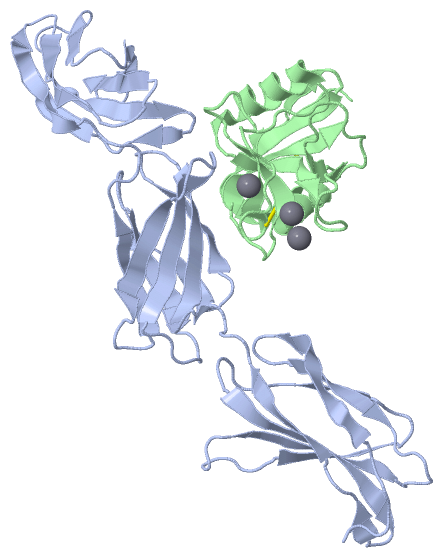
Image Asym./Biol. Unit
Asym./Biol. Unit  (Jmol Viewer)
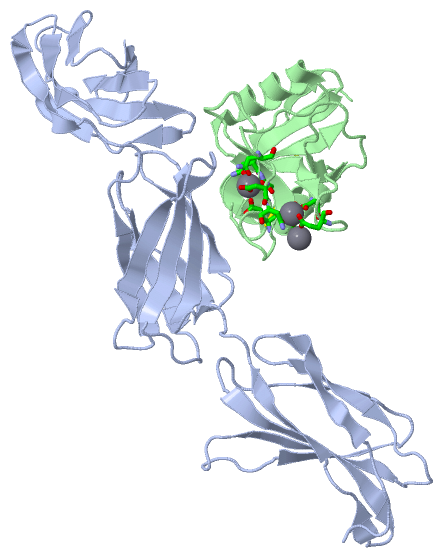
Image Asym./Biol. Unit - sites
Asym./Biol. Unit - sites  (Jmol Viewer)

(-) Description

Title :  STRUCTURAL BASIS FOR THE INTERACTIONS BETWEEN TENASCINS AND THE C-TYPE LECTIN DOMAINS FROM LECTICANS: EVIDENCE FOR A CROSS-LINKING ROLE FOR TENASCINS
 
Authors :  A. Lundell, A. I. Olin, M. Moergelin, S. Al-Karadaghi, A. Aspberg, D. T.
Date :  24 May 04  (Deposition) - 31 Aug 04  (Release) - 13 Jul 11  (Revision)
Method :  X-RAY DIFFRACTION
Resolution :  2.60
Chains :  Asym./Biol. Unit :  A,B
Keywords :  Extracellular Matrix, Lecticans, Tenascins, Protein-Protein Interactions, C-Type Lectin Domain (Keyword Search: [Gene Ontology, PubMed, Web (Google))
 
Reference :  A. Lundell, A. I. Olin, M. Moergelin, S. Al-Karadaghi, A. Aspberg, D. T. Logan
Structural Basis For Interactions Between Tenascins And Lectican C-Type Lectin Domains: Evidence For A Crosslinking Role For Tenascins
Structure V. 12 1495 2004
PubMed-ID: 15296743  |  Reference-DOI: 10.1016/J.STR.2004.05.021

(-) Compounds

Molecule 1 - TENASCIN-R
    ChainsA
    EngineeredYES
    Expression SystemESCHERICHIA COLI
    Expression System StrainTG-1
    Expression System Taxid562
    FragmentFIBRONECTIN TYPE III REPEATS 3-5
    Organism CommonNORWAY RAT
    Organism ScientificRATTUS NORVEGICUS
    Organism Taxid10116
 
Molecule 2 - AGGRECAN CORE PROTEIN
    ChainsB
    EngineeredYES
    Expression SystemHOMO SAPIENS
    Expression System CommonHUMAN
    Expression System PlasmidPCEP4
    Expression System StrainEMBRYONAL KIDNEY 293-EBNA
    Expression System Taxid9606
    Expression System Vector TypePLASMID
    FragmentC-TYPE LECTIN DOMAIN
    GeneAGC1, AGC
    Organism CommonNORWAY RAT
    Organism ScientificRATTUS NORVEGICUS
    Organism Taxid10116
    SynonymCARTILAGE-SPECIFIC PROTEOGLYCAN CORE PROTEIN, CSPCP

 Structural Features

(-) Chains, Units

  12
Asymmetric/Biological Unit AB

Summary Information (see also Sequences/Alignments below)

(-) Ligands, Modified Residues, Ions  (1, 3)

Asymmetric/Biological Unit (1, 3)
No.NameCountTypeFull Name
1CA3Ligand/IonCALCIUM ION

(-) Sites  (3, 3)

Asymmetric Unit (3, 3)
No.NameEvidenceResiduesDescription
1AC1SOFTWAREGLN B:88 , ASP B:90 , GLU B:97 , ASN B:111 , ASP B:112 , HOH B:137BINDING SITE FOR RESIDUE CA B 127
2AC2SOFTWAREASP B:64 , GLU B:68 , ASN B:91 , GLU B:97 , ASP B:98BINDING SITE FOR RESIDUE CA B 128
3AC3SOFTWAREGLU B:68 , ASP B:98 , HOH B:139 , HOH B:140 , HOH B:141 , HOH B:142BINDING SITE FOR RESIDUE CA B 129

(-) SS Bonds  (2, 2)

Asymmetric/Biological Unit
No.Residues
1B:31 -B:123
2B:99 -B:115

(-) Cis Peptide Bonds  (1, 1)

Asymmetric/Biological Unit
No.Residues
1Gln B:88 -Pro B:89

 Sequence-Structure Mapping

(-) SAPs(SNPs)/Variants  (0, 0)

(no "SAP(SNP)/Variant" information available for 1TDQ)

(-) PROSITE Motifs  (3, 5)

Asymmetric/Biological Unit (3, 5)
 PROSITEUniProtKBPDB
No.IDACDescriptionIDLocationCountLocation
1FN3PS50853 Fibronectin type-III domain profile.TENR_RAT328-419
505-596
420-504
687-776
597-686
865-953
777-864
1041-1129
954-1040
  3-
A:6-97
-
A:188-271
A:98-187
-
-
-
-
2C_TYPE_LECTIN_2PS50041 C-type lectin domain profile.PGCA_RAT1921-2035  1B:10-124
3C_TYPE_LECTIN_1PS00615 C-type lectin domain signature.PGCA_RAT2010-2034  1B:99-123

(-) Exons   (0, 0)

(no "Exon" information available for 1TDQ)

(-) Sequences/Alignments

Asymmetric/Biological Unit
   Reformat: Number of residues per line =  ('0' or empty: single-line sequence representation)
  Number of residues per labelling interval =   
  UniProt sequence: complete  aligned part    
   Show mapping: SCOP domains CATH domains Pfam domains Secondary structure (by author)
SAPs(SNPs) PROSITE motifs Exons
(details for a mapped element are shown in a popup box when the mouse pointer rests over it)
Chain A from PDB  Type:PROTEIN  Length:271
 aligned with TENR_RAT | Q05546 from UniProtKB/Swiss-Prot  Length:1356

    Alignment length:271
                                   509       519       529       539       549       559       569       579       589       599       609       619       629       639       649       659       669       679       689       699       709       719       729       739       749       759       769 
            TENR_RAT    500 STVIDGPTQILVRDVSDTVAFVEWTPPRAKVDFILLKYGLVGGEGGKTTFRLQPPLSQYSVQALRPGSRYEVSISAVRGTNESDASSTQFTTEIDAPKNLRVGSRTATSLDLEWDNSEAEAQEYKVVYSTLAGEQYHEVLVPKGIGPTTKTTLTDLVPGTEYGVGISAVMNSKQSIPATMNARTELDSPRDLMVTASSETSISLIWTKASGPIDHYRITFTPSSGISSEVTVPRDRTSYTLTDLEPGAEYIISITAERGRQQSLESTVDAF  770
               SCOP domains d1tdqa1 A:1-93 Tenascin                                                                      d1tdqa2 A:94-185 Tenascin                                                                   d1tdqa3 A:186-271 Tenascin                                                             SCOP domains
               CATH domains 1tdqA01 A:1-94 Immunoglobulins                                                                1tdqA02 A:95-184 Immunoglobulins                                                          1tdqA03 A:185-271 Immunoglobulins                                                       CATH domains
           Pfam domains (1) ------------------------------------------------------------------------------------------------------------------------------------------------------------------------------------------fn3-1tdqA01 A:187-266                                                           ----- Pfam domains (1)
           Pfam domains (2) ------------------------------------------------------------------------------------------------------------------------------------------------------------------------------------------fn3-1tdqA02 A:187-266                                                           ----- Pfam domains (2)
           Pfam domains (3) ------------------------------------------------------------------------------------------------------------------------------------------------------------------------------------------fn3-1tdqA03 A:187-266                                                           ----- Pfam domains (3)
         Sec.struct. author .......eeeeeeee....eeeeee.......eeeeeeee.......eeeee.....eeee.......eeeeeeeeee..ee...eeeeee......eeeeeeee....eeeeee.......eeeeeeee......eeeeee.....eeeeee.......eeeeeeeeee..ee...eeeeee......eeeeeeee....eeeeee.......eeeeeee......eeeeee....eeee........eeeeeeeee..ee...eeeee. Sec.struct. author
                 SAPs(SNPs) ------------------------------------------------------------------------------------------------------------------------------------------------------------------------------------------------------------------------------------------------------------------------------- SAPs(SNPs)
                    PROSITE FN3  FN3  PDB: A:6-97 UniProt: 505-596                                                           FN3  PDB: A:98-187 UniProt: 597-686                                                       FN3  PDB: A:188-271 UniProt: 687-776                                                 PROSITE
                 Transcript ------------------------------------------------------------------------------------------------------------------------------------------------------------------------------------------------------------------------------------------------------------------------------- Transcript
                1tdq A    1 IPVIDGPTQILVRDVSDTVAFVEWTPPRAKVDFILLKYGLVGGEGGKTTFRLQPPLSQYSVQALRPGSRYEVSISAVRGTNESDASSTQFTTEIDAPKNLRVGSRTATSLDLEWDNSEAEAQEYKVVYSTLAGEQYHEVLVPKGIGPTTKTTLTDLVPGTEYGVGISAVMNSKQSIPATMNARTELDSPRDLMVTASSETSISLIWTKASGPIDHYRITFTPSSGISSEVTVPRDRTSYTLTDLEPGAEYIISITAERGRQQSLESTVDAF  271
                                    10        20        30        40        50        60        70        80        90       100       110       120       130       140       150       160       170       180       190       200       210       220       230       240       250       260       270 

Chain B from PDB  Type:PROTEIN  Length:126
 aligned with PGCA_RAT | P07897 from UniProtKB/Swiss-Prot  Length:2124

    Alignment length:126
                                  1921      1931      1941      1951      1961      1971      1981      1991      2001      2011      2021      2031      
            PGCA_RAT   1912 EQCEEGWTKFQGHCYRHFPDRETWVDAERRCREQQSHLSSIVTPEEQEFVNKNAQDYQWIGLNDRTIEGDFRWSDGHSLQFEKWRPNQPDNFFATGEDCVVMIWHERGEWNDVPCNYQLPFTCKKG 2037
               SCOP domains d1tdqb_ B: Aggrecan core protein                                                                                               SCOP domains
               CATH domains 1tdqB00 B:1-126 Mannose-Binding Protein A, subunit A                                                                           CATH domains
               Pfam domains -------------------Lectin_C-1tdqB01 B:20-125                                                                                 - Pfam domains
         Sec.struct. author .......eee..eeeeeeeeeehhhhhhhhhhhh..ee....hhhhhhhhhhhhh..eeeeee........ee.......................eeeeee.......eeeee....eeeeeee. Sec.struct. author
                 SAPs(SNPs) ------------------------------------------------------------------------------------------------------------------------------ SAPs(SNPs)
                PROSITE (1) ---------C_TYPE_LECTIN_2  PDB: B:10-124 UniProt: 1921-2035                                                                  -- PROSITE (1)
                PROSITE (2) --------------------------------------------------------------------------------------------------C_TYPE_LECTIN_1          --- PROSITE (2)
                 Transcript ------------------------------------------------------------------------------------------------------------------------------ Transcript
                1tdq B    1 EQCEEGWTKFQGHCYRHFPDRETWVDAERRCREQQSHLSSIVTPEEQEFVNKNAQDYQWIGLNDRTIEGDFRWSDGHSLQFEKWRPNQPDNFFATGEDCVVMIWHERGEWNDVPCNYQLPFTCKKG  126
                                    10        20        30        40        50        60        70        80        90       100       110       120      

   Legend:   → Mismatch (orange background)
  - → Gap (green background, '-', border residues have a numbering label)
    → Modified Residue (blue background, lower-case, 'x' indicates undefined single-letter code, labelled with number + name)
  x → Chemical Group (purple background, 'x', labelled with number + name, e.g. ACE or NH2)
  extra numbering lines below/above indicate numbering irregularities and modified residue names etc., number ends below/above '|'

 Classification and Annotation

(-) SCOP Domains  (2, 4)

Asymmetric/Biological Unit

(-) CATH Domains  (2, 4)

Asymmetric/Biological Unit
(-)
Class: Alpha Beta (26913)
(-)
Class: Mainly Beta (13760)

(-) Pfam Domains  (2, 4)

Asymmetric/Biological Unit
(-)
Clan: C_Lectin (98)
(-)
Clan: E-set (290)
(-)
Family: fn3 (66)
2afn3-1tdqA01A:187-266
2bfn3-1tdqA02A:187-266
2cfn3-1tdqA03A:187-266

(-) Gene Ontology  (27, 30)

Asymmetric/Biological Unit(hide GO term definitions)
Chain A   (TENR_RAT | Q05546)
molecular function
    GO:0005178    integrin binding    Interacting selectively and non-covalently with an integrin.
biological process
    GO:0007155    cell adhesion    The attachment of a cell, either to another cell or to an underlying substrate such as the extracellular matrix, via cell adhesion molecules.
    GO:0007162    negative regulation of cell adhesion    Any process that stops, prevents, or reduces the frequency, rate or extent of cell adhesion.
    GO:0007399    nervous system development    The process whose specific outcome is the progression of nervous tissue over time, from its formation to its mature state.
    GO:0050767    regulation of neurogenesis    Any process that modulates the frequency, rate or extent of neurogenesis, the origin and formation of neurons.
cellular component
    GO:0005576    extracellular region    The space external to the outermost structure of a cell. For cells without external protective or external encapsulating structures this refers to space outside of the plasma membrane. This term covers the host cell environment outside an intracellular parasite.
    GO:0005578    proteinaceous extracellular matrix    A layer consisting mainly of proteins (especially collagen) and glycosaminoglycans (mostly as proteoglycans) that forms a sheet underlying or overlying cells such as endothelial and epithelial cells. The proteins are secreted by cells in the vicinity. An example of this component is found in Mus musculus.

Chain B   (PGCA_RAT | P07897)
molecular function
    GO:0005509    calcium ion binding    Interacting selectively and non-covalently with calcium ions (Ca2+).
    GO:0030246    carbohydrate binding    Interacting selectively and non-covalently with any carbohydrate, which includes monosaccharides, oligosaccharides and polysaccharides as well as substances derived from monosaccharides by reduction of the carbonyl group (alditols), by oxidation of one or more hydroxy groups to afford the corresponding aldehydes, ketones, or carboxylic acids, or by replacement of one or more hydroxy group(s) by a hydrogen atom. Cyclitols are generally not regarded as carbohydrates.
    GO:0005201    extracellular matrix structural constituent    The action of a molecule that contributes to the structural integrity of the extracellular matrix.
    GO:0005540    hyaluronic acid binding    Interacting selectively and non-covalently with hyaluronic acid, a polymer composed of repeating dimeric units of glucuronic acid and N-acetyl glucosamine.
    GO:0046872    metal ion binding    Interacting selectively and non-covalently with any metal ion.
biological process
    GO:0007155    cell adhesion    The attachment of a cell, either to another cell or to an underlying substrate such as the extracellular matrix, via cell adhesion molecules.
    GO:0071363    cellular response to growth factor stimulus    Any process that results in a change in state or activity of a cell (in terms of movement, secretion, enzyme production, gene expression, etc.) as a result of a growth factor stimulus.
    GO:0007417    central nervous system development    The process whose specific outcome is the progression of the central nervous system over time, from its formation to the mature structure. The central nervous system is the core nervous system that serves an integrating and coordinating function. In vertebrates it consists of the brain and spinal cord. In those invertebrates with a central nervous system it typically consists of a brain, cerebral ganglia and a nerve cord.
    GO:0060591    chondroblast differentiation    The process in which a mesenchymal cell, acquires specialized structural and/or functional features of a chondroblast. Differentiation includes the processes involved in commitment of a cell to a chondroblast fate. A chondroblast is a precursor cell to chondrocytes.
    GO:0010259    multicellular organism aging    An aging process that has as participant a whole multicellular organism. Multicellular organism aging includes loss of functions such as resistance to disease, homeostasis, and fertility, as well as wear and tear. Multicellular organisms aging includes processes like cellular senescence and organ senescence, but is more inclusive. May precede death (GO:0016265) of an organism and may succeed developmental maturation (GO:0021700).
    GO:0030336    negative regulation of cell migration    Any process that stops, prevents, or reduces the frequency, rate or extent of cell migration.
    GO:0001503    ossification    The formation of bone or of a bony substance, or the conversion of fibrous tissue or of cartilage into bone or a bony substance.
    GO:0010447    response to acidic pH    Any process that results in a change in state or activity of a cell or an organism (in terms of movement, secretion, enzyme production, gene expression, etc.) as a result of a pH stimulus with pH < 7. pH is a measure of the acidity or basicity of an aqueous solution.
    GO:0042493    response to drug    Any process that results in a change in state or activity of a cell or an organism (in terms of movement, secretion, enzyme production, gene expression, etc.) as a result of a drug stimulus. A drug is a substance used in the diagnosis, treatment or prevention of a disease.
    GO:0009749    response to glucose    Any process that results in a change in state or activity of a cell or an organism (in terms of movement, secretion, enzyme production, gene expression, etc.) as a result of a glucose stimulus.
    GO:0009629    response to gravity    Any process that results in a change in state or activity of a cell or an organism (in terms of movement, secretion, enzyme production, gene expression, etc.) as a result of a gravitational stimulus.
    GO:0009612    response to mechanical stimulus    Any process that results in a change in state or activity of a cell or an organism (in terms of movement, secretion, enzyme production, gene expression, etc.) as a result of a mechanical stimulus.
    GO:0014070    response to organic cyclic compound    Any process that results in a change in state or activity of a cell or an organism (in terms of movement, secretion, enzyme production, gene expression, etc.) as a result of an organic cyclic compound stimulus.
    GO:0009314    response to radiation    Any process that results in a change in state or activity of a cell or an organism (in terms of movement, secretion, enzyme production, gene expression, etc.) as a result of an electromagnetic radiation stimulus. Electromagnetic radiation is a propagating wave in space with electric and magnetic components. These components oscillate at right angles to each other and to the direction of propagation.
    GO:0021510    spinal cord development    The process whose specific outcome is the progression of the spinal cord over time, from its formation to the mature structure. The spinal cord primarily conducts sensory and motor nerve impulses between the brain and the peripheral nervous tissues.
cellular component
    GO:0005576    extracellular region    The space external to the outermost structure of a cell. For cells without external protective or external encapsulating structures this refers to space outside of the plasma membrane. This term covers the host cell environment outside an intracellular parasite.
    GO:0072534    perineuronal net    A dense extracellular matrix (ECM) structure that forms around many neuronal cell bodies and dendrites late in development and is responsible for synaptic stabilization in the adult brain.
    GO:0005578    proteinaceous extracellular matrix    A layer consisting mainly of proteins (especially collagen) and glycosaminoglycans (mostly as proteoglycans) that forms a sheet underlying or overlying cells such as endothelial and epithelial cells. The proteins are secreted by cells in the vicinity. An example of this component is found in Mus musculus.

 Visualization

(-) Interactive Views

Asymmetric/Biological Unit
  Complete Structure
    Jena3D(integrated viewing of ligand, site, SAP, PROSITE, SCOP information)
    WebMol | AstexViewer[tm]@PDBe
(Java Applets, require no local installation except for Java; loading may be slow)
    STRAP
(Java WebStart application, automatic local installation, requires Java; full application with system access!)
    RasMol
(require local installation)
    Molscript (VRML)
(requires installation of a VRML viewer; select preferred view via VRML and generate a mono or stereo PDF format file)
 
  Ligands, Modified Residues, Ions
    CA  [ RasMol | Jena3D ]  +environment [ RasMol | Jena3D ]
 
  Sites
    AC1  [ RasMol ]  +environment [ RasMol ]
    AC2  [ RasMol ]  +environment [ RasMol ]
    AC3  [ RasMol ]  +environment [ RasMol ]
 
  Cis Peptide Bonds
    Gln B:88 - Pro B:89   [ RasMol ]  
 

(-) Still Images

Jmol
  protein: cartoon or spacefill or dots and stick; nucleic acid: cartoon and stick; ligands: spacefill; active site: stick
Molscript
  protein, nucleic acid: cartoon; ligands: spacefill; active site: ball and stick

 Databases and Analysis Tools

(-) Databases

Access by PDB/NDB ID
  1tdq
    Family and Domain InformationProDom | SYSTERS
    General Structural InformationGlycoscienceDB | MMDB | NDB | OCA | PDB | PDBe | PDBj | PDBsum | PDBWiki | PQS | PROTEOPEDIA
    Orientation in MembranesOPM
    Protein SurfaceSURFACE
    Secondary StructureDSSP (structure derived) | HSSP (homology derived)
    Structural GenomicsGeneCensus
    Structural NeighboursCE | VAST
    Structure ClassificationCATH | Dali | SCOP
    Validation and Original DataBMRB Data View | BMRB Restraints Grid | EDS | PROCHECK | RECOORD | WHAT_CHECK
 
Access by UniProt ID/Accession number
  PGCA_RAT | P07897
    Comparative Protein Structure ModelsModBase
    Genomic InformationEnsembl
    Protein-protein InteractionDIP
    Sequence, Family and Domain InformationInterPro | Pfam | SMART | UniProtKB/SwissProt
  TENR_RAT | Q05546
    Comparative Protein Structure ModelsModBase
    Genomic InformationEnsembl
    Protein-protein InteractionDIP
    Sequence, Family and Domain InformationInterPro | Pfam | SMART | UniProtKB/SwissProt
 
Access by Enzyme Classificator   (EC Number)
  (no 'Enzyme Classificator' available)
    General Enzyme InformationBRENDA | EC-PDB | Enzyme | IntEnz
    PathwayKEGG | MetaCyc
 
Access by Disease Identifier   (MIM ID)
  (no 'MIM ID' available)
    Disease InformationOMIM
 
Access by GenAge ID
  (no 'GenAge ID' available)
    Age Related InformationGenAge

(-) Analysis Tools

Access by PDB/NDB ID
    Domain InformationXDom
    Interatomic Contacts of Structural UnitsCSU
    Ligand-protein ContactsLPC
    Protein CavitiescastP
    Sequence and Secondary StructurePDBCartoon
    Structure AlignmentSTRAP(Java WebStart application, automatic local installation, requires Java; full application with system access!)
    Structure and Sequence BrowserSTING
 
Access by UniProt ID/Accession number
  PGCA_RAT | P07897
    Protein Disorder PredictionDisEMBL | FoldIndex | GLOBPLOT (for more information see DisProt)
  TENR_RAT | Q05546
    Protein Disorder PredictionDisEMBL | FoldIndex | GLOBPLOT (for more information see DisProt)

 Related Entries

(-) Entries Sharing at Least One Protein Chain (UniProt ID)

(no "Entries Sharing at Least One Protein Chain" available for 1TDQ)

(-) Related Entries Specified in the PDB File

(no "Related Entries Specified in the PDB File" available for 1TDQ)