Show PDB file:   
         Plain Text   HTML   (compressed file size)
QuickSearch:   
by PDB,NDB,UniProt,PROSITE Code or Search Term(s)  
(-)NMR Structure - manually
(-)NMR Structure - model 1
(-)NMR Structure - all models
collapse expand < >
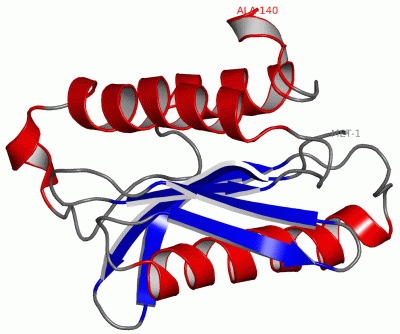
Image NMR Structure - manually
NMR Structure - manually  (Jmol Viewer)
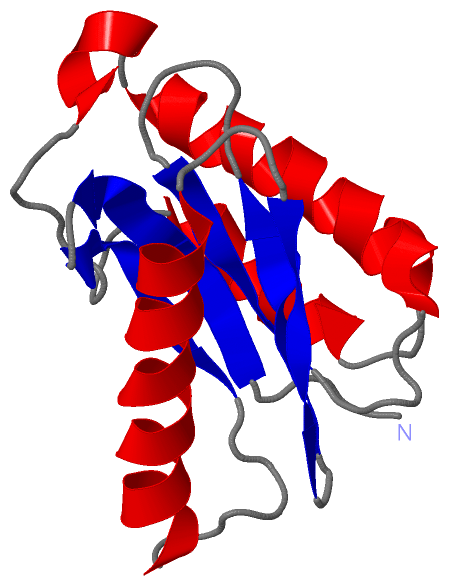
Image NMR Structure - model 1
NMR Structure - model 1  (Jmol Viewer)
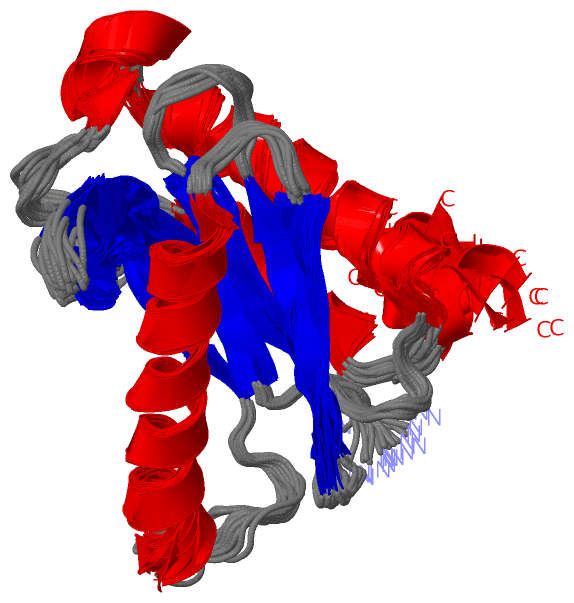
Image NMR Structure - all models
NMR Structure - all models  (Jmol Viewer)

(-) Description

Title :  SOLUTION STRUCTURE OF YKT6P (1-140)
 
Authors :  H. Tochio, M. M. K. Tsui, D. K. Banfield, M. Zhang
Date :  09 Apr 01  (Deposition) - 06 May 03  (Release) - 24 Feb 09  (Revision)
Method :  SOLUTION NMR
Resolution :  NOT APPLICABLE
Chains :  NMR Structure  :  A  (20x)
Keywords :  Snare, Membrane Protein (Keyword Search: [Gene Ontology, PubMed, Web (Google))
 
Reference :  H. Tochio, M. M. K. Tsui, D. K. Banfield, M. Zhang
An Autoinhibitory Mechanism For Nonsyntaxin Snare Proteins Revealed By The Structure Of Ykt6P
Science V. 293 698 2001
PubMed-ID: 11474112  |  Reference-DOI: 10.1126/SCIENCE.1062950
(for further references see the PDB file header)

(-) Compounds

Molecule 1 - YKT6P
    ChainsA
    EngineeredYES
    Expression SystemESCHERICHIA COLI
    Expression System Taxid562
    FragmentRESIDUES 1-140
    Organism CommonBAKER'S YEAST
    Organism ScientificSACCHAROMYCES CEREVISIAE
    Organism Taxid4932
    SynonymSYNAPTOBREVIN HOMOLOG 1

 Structural Features

(-) Chains, Units

  
NMR Structure (20x)

Summary Information (see also Sequences/Alignments below)

(-) Ligands, Modified Residues, Ions  (0, 0)

(no "Ligand,Modified Residues,Ions" information available for 1IOU)

(-) Sites  (0, 0)

(no "Site" information available for 1IOU)

(-) SS Bonds  (0, 0)

(no "SS Bond" information available for 1IOU)

(-) Cis Peptide Bonds  (0, 0)

(no "Cis Peptide Bond" information available for 1IOU)

 Sequence-Structure Mapping

(-) SAPs(SNPs)/Variants  (0, 0)

(no "SAP(SNP)/Variant" information available for 1IOU)

(-) PROSITE Motifs  (2, 2)

NMR Structure (2, 2)
 PROSITEUniProtKBPDB
No.IDACDescriptionIDLocationCountLocation
1LONGINPS50859 Longin domain profile.YKT6_YEAST7-129  1A:7-129
2V_SNAREPS50892 v-SNARE coiled-coil homology domain profile.YKT6_YEAST140-200  1A:140-140

(-) Exons   (1, 1)

NMR Structure (1, 1)
 ENSEMBLUniProtKBPDB
No.Transcript IDExonExon IDGenome LocationLengthIDLocationLengthCountLocationLength
1.1YKL196C1YKL196C.1XI:75539-74937603YKT6_YEAST1-2002001A:1-140140

(-) Sequences/Alignments

NMR Structure
   Reformat: Number of residues per line =  ('0' or empty: single-line sequence representation)
  Number of residues per labelling interval =   
  UniProt sequence: complete  aligned part    
   Show mapping: SCOP domains CATH domains Pfam domains Secondary structure (by author)
SAPs(SNPs) PROSITE motifs Exons
(details for a mapped element are shown in a popup box when the mouse pointer rests over it)
Chain A from PDB  Type:PROTEIN  Length:140
 aligned with YKT6_YEAST | P36015 from UniProtKB/Swiss-Prot  Length:200

    Alignment length:140
                                    10        20        30        40        50        60        70        80        90       100       110       120       130       140
           YKT6_YEAST     1 MRIYYIGVFRSGGEKALELSEVKDLSQFGFFERSSVGQFMTFFAETVASRTGAGQRQSIEEGNYIGHVYARSEGICGVLITDKEYPVRPAYTLLNKILDEYLVAHPKEEWADVTETNDALKMKQLDTYISKYQDPSQADA 140
               SCOP domains d1ioua_ A: Synaptobrevin homolog 1 ykt6                                                                                                      SCOP domains
               CATH domains 1iouA00 A:1-140  [code=3.30.450.50, no name defined]                                                                                         CATH domains
               Pfam domains -------------------------------------------------------------------------------------------------------------------------------------------- Pfam domains
         Sec.struct. author ....eeeeeeee..eeeeeeeee.......hhhhhhhhhhhhhhhhhhhhh....eeeeee..eeeeee......eeeee.....hhhhhhhhhhhhhhhhhhh.hhhhhh..........hhhhhhhhhhh...hhhhh Sec.struct. author
                 SAPs(SNPs) -------------------------------------------------------------------------------------------------------------------------------------------- SAPs(SNPs)
                    PROSITE ------LONGIN  PDB: A:7-129 UniProt: 7-129                                                                                        ----------V PROSITE
               Transcript 1 Exon 1.1  PDB: A:1-140 UniProt: 1-200 [INCOMPLETE]                                                                                           Transcript 1
                 1iou A   1 MRIYYIGVFRSGGEKALELSEVKDLSQFGFFERSSVGQFMTFFAETVASRTGAGERQSIEEGNYIGHVYARSEGICGVLITDKQYPVRPAYTLLNKILDEYLVAHPKEEWADVTETNDALKMKQLDTYISKYQDPSQADA 140
                                    10        20        30        40        50        60        70        80        90       100       110       120       130       140

   Legend:   → Mismatch (orange background)
  - → Gap (green background, '-', border residues have a numbering label)
    → Modified Residue (blue background, lower-case, 'x' indicates undefined single-letter code, labelled with number + name)
  x → Chemical Group (purple background, 'x', labelled with number + name, e.g. ACE or NH2)
  extra numbering lines below/above indicate numbering irregularities and modified residue names etc., number ends below/above '|'

 Classification and Annotation

(-) SCOP Domains  (1, 1)

NMR Structure

(-) CATH Domains  (1, 1)

NMR Structure
(-)
Class: Alpha Beta (26913)

(-) Pfam Domains  (0, 0)

(no "Pfam Domain" information available for 1IOU)

(-) Gene Ontology  (19, 19)

NMR Structure(hide GO term definitions)
Chain A   (YKT6_YEAST | P36015)
molecular function
    GO:0005484    SNAP receptor activity    Acting as a marker to identify a membrane and interacting selectively with one or more SNAREs on another membrane to mediate membrane fusion.
    GO:0000149    SNARE binding    Interacting selectively and non-covalently with a SNARE (soluble N-ethylmaleimide-sensitive factor attached protein receptor) protein.
    GO:0016409    palmitoyltransferase activity    Catalysis of the transfer of a palmitoyl (CH3-[CH2]14-CO-) group to an acceptor molecule.
    GO:0005515    protein binding    Interacting selectively and non-covalently with any protein or protein complex (a complex of two or more proteins that may include other nonprotein molecules).
    GO:0016740    transferase activity    Catalysis of the transfer of a group, e.g. a methyl group, glycosyl group, acyl group, phosphorus-containing, or other groups, from one compound (generally regarded as the donor) to another compound (generally regarded as the acceptor). Transferase is the systematic name for any enzyme of EC class 2.
biological process
    GO:0006888    ER to Golgi vesicle-mediated transport    The directed movement of substances from the endoplasmic reticulum (ER) to the Golgi, mediated by COP II vesicles. Small COP II coated vesicles form from the ER and then fuse directly with the cis-Golgi. Larger structures are transported along microtubules to the cis-Golgi.
    GO:0006887    exocytosis    A process of secretion by a cell that results in the release of intracellular molecules (e.g. hormones, matrix proteins) contained within a membrane-bounded vesicle. Exocytosis can occur either by full fusion, when the vesicle collapses into the plasma membrane, or by a kiss-and-run mechanism that involves the formation of a transient contact, a pore, between a granule (for exemple of chromaffin cells) and the plasma membrane. The latter process most of the time leads to only partial secretion of the granule content. Exocytosis begins with steps that prepare vesicles for fusion with the membrane (tethering and docking) and ends when molecules are secreted from the cell.
    GO:0006891    intra-Golgi vesicle-mediated transport    The directed movement of substances within the Golgi, mediated by small transport vesicles. These either fuse with the cis-Golgi or with each other to form the membrane stacks known as the cis-Golgi reticulum (network).
    GO:0006810    transport    The directed movement of substances (such as macromolecules, small molecules, ions) or cellular components (such as complexes and organelles) into, out of or within a cell, or between cells, or within a multicellular organism by means of some agent such as a transporter, pore or motor protein.
    GO:0042144    vacuole fusion, non-autophagic    The fusion of two vacuole membranes to form a single vacuole.
    GO:0006906    vesicle fusion    Fusion of the membrane of a transport vesicle with its target membrane.
    GO:0016192    vesicle-mediated transport    A cellular transport process in which transported substances are moved in membrane-bounded vesicles; transported substances are enclosed in the vesicle lumen or located in the vesicle membrane. The process begins with a step that directs a substance to the forming vesicle, and includes vesicle budding and coating. Vesicles are then targeted to, and fuse with, an acceptor membrane.
cellular component
    GO:0005794    Golgi apparatus    A compound membranous cytoplasmic organelle of eukaryotic cells, consisting of flattened, ribosome-free vesicles arranged in a more or less regular stack. The Golgi apparatus differs from the endoplasmic reticulum in often having slightly thicker membranes, appearing in sections as a characteristic shallow semicircle so that the convex side (cis or entry face) abuts the endoplasmic reticulum, secretory vesicles emerging from the concave side (trans or exit face). In vertebrate cells there is usually one such organelle, while in invertebrates and plants, where they are known usually as dictyosomes, there may be several scattered in the cytoplasm. The Golgi apparatus processes proteins produced on the ribosomes of the rough endoplasmic reticulum; such processing includes modification of the core oligosaccharides of glycoproteins, and the sorting and packaging of proteins for transport to a variety of cellular locations. Three different regions of the Golgi are now recognized both in terms of structure and function: cis, in the vicinity of the cis face, trans, in the vicinity of the trans face, and medial, lying between the cis and trans regions.
    GO:0031201    SNARE complex    A protein complex involved in membrane fusion; a stable ternary complex consisting of a four-helix bundle, usually formed from one R-SNARE and three Q-SNAREs with an ionic layer sandwiched between hydrophobic layers. One well-characterized example is the neuronal SNARE complex formed of synaptobrevin 2, syntaxin 1a, and SNAP-25.
    GO:0005768    endosome    A vacuole to which materials ingested by endocytosis are delivered.
    GO:0000324    fungal-type vacuole    A vacuole that has both lytic and storage functions. The fungal vacuole is a large, membrane-bounded organelle that functions as a reservoir for the storage of small molecules (including polyphosphate, amino acids, several divalent cations (e.g. calcium), other ions, and other small molecules) as well as being the primary compartment for degradation. It is an acidic compartment, containing an ensemble of acid hydrolases. At least in S. cerevisiae, there are indications that the morphology of the vacuole is variable and correlated with the cell cycle, with logarithmically growing cells having a multilobed, reticulated vacuole, while stationary phase cells contain a single large structure.
    GO:0016021    integral component of membrane    The component of a membrane consisting of the gene products and protein complexes having at least some part of their peptide sequence embedded in the hydrophobic region of the membrane.
    GO:0016020    membrane    A lipid bilayer along with all the proteins and protein complexes embedded in it an attached to it.
    GO:0005886    plasma membrane    The membrane surrounding a cell that separates the cell from its external environment. It consists of a phospholipid bilayer and associated proteins.

 Visualization

(-) Interactive Views

NMR Structure
  Complete Structure
    Jena3D(integrated viewing of ligand, site, SAP, PROSITE, SCOP information)
    WebMol | AstexViewer[tm]@PDBe
(Java Applets, require no local installation except for Java; loading may be slow)
    STRAP
(Java WebStart application, automatic local installation, requires Java; full application with system access!)
    RasMol
(require local installation)
    Molscript (VRML)
(requires installation of a VRML viewer; select preferred view via VRML and generate a mono or stereo PDF format file)
 
  Ligands, Modified Residues, Ions
(no "Ligands, Modified Residues, Ions" information available for 1iou)
 
  Sites
(no "Sites" information available for 1iou)
 
  Cis Peptide Bonds
(no "Cis Peptide Bonds" information available for 1iou)
 

(-) Still Images

Jmol
  protein: cartoon or spacefill or dots and stick; nucleic acid: cartoon and stick; ligands: spacefill; active site: stick
Molscript
  protein, nucleic acid: cartoon; ligands: spacefill; active site: ball and stick

 Databases and Analysis Tools

(-) Databases

Access by PDB/NDB ID
  1iou
    Family and Domain InformationProDom | SYSTERS
    General Structural InformationGlycoscienceDB | MMDB | NDB | OCA | PDB | PDBe | PDBj | PDBsum | PDBWiki | PQS | PROTEOPEDIA
    Orientation in MembranesOPM
    Protein SurfaceSURFACE
    Secondary StructureDSSP (structure derived) | HSSP (homology derived)
    Structural GenomicsGeneCensus
    Structural NeighboursCE | VAST
    Structure ClassificationCATH | Dali | SCOP
    Validation and Original DataBMRB Data View | BMRB Restraints Grid | EDS | PROCHECK | RECOORD | WHAT_CHECK
 
Access by UniProt ID/Accession number
  YKT6_YEAST | P36015
    Comparative Protein Structure ModelsModBase
    Genomic InformationEnsembl
    Protein-protein InteractionDIP
    Sequence, Family and Domain InformationInterPro | Pfam | SMART | UniProtKB/SwissProt
 
Access by Enzyme Classificator   (EC Number)
  (no 'Enzyme Classificator' available)
    General Enzyme InformationBRENDA | EC-PDB | Enzyme | IntEnz
    PathwayKEGG | MetaCyc
 
Access by Disease Identifier   (MIM ID)
  (no 'MIM ID' available)
    Disease InformationOMIM
 
Access by GenAge ID
  (no 'GenAge ID' available)
    Age Related InformationGenAge

(-) Analysis Tools

Access by PDB/NDB ID
    Domain InformationXDom
    Interatomic Contacts of Structural UnitsCSU
    Ligand-protein ContactsLPC
    Protein CavitiescastP
    Sequence and Secondary StructurePDBCartoon
    Structure AlignmentSTRAP(Java WebStart application, automatic local installation, requires Java; full application with system access!)
    Structure and Sequence BrowserSTING
 
Access by UniProt ID/Accession number
  YKT6_YEAST | P36015
    Protein Disorder PredictionDisEMBL | FoldIndex | GLOBPLOT (for more information see DisProt)

 Related Entries

(-) Entries Sharing at Least One Protein Chain (UniProt ID)

UniProtKB/Swiss-Prot
        YKT6_YEAST | P360151h8m 3bw6

(-) Related Entries Specified in the PDB File

1h8m 1H8M IS THE MINIMIZED AVERAGE STRUCTURE