Show PDB file:   
         Plain Text   HTML   (compressed file size)
QuickSearch:   
by PDB,NDB,UniProt,PROSITE Code or Search Term(s)  
(-)Asym.Unit - manually
(-)Asymmetric Unit
(-)Asym. Unit - sites
(-)Biological Unit 1
(-)Biol. Unit 1 - sites
(-)Biological Unit 2
collapse expand < >
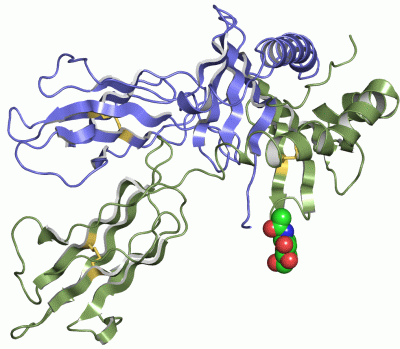
Image Asym.Unit - manually
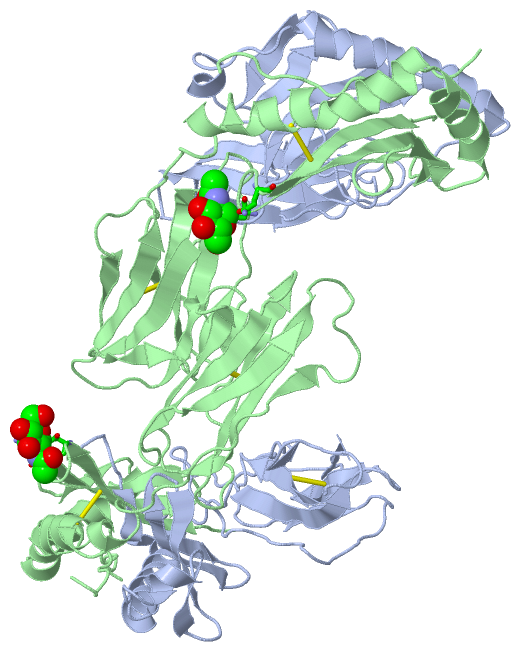
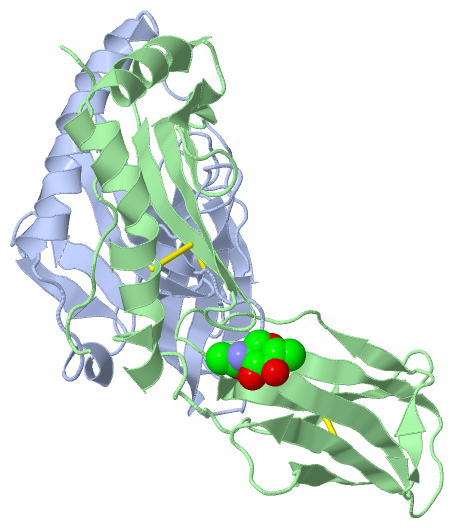
Asym.Unit - manually  (Jmol Viewer)
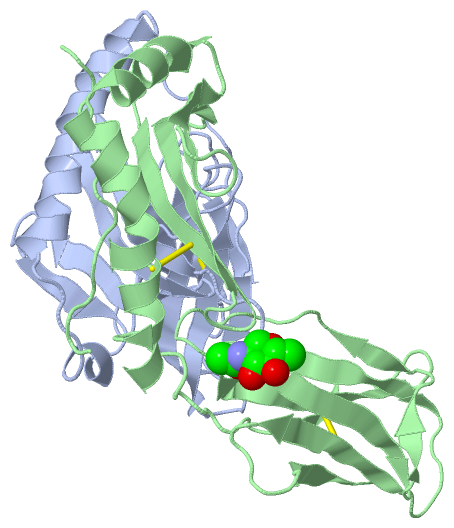
Image Asymmetric Unit
Asymmetric Unit  (Jmol Viewer)
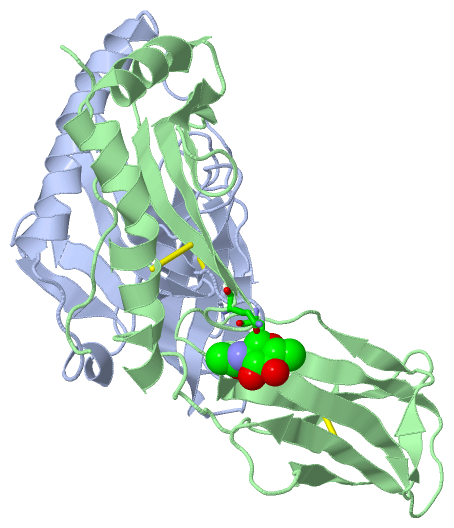
Image Asym. Unit - sites
Asym. Unit - sites  (Jmol Viewer)
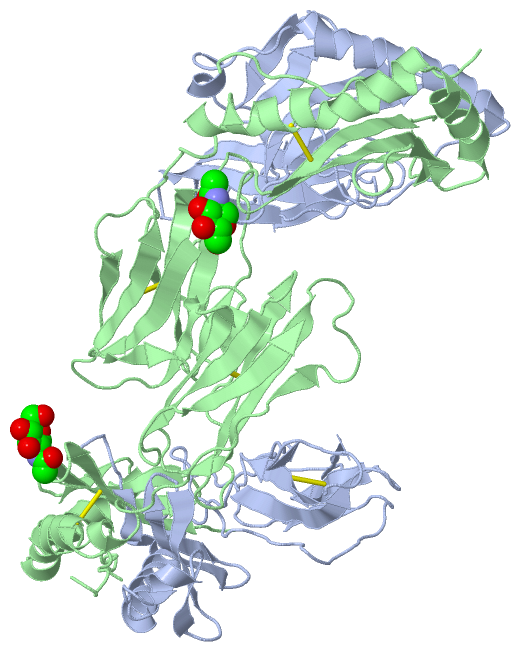
Image Biological Unit 1
Biological Unit 1  (Jmol Viewer)
Image Biol. Unit 1 - sites
Biol. Unit 1 - sites  (Jmol Viewer)
Image Biological Unit 2
Biological Unit 2  (Jmol Viewer)

(-) Description

Title :  CLASS II MHC I-AD IN COMPLEX WITH OVALBUMIN PEPTIDE 323-339
 
Authors :  C. A. Scott, P. A. Peterson, L. Teyton, I. A. Wilson
Date :  13 Mar 98  (Deposition) - 04 Nov 98  (Release) - 13 Jul 11  (Revision)
Method :  X-RAY DIFFRACTION
Resolution :  2.60
Chains :  Asym. Unit :  A,B
Biol. Unit 1:  A,B  (2x)
Biol. Unit 2:  A,B  (1x)
Keywords :  Mhc Ii, Class Ii Mhc, I-A, Ovalbumin Peptide (Keyword Search: [Gene Ontology, PubMed, Web (Google))
 
Reference :  C. A. Scott, P. A. Peterson, L. Teyton, I. A. Wilson
Crystal Structures Of Two I-Ad-Peptide Complexes Reveal Tha High Affinity Can Be Achieved Without Large Anchor Residues
Immunity V. 8 319 1998
PubMed-ID: 9529149  |  Reference-DOI: 10.1016/S1074-7613(00)80537-3
(for further references see the PDB file header)

(-) Compounds

Molecule 1 - MHC CLASS II I-AD
    Cell LineS2
    ChainsA
    EngineeredYES
    Expression SystemDROSOPHILA MELANOGASTER
    Expression System Cell LineS2
    Expression System CommonFRUIT FLY
    Expression System Taxid7227
    OrganEGG
    Organism CommonHOUSE MOUSE
    Organism ScientificMUS MUSCULUS
    Organism Taxid10090
    Other DetailsBOTH THE A AND B CHAINS HAVE AN 8-RESIDUE (SSADLVPR) PEPTIDE BOUND TO THE C-TERMINUS. THE B CHAIN ALSO HAS A 24-RESIDUE PEPTIDE CONSISTING OF A 2-RESIDUE (RG) SIGNAL SEQUENCE, RESIDUES 323 - 339 OF HEN EGG OVALBUMIN AND A 6-RESIDUE (GSGSGS) LINKER, COVALENTLY BONDED TO THE N-TERMINUS.
    Other Details - SourceHETEROLOGOUS EXPRESSION
    StrainBALB/C
 
Molecule 2 - MHC CLASS II I-AD
    Cell LineS2
    ChainsB
    EngineeredYES
    Expression SystemDROSOPHILA MELANOGASTER
    Expression System Cell LineS2
    Expression System CommonFRUIT FLY
    Expression System Taxid7227
    OrganEGG
    Organism CommonHOUSE MOUSE
    Organism ScientificMUS MUSCULUS
    Organism Taxid10090
    Other DetailsBOTH THE A AND B CHAINS HAVE AN 8-RESIDUE (SSADLVPR) PEPTIDE BOUND TO THE C-TERMINUS. THE B CHAIN ALSO HAS A 24-RESIDUE PEPTIDE CONSISTING OF A 2-RESIDUE (RG) SIGNAL SEQUENCE, RESIDUES 323 - 339 OF HEN EGG OVALBUMIN AND A 6-RESIDUE (GSGSGS) LINKER, COVALENTLY BONDED TO THE N-TERMINUS.
    Other Details - SourceHETEROLOGOUS EXPRESSION
    StrainBALB/C

 Structural Features

(-) Chains, Units

  12
Asymmetric Unit AB
Biological Unit 1 (2x)AB
Biological Unit 2 (1x)AB

Summary Information (see also Sequences/Alignments below)

(-) Ligands, Modified Residues, Ions  (1, 1)

Asymmetric Unit (1, 1)
No.NameCountTypeFull Name
1NAG1Ligand/IonN-ACETYL-D-GLUCOSAMINE
Biological Unit 1 (1, 2)
No.NameCountTypeFull Name
1NAG2Ligand/IonN-ACETYL-D-GLUCOSAMINE
Biological Unit 2 (1, 1)
No.NameCountTypeFull Name
1NAG1Ligand/IonN-ACETYL-D-GLUCOSAMINE

(-) Sites  (1, 1)

Asymmetric Unit (1, 1)
No.NameEvidenceResiduesDescription
1AC1SOFTWAREASN B:19 , GLN B:22BINDING SITE FOR RESIDUE NAG B 495

(-) SS Bonds  (3, 3)

Asymmetric Unit
No.Residues
1A:107 -A:163
2B:15 -B:79
3B:117 -B:173

(-) Cis Peptide Bonds  (2, 2)

Asymmetric Unit
No.Residues
1Phe A:113 -Pro A:114
2Tyr B:123 -Pro B:124

 Sequence-Structure Mapping

(-) SAPs(SNPs)/Variants  (0, 0)

(no "SAP(SNP)/Variant" information available for 1IAO)

(-) PROSITE Motifs  (1, 2)

Asymmetric Unit (1, 2)
 PROSITEUniProtKBPDB
No.IDACDescriptionIDLocationCountLocation
1IG_MHCPS00290 Immunoglobulins and major histocompatibility complex proteins signature.HA2D_MOUSE188-194  1A:161-167
HB2D_MOUSE199-205  1B:171-177
Biological Unit 1 (1, 4)
 PROSITEUniProtKBPDB
No.IDACDescriptionIDLocationCountLocation
1IG_MHCPS00290 Immunoglobulins and major histocompatibility complex proteins signature.HA2D_MOUSE188-194  2A:161-167
HB2D_MOUSE199-205  2B:171-177
Biological Unit 2 (1, 2)
 PROSITEUniProtKBPDB
No.IDACDescriptionIDLocationCountLocation
1IG_MHCPS00290 Immunoglobulins and major histocompatibility complex proteins signature.HA2D_MOUSE188-194  1A:161-167
HB2D_MOUSE199-205  1B:171-177

(-) Exons   (0, 0)

(no "Exon" information available for 1IAO)

(-) Sequences/Alignments

Asymmetric Unit
   Reformat: Number of residues per line =  ('0' or empty: single-line sequence representation)
  Number of residues per labelling interval =   
  UniProt sequence: complete  aligned part    
   Show mapping: SCOP domains CATH domains Pfam domains Secondary structure (by author)
SAPs(SNPs) PROSITE motifs Exons
(details for a mapped element are shown in a popup box when the mouse pointer rests over it)
Chain A from PDB  Type:PROTEIN  Length:178
 aligned with HA2D_MOUSE | P04228 from UniProtKB/Swiss-Prot  Length:256

    Alignment length:178
                                    37        47        57        67        77        87        97       107       117       127       137       147       157       167       177       187       197        
          HA2D_MOUSE     28 EADHVGFYGTTVYQSPGDIGQYTHEFDGDELFYVDLDKKKTVWRLPEFGQLILFEPQGGLQNIAAEKHNLGILTKRSNFTPATNEAPQATVFPKSPVLLGQPNTLICFVDNIFPPVINITWLRNSKSVTDGVYETSFLVNRDHSFHKLSYLTFIPSDDDIYDCKVEHWGLEEPVLKHW  205
               SCOP domains d1iaoa2 A:1-82 Class II MHC alpha chain, N-terminal domain                        d1iaoa1 A:83-178 Class II MHC alpha chain, C-terminal domain                                     SCOP domains
               CATH domains -1iaoA01 A:2-81                                                                  1iaoA02 A:82-178 Immunoglobulins                                                                  CATH domains
               Pfam domains ---------------------------------------------------------------------------------------------------------------------------------------------------------------------------------- Pfam domains
         Sec.struct. author .....eeeeeeeee....eeeeeeee..eeeeeee....eeee..hhhh......hhhhhhhhhhhhhhhhhhhhh..............eee........eeeeeeee........eeee.........................eeeeeeee......eeeeee.......eeeee Sec.struct. author
                 SAPs(SNPs) ---------------------------------------------------------------------------------------------------------------------------------------------------------------------------------- SAPs(SNPs)
                    PROSITE ----------------------------------------------------------------------------------------------------------------------------------------------------------------IG_MHC ----------- PROSITE
                 Transcript ---------------------------------------------------------------------------------------------------------------------------------------------------------------------------------- Transcript
                1iao A    1 EADHVGFYGTTVYQSPGDIGQYTHEFDGDELFYVDLDKKKTVWRLPEFGQLILFEPQGGLQNIAAEKHNLGILTKRSNFTPATNEAPQATVFPKSPVLLGQPNTLICFVDNIFPPVINITWLRNSKSVTDGVYETSFLVNRDHSFHKLSYLTFIPSDDDIYDCKVEHWGLEEPVLKHW  178
                                    10        20        30        40        50        60        70        80        90       100       110       120       130       140       150       160       170        

Chain B from PDB  Type:PROTEIN  Length:200
 aligned with HB2D_MOUSE | P01921 from UniProtKB/Swiss-Prot  Length:265

    Alignment length:213
                                    16        26        36        46        56        66        76        86        96       106       116       126       136       146       156       166       176       186       196       206       216   
          HB2D_MOUSE      7 SLLLSAAVVVLMVLSSPRTEGGNSERHFVVQFKGECYYTNGTQRIRLVTRYIYNREEYVRYDSDVGEYRAVTELGRPDAEYWNSQPEILERTRAEVDTACRHNYEGPETSTSLRRLEQPNVAISLSRTEALNHHNTLVCSVTDFYPAKIKVRWFRNGQEETVGVSSTQLIRNGDWTFQVLVMLEMTPHQGEVYTCHVEHPSLKSPITVEWRAQ  219
               SCOP domains --------------------------d1iaob2 B:6-93 Class II MHC beta chain, N-terminal domain                               d1iaob1 B:94-188 Class II MHC beta chain, C-terminal domain                                     --- SCOP domains
               CATH domains -- -----           -------1iaoB01 B:6-93 Class II Histocompatibility Antigen, M Beta Chain; Chain B, domain 1     1iaoB02 B:94-2T Immunoglobulins                                                                     CATH domains
               Pfam domains --------------------------------------------------------------------------------------------------------------------------------------------------------------------------------------------------------------------- Pfam domains
         Sec.struct. author ..-.....-----------..........eeeeeeeeee....eeeeeeeeee..eeeeeee.....eee..hhhhhhhhhhhh.hhhhhhhhhhhhh.hhhhhh..hhh............eee.........eeeeeeeeee....eeeeeee..eee...eee..........eeeeeeeee......eeeeeeee......eeeee-e. Sec.struct. author
                 SAPs(SNPs) --------------------------------------------------------------------------------------------------------------------------------------------------------------------------------------------------------------------- SAPs(SNPs)
                    PROSITE ------------------------------------------------------------------------------------------------------------------------------------------------------------------------------------------------IG_MHC -------------- PROSITE
                 Transcript --------------------------------------------------------------------------------------------------------------------------------------------------------------------------------------------------------------------- Transcript
                1iao B   1S RG-ISQAV-----------HAAHAEIHFVVQFKGECYYTNGTQRIRLVTRYIYNREEYVRYDSDVGEYRAVTELGRPDAEYWNSQPEILDRTRAEVDTACRHNYEGPETSTSLRRLEQPNVAISLSRTEALNHHNTLVCSVTDFYPAKIKVRWFRNGQEETVGVSSTQLIRNGDWTFQVLVMLEMTPHQGEVYTCHVEHPSLKSPITVEW-SS   2T
                            || ||||| -      328P|||||||  9        19        29        39        49        59        69        79        89     |  98       108       118       128       138       148       158       168       178       188 ||
                           1S| |||||        328P|||||||                                                                                      94A                                                                                           188 ||
                            2S |||||         329P||||||                                                                                                                                                                                       1T|
                            323P||||          330P|||||                                                                                                                                                                                        2T
                             324P|||           331P||||                                                                                                                                                                                          
                              325P||            332P|||                                                                                                                                                                                          
                               326P|             333P||                                                                                                                                                                                          
                                327P              334P|                                                                                                                                                                                          
                                                      6                                                                                                                                                                                          

   Legend:   → Mismatch (orange background)
  - → Gap (green background, '-', border residues have a numbering label)
    → Modified Residue (blue background, lower-case, 'x' indicates undefined single-letter code, labelled with number + name)
  x → Chemical Group (purple background, 'x', labelled with number + name, e.g. ACE or NH2)
  extra numbering lines below/above indicate numbering irregularities and modified residue names etc., number ends below/above '|'

 Classification and Annotation

(-) SCOP Domains  (4, 4)

Asymmetric Unit

(-) CATH Domains  (2, 4)

Asymmetric Unit
(-)
Class: Alpha Beta (26913)
(-)
Class: Mainly Beta (13760)

(-) Pfam Domains  (0, 0)

(no "Pfam Domain" information available for 1IAO)

(-) Gene Ontology  (21, 34)

Asymmetric Unit(hide GO term definitions)
Chain A   (HA2D_MOUSE | P04228)
molecular function
    GO:0042605    peptide antigen binding    Interacting selectively and non-covalently with an antigen peptide.
    GO:0005515    protein binding    Interacting selectively and non-covalently with any protein or protein complex (a complex of two or more proteins that may include other nonprotein molecules).
biological process
    GO:0019882    antigen processing and presentation    The process in which an antigen-presenting cell expresses antigen (peptide or lipid) on its cell surface in association with an MHC protein complex.
    GO:0019886    antigen processing and presentation of exogenous peptide antigen via MHC class II    The process in which an antigen-presenting cell expresses a peptide antigen of exogenous origin on its cell surface in association with an MHC class II protein complex. The peptide antigen is typically, but not always, processed from a whole protein.
    GO:0048002    antigen processing and presentation of peptide antigen    The process in which an antigen-presenting cell expresses peptide antigen in association with an MHC protein complex on its cell surface, including proteolysis and transport steps for the peptide antigen both prior to and following assembly with the MHC protein complex. The peptide antigen is typically, but not always, processed from an endogenous or exogenous protein.
    GO:0002504    antigen processing and presentation of peptide or polysaccharide antigen via MHC class II    The process in which an antigen-presenting cell expresses antigen (peptide or polysaccharide) on its cell surface in association with an MHC class II protein complex.
    GO:0006955    immune response    Any immune system process that functions in the calibrated response of an organism to a potential internal or invasive threat.
    GO:0002376    immune system process    Any process involved in the development or functioning of the immune system, an organismal system for calibrated responses to potential internal or invasive threats.
    GO:0045582    positive regulation of T cell differentiation    Any process that activates or increases the frequency, rate or extent of T cell differentiation.
cellular component
    GO:0042613    MHC class II protein complex    A transmembrane protein complex composed of an MHC class II alpha and MHC class II beta chain, and with or without a bound peptide or polysaccharide antigen.
    GO:0009897    external side of plasma membrane    The leaflet of the plasma membrane that faces away from the cytoplasm and any proteins embedded or anchored in it or attached to its surface.
    GO:0016021    integral component of membrane    The component of a membrane consisting of the gene products and protein complexes having at least some part of their peptide sequence embedded in the hydrophobic region of the membrane.
    GO:0005764    lysosome    A small lytic vacuole that has cell cycle-independent morphology and is found in most animal cells and that contains a variety of hydrolases, most of which have their maximal activities in the pH range 5-6. The contained enzymes display latency if properly isolated. About 40 different lysosomal hydrolases are known and lysosomes have a great variety of morphologies and functions.
    GO:0016020    membrane    A lipid bilayer along with all the proteins and protein complexes embedded in it an attached to it.
    GO:0005886    plasma membrane    The membrane surrounding a cell that separates the cell from its external environment. It consists of a phospholipid bilayer and associated proteins.

Chain B   (HB2D_MOUSE | P01921)
molecular function
    GO:0042605    peptide antigen binding    Interacting selectively and non-covalently with an antigen peptide.
    GO:0005515    protein binding    Interacting selectively and non-covalently with any protein or protein complex (a complex of two or more proteins that may include other nonprotein molecules).
biological process
    GO:0019882    antigen processing and presentation    The process in which an antigen-presenting cell expresses antigen (peptide or lipid) on its cell surface in association with an MHC protein complex.
    GO:0019886    antigen processing and presentation of exogenous peptide antigen via MHC class II    The process in which an antigen-presenting cell expresses a peptide antigen of exogenous origin on its cell surface in association with an MHC class II protein complex. The peptide antigen is typically, but not always, processed from a whole protein.
    GO:0048002    antigen processing and presentation of peptide antigen    The process in which an antigen-presenting cell expresses peptide antigen in association with an MHC protein complex on its cell surface, including proteolysis and transport steps for the peptide antigen both prior to and following assembly with the MHC protein complex. The peptide antigen is typically, but not always, processed from an endogenous or exogenous protein.
    GO:0002504    antigen processing and presentation of peptide or polysaccharide antigen via MHC class II    The process in which an antigen-presenting cell expresses antigen (peptide or polysaccharide) on its cell surface in association with an MHC class II protein complex.
    GO:0002455    humoral immune response mediated by circulating immunoglobulin    An immune response dependent upon secreted immunoglobulin. An example of this process is found in Mus musculus.
    GO:0006955    immune response    Any immune system process that functions in the calibrated response of an organism to a potential internal or invasive threat.
    GO:0002376    immune system process    Any process involved in the development or functioning of the immune system, an organismal system for calibrated responses to potential internal or invasive threats.
    GO:0002381    immunoglobulin production involved in immunoglobulin mediated immune response    The appearance of immunoglobulin due to biosynthesis or secretion following a cellular stimulus during an immune response, resulting in an increase in its intracellular or extracellular levels.
cellular component
    GO:0005794    Golgi apparatus    A compound membranous cytoplasmic organelle of eukaryotic cells, consisting of flattened, ribosome-free vesicles arranged in a more or less regular stack. The Golgi apparatus differs from the endoplasmic reticulum in often having slightly thicker membranes, appearing in sections as a characteristic shallow semicircle so that the convex side (cis or entry face) abuts the endoplasmic reticulum, secretory vesicles emerging from the concave side (trans or exit face). In vertebrate cells there is usually one such organelle, while in invertebrates and plants, where they are known usually as dictyosomes, there may be several scattered in the cytoplasm. The Golgi apparatus processes proteins produced on the ribosomes of the rough endoplasmic reticulum; such processing includes modification of the core oligosaccharides of glycoproteins, and the sorting and packaging of proteins for transport to a variety of cellular locations. Three different regions of the Golgi are now recognized both in terms of structure and function: cis, in the vicinity of the cis face, trans, in the vicinity of the trans face, and medial, lying between the cis and trans regions.
    GO:0042613    MHC class II protein complex    A transmembrane protein complex composed of an MHC class II alpha and MHC class II beta chain, and with or without a bound peptide or polysaccharide antigen.
    GO:0005769    early endosome    A membrane-bounded organelle that receives incoming material from primary endocytic vesicles that have been generated by clathrin-dependent and clathrin-independent endocytosis; vesicles fuse with the early endosome to deliver cargo for sorting into recycling or degradation pathways.
    GO:0009897    external side of plasma membrane    The leaflet of the plasma membrane that faces away from the cytoplasm and any proteins embedded or anchored in it or attached to its surface.
    GO:0016021    integral component of membrane    The component of a membrane consisting of the gene products and protein complexes having at least some part of their peptide sequence embedded in the hydrophobic region of the membrane.
    GO:0005622    intracellular    The living contents of a cell; the matter contained within (but not including) the plasma membrane, usually taken to exclude large vacuoles and masses of secretory or ingested material. In eukaryotes it includes the nucleus and cytoplasm.
    GO:0016020    membrane    A lipid bilayer along with all the proteins and protein complexes embedded in it an attached to it.
    GO:0005771    multivesicular body    A type of endosome in which regions of the limiting endosomal membrane invaginate to form internal vesicles; membrane proteins that enter the internal vesicles are sequestered from the cytoplasm.
    GO:0005886    plasma membrane    The membrane surrounding a cell that separates the cell from its external environment. It consists of a phospholipid bilayer and associated proteins.

 Visualization

(-) Interactive Views

Asymmetric Unit
  Complete Structure
    Jena3D(integrated viewing of ligand, site, SAP, PROSITE, SCOP information)
    WebMol | AstexViewer[tm]@PDBe
(Java Applets, require no local installation except for Java; loading may be slow)
    STRAP
(Java WebStart application, automatic local installation, requires Java; full application with system access!)
    RasMol
(require local installation)
    Molscript (VRML)
(requires installation of a VRML viewer; select preferred view via VRML and generate a mono or stereo PDF format file)
 
  Ligands, Modified Residues, Ions
    NAG  [ RasMol | Jena3D ]  +environment [ RasMol | Jena3D ]
 
  Sites
    AC1  [ RasMol ]  +environment [ RasMol ]
 
  Cis Peptide Bonds
    Phe A:113 - Pro A:114   [ RasMol ]  
    Tyr B:123 - Pro B:124   [ RasMol ]  
 
Biological Units
  Complete Structure
    Biological Unit 1  [ Jena3D ]
    Biological Unit 2  [ Jena3D ]

(-) Still Images

Jmol
  protein: cartoon or spacefill or dots and stick; nucleic acid: cartoon and stick; ligands: spacefill; active site: stick
Molscript
  protein, nucleic acid: cartoon; ligands: spacefill; active site: ball and stick

 Databases and Analysis Tools

(-) Databases

Access by PDB/NDB ID
  1iao
    Family and Domain InformationProDom | SYSTERS
    General Structural InformationGlycoscienceDB | MMDB | NDB | OCA | PDB | PDBe | PDBj | PDBsum | PDBWiki | PQS | PROTEOPEDIA
    Orientation in MembranesOPM
    Protein SurfaceSURFACE
    Secondary StructureDSSP (structure derived) | HSSP (homology derived)
    Structural GenomicsGeneCensus
    Structural NeighboursCE | VAST
    Structure ClassificationCATH | Dali | SCOP
    Validation and Original DataBMRB Data View | BMRB Restraints Grid | EDS | PROCHECK | RECOORD | WHAT_CHECK
 
Access by UniProt ID/Accession number
  HA2D_MOUSE | P04228
    Comparative Protein Structure ModelsModBase
    Genomic InformationEnsembl
    Protein-protein InteractionDIP
    Sequence, Family and Domain InformationInterPro | Pfam | SMART | UniProtKB/SwissProt
  HB2D_MOUSE | P01921
    Comparative Protein Structure ModelsModBase
    Genomic InformationEnsembl
    Protein-protein InteractionDIP
    Sequence, Family and Domain InformationInterPro | Pfam | SMART | UniProtKB/SwissProt
 
Access by Enzyme Classificator   (EC Number)
  (no 'Enzyme Classificator' available)
    General Enzyme InformationBRENDA | EC-PDB | Enzyme | IntEnz
    PathwayKEGG | MetaCyc
 
Access by Disease Identifier   (MIM ID)
  (no 'MIM ID' available)
    Disease InformationOMIM
 
Access by GenAge ID
  (no 'GenAge ID' available)
    Age Related InformationGenAge

(-) Analysis Tools

Access by PDB/NDB ID
    Domain InformationXDom
    Interatomic Contacts of Structural UnitsCSU
    Ligand-protein ContactsLPC
    Protein CavitiescastP
    Sequence and Secondary StructurePDBCartoon
    Structure AlignmentSTRAP(Java WebStart application, automatic local installation, requires Java; full application with system access!)
    Structure and Sequence BrowserSTING
 
Access by UniProt ID/Accession number
  HA2D_MOUSE | P04228
    Protein Disorder PredictionDisEMBL | FoldIndex | GLOBPLOT (for more information see DisProt)
  HB2D_MOUSE | P01921
    Protein Disorder PredictionDisEMBL | FoldIndex | GLOBPLOT (for more information see DisProt)

 Related Entries

(-) Entries Sharing at Least One Protein Chain (UniProt ID)

UniProtKB/Swiss-Prot
        HA2D_MOUSE | P042281es0 1f3j 2iad 3cup 3mbe 5dmk
        HB2D_MOUSE | P019212iad

(-) Related Entries Specified in the PDB File

(no "Related Entries Specified in the PDB File" available for 1IAO)