Show PDB file:   
         Plain Text   HTML   (compressed file size)
QuickSearch:   
by PDB,NDB,UniProt,PROSITE Code or Search Term(s)  
(-)Asymmetric Unit
(-)Asym. Unit - sites
(-)Biological Unit 1
(-)Biol. Unit 1 - sites
collapse expand < >
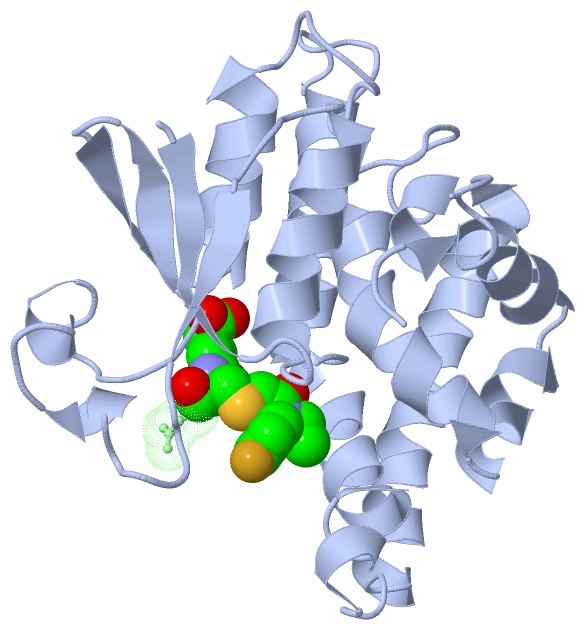
Image Asymmetric Unit
Asymmetric Unit  (Jmol Viewer)
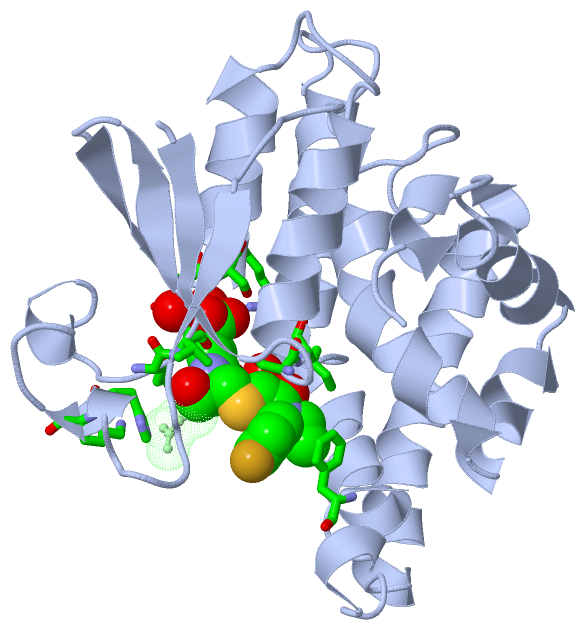
Image Asym. Unit - sites
Asym. Unit - sites  (Jmol Viewer)
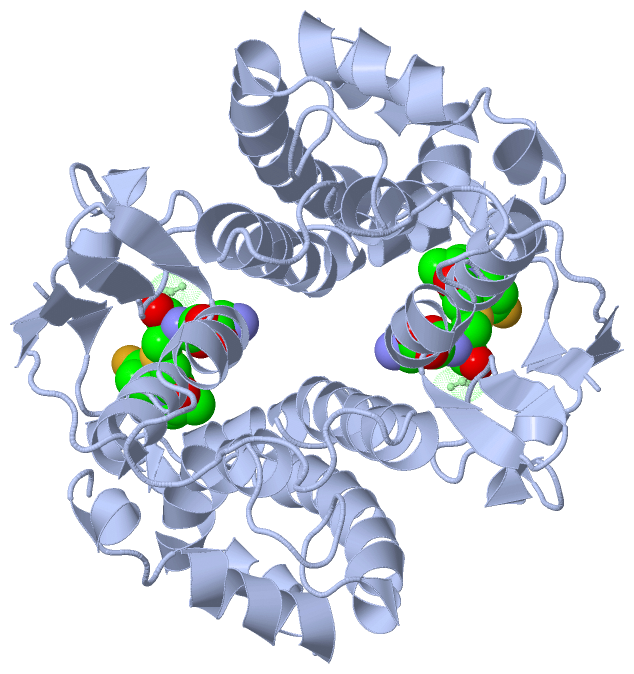
Image Biological Unit 1
Biological Unit 1  (Jmol Viewer)
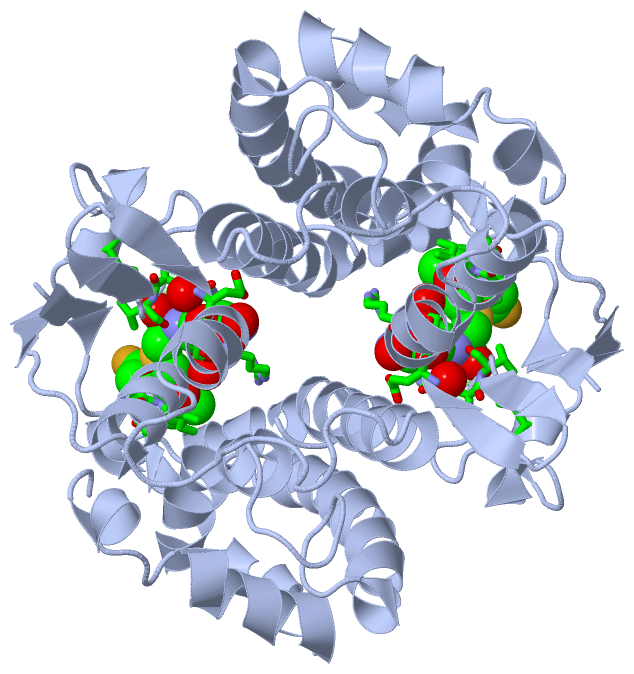
Image Biol. Unit 1 - sites
Biol. Unit 1 - sites  (Jmol Viewer)

(-) Description

Title :  GLUTATHIONE S-TRANSFERASE IN COMPLEX WITH HERBICIDE
 
Authors :  L. Prade, R. Huber, B. Bieseler
Date :  14 Oct 98  (Deposition) - 21 Oct 98  (Release) - 13 Jul 11  (Revision)
Method :  X-RAY DIFFRACTION
Resolution :  2.60
Chains :  Asym. Unit :  A,B
Biol. Unit 1:  A,B  (2x)
Keywords :  Herbicide, Foe-4053-Glutathione Conjugate, Product Of The Detoxifying Reaction, Transferase, Transferase-Peptide Complex (Keyword Search: [Gene Ontology, PubMed, Web (Google))
 
Reference :  L. Prade, R. Huber, B. Bieseler
Structures Of Herbicides In Complex With Their Detoxifying Enzyme Glutathione S-Transferase - Explanations For The Selectivity Of The Enzyme In Plants.
Structure V. 6 1445 1998
PubMed-ID: 9817846  |  Reference-DOI: 10.1016/S0969-2126(98)00143-9

(-) Compounds

Molecule 1 - GLUTATHIONE S-TRANSFERASE
    ChainsA
    Organism CommonTHALE CRESS
    Organism ScientificARABIDOPSIS THALIANA
    Organism Taxid3702
 
Molecule 2 - FOE-4053-GLUTATHIONE CONJUGATE GGL-FOE-GLY
    ChainsB
    EngineeredYES
    SyntheticYES

 Structural Features

(-) Chains, Units

  12
Asymmetric Unit AB
Biological Unit 1 (2x)AB

Summary Information (see also Sequences/Alignments below)

(-) Ligands, Modified Residues, Ions  (2, 2)

Asymmetric Unit (2, 2)
No.NameCountTypeFull Name
1FOE1Mod. Amino Acid2-(2-AMINO-3-OXO-PROPYLSULFANYL)-N-(4-FLUORO-PHENYL)-N-ISOPROPYL-ACETAMIDE
2GGL1Mod. Amino AcidL-GLUTAMIC ACID
Biological Unit 1 (2, 4)
No.NameCountTypeFull Name
1FOE2Mod. Amino Acid2-(2-AMINO-3-OXO-PROPYLSULFANYL)-N-(4-FLUORO-PHENYL)-N-ISOPROPYL-ACETAMIDE
2GGL2Mod. Amino AcidL-GLUTAMIC ACID

(-) Sites  (1, 1)

Asymmetric Unit (1, 1)
No.NameEvidenceResiduesDescription
1AC1SOFTWARESER A:10 , ILE A:11 , HIS A:39 , LYS A:40 , GLN A:52 , VAL A:53 , GLU A:65 , SER A:66 , ARG A:67 , PHE A:122 , HOH A:253 , HOH A:279 , HOH B:41BINDING SITE FOR CHAIN B OF FOE-4053- GLUTATHIONE CONJUGATE GGL-FOE-GLY

(-) SS Bonds  (0, 0)

(no "SS Bond" information available for 1BX9)

(-) Cis Peptide Bonds  (2, 2)

Asymmetric Unit
No.Residues
1Glu A:42 -Pro A:43
2Val A:53 -Pro A:54

 Sequence-Structure Mapping

(-) SAPs(SNPs)/Variants  (0, 0)

(no "SAP(SNP)/Variant" information available for 1BX9)

(-) PROSITE Motifs  (1, 1)

Asymmetric Unit (1, 1)
 PROSITEUniProtKBPDB
No.IDACDescriptionIDLocationCountLocation
1GST_CTERPS50405 Soluble glutathione S-transferase C-terminal domain profile.GSTF2_ARATH93-212  1A:91-210
Biological Unit 1 (1, 2)
 PROSITEUniProtKBPDB
No.IDACDescriptionIDLocationCountLocation
1GST_CTERPS50405 Soluble glutathione S-transferase C-terminal domain profile.GSTF2_ARATH93-212  2A:91-210

(-) Exons   (0, 0)

(no "Exon" information available for 1BX9)

(-) Sequences/Alignments

Asymmetric Unit
   Reformat: Number of residues per line =  ('0' or empty: single-line sequence representation)
  Number of residues per labelling interval =   
  UniProt sequence: complete  aligned part    
   Show mapping: SCOP domains CATH domains Pfam domains Secondary structure (by author)
SAPs(SNPs) PROSITE motifs Exons
(details for a mapped element are shown in a popup box when the mouse pointer rests over it)
Chain A from PDB  Type:PROTEIN  Length:210
 aligned with GSTF2_ARATH | P46422 from UniProtKB/Swiss-Prot  Length:212

    Alignment length:210
                                    12        22        32        42        52        62        72        82        92       102       112       122       132       142       152       162       172       182       192       202       212
          GSTF2_ARATH     3 GIKVFGHPASIATRRVLIALHEKNLDFELVHVELKDGEHKKEPFLSRNPFGQVPAFEDGDLKLFESRAITQYIAHRYENQGTNLLQTDSKNISQYAIMAIGMQVEDHQFDPVASKLAFEQIFKSIYGLTTDEAVVAEEEAKLAKVLDVYEARLKEFKYLAGETFTLTDLHHIPAIQYLLGTPTKKLFTERPRVNEWVAEITKRPASEKVQ 212
               SCOP domains d1bx9a2 A:1-85 Class phi GST                                                         d1bx9a1 A:86-210 Class phi GST                                                                                                SCOP domains
               CATH domains 1bx9A01 A:1-85 Glutaredoxin                                                          1bx9A02 A:86-210  [code=1.20.1050.10, no name defined]                                                                        CATH domains
               Pfam domains ------------------------------------------------------------------------------------------------------------------------------------------------------------------------------------------------------------------ Pfam domains
         Sec.struct. author .eeeee....hhhhhhhhhhhh.....eeee......hhh...hhh........eeee..eeee.hhhhhhhhhhh...............hhhhhhhhhhhhhhhh..hhhhhhhhhhhh..hhh.....hhhhhhhhhhhhhhhhhhhhhhhh..........hhhhhhhhhhhhhhh.hhhhhhh..hhhhhhhhhh...hhhh... Sec.struct. author
                 SAPs(SNPs) ------------------------------------------------------------------------------------------------------------------------------------------------------------------------------------------------------------------ SAPs(SNPs)
                    PROSITE ------------------------------------------------------------------------------------------GST_CTER  PDB: A:91-210 UniProt: 93-212                                                                                  PROSITE
                 Transcript ------------------------------------------------------------------------------------------------------------------------------------------------------------------------------------------------------------------ Transcript
                 1bx9 A   1 GIKVFGHPASIATRRVLIALHEKNLDFELVHVELKDGEHKKEPFLSRNPFGQVPAFEDGDLKLFESRAITQYIAHRYENQGTNLLQTDSKNISQYAIMAIGMQVEDHQFDPVASKLAFEQIFKSIYGLTTDEAVVAEEEAKLAKVLDVYEARLKEFKYLAGETFTLTDLHHIPAIQYLLGTPTKKLFTERPRVNEWVAEITKRPASEKVQ 210
                                    10        20        30        40        50        60        70        80        90       100       110       120       130       140       150       160       170       180       190       200       210

Chain B from PDB  Type:PROTEIN  Length:3
                                   
               SCOP domains --- SCOP domains
               CATH domains --- CATH domains
               Pfam domains --- Pfam domains
         Sec.struct. author ... Sec.struct. author
                 SAPs(SNPs) --- SAPs(SNPs)
                    PROSITE --- PROSITE
                 Transcript --- Transcript
                 1bx9 B 101 xcG 103
                            || 
                          101-GGL
                           102-FOE

   Legend:   → Mismatch (orange background)
  - → Gap (green background, '-', border residues have a numbering label)
    → Modified Residue (blue background, lower-case, 'x' indicates undefined single-letter code, labelled with number + name)
  x → Chemical Group (purple background, 'x', labelled with number + name, e.g. ACE or NH2)
  extra numbering lines below/above indicate numbering irregularities and modified residue names etc., number ends below/above '|'

 Classification and Annotation

(-) SCOP Domains  (2, 2)

Asymmetric Unit

(-) CATH Domains  (2, 2)

Asymmetric Unit
(-)
Class: Alpha Beta (26913)

(-) Pfam Domains  (0, 0)

(no "Pfam Domain" information available for 1BX9)

(-) Gene Ontology  (31, 31)

Asymmetric Unit(hide GO term definitions)
Chain A   (GSTF2_ARATH | P46422)
molecular function
    GO:2001147    camalexin binding    Interacting selectively and non-covalently with camalexin.
    GO:0043295    glutathione binding    Interacting selectively and non-covalently with glutathione; a tripeptide composed of the three amino acids cysteine, glutamic acid and glycine.
    GO:0004364    glutathione transferase activity    Catalysis of the reaction: R-X + glutathione = H-X + R-S-glutathione. R may be an aliphatic, aromatic or heterocyclic group; X may be a sulfate, nitrile or halide group.
    GO:0016491    oxidoreductase activity    Catalysis of an oxidation-reduction (redox) reaction, a reversible chemical reaction in which the oxidation state of an atom or atoms within a molecule is altered. One substrate acts as a hydrogen or electron donor and becomes oxidized, while the other acts as hydrogen or electron acceptor and becomes reduced.
    GO:0004601    peroxidase activity    Catalysis of the reaction: donor + hydrogen peroxide = oxidized donor + 2 H2O.
    GO:2001227    quercitrin binding    Interacting selectively and non-covalently with quercitrin.
    GO:0016740    transferase activity    Catalysis of the transfer of a group, e.g. a methyl group, glycosyl group, acyl group, phosphorus-containing, or other groups, from one compound (generally regarded as the donor) to another compound (generally regarded as the acceptor). Transferase is the systematic name for any enzyme of EC class 2.
biological process
    GO:0009734    auxin-activated signaling pathway    A series of molecular signals generated by the binding of the plant hormone auxin to a receptor, and ending with modulation of a downstream cellular process, e.g. transcription.
    GO:0098869    cellular oxidant detoxification    Any process carried out at the cellular level that reduces or removes the toxicity superoxide radicals or hydrogen peroxide.
    GO:0006952    defense response    Reactions, triggered in response to the presence of a foreign body or the occurrence of an injury, which result in restriction of damage to the organism attacked or prevention/recovery from the infection caused by the attack.
    GO:0042742    defense response to bacterium    Reactions triggered in response to the presence of a bacterium that act to protect the cell or organism.
    GO:0050832    defense response to fungus    Reactions triggered in response to the presence of a fungus that act to protect the cell or organism.
    GO:0006749    glutathione metabolic process    The chemical reactions and pathways involving glutathione, the tripeptide glutamylcysteinylglycine, which acts as a coenzyme for some enzymes and as an antioxidant in the protection of sulfhydryl groups in enzymes and other proteins; it has a specific role in the reduction of hydrogen peroxide (H2O2) and oxidized ascorbate, and it participates in the gamma-glutamyl cycle.
    GO:0055114    oxidation-reduction process    A metabolic process that results in the removal or addition of one or more electrons to or from a substance, with or without the concomitant removal or addition of a proton or protons.
    GO:0046686    response to cadmium ion    Any process that results in a change in state or activity of a cell or an organism (in terms of movement, secretion, enzyme production, gene expression, etc.) as a result of a cadmium (Cd) ion stimulus.
    GO:0009409    response to cold    Any process that results in a change in state or activity of a cell or an organism (in terms of movement, secretion, enzyme production, gene expression, etc.) as a result of a cold stimulus, a temperature stimulus below the optimal temperature for that organism.
    GO:0009651    response to salt stress    Any process that results in a change in state or activity of a cell or an organism (in terms of movement, secretion, enzyme production, gene expression, etc.) as a result of a stimulus indicating an increase or decrease in the concentration of salt (particularly but not exclusively sodium and chloride ions) in the environment.
    GO:0009636    response to toxic substance    Any process that results in a change in state or activity of a cell or an organism (in terms of movement, secretion, enzyme production, gene expression, etc.) as a result of a toxic stimulus.
    GO:0010043    response to zinc ion    Any process that results in a change in state or activity of a cell or an organism (in terms of movement, secretion, enzyme production, gene expression, etc.) as a result of a zinc ion stimulus.
    GO:0009407    toxin catabolic process    The chemical reactions and pathways resulting in the breakdown of toxin, a poisonous compound (typically a protein) that is produced by cells or organisms and that can cause disease when introduced into the body or tissues of an organism.
cellular component
    GO:0048046    apoplast    The cell membranes and intracellular regions in a plant are connected through plasmodesmata, and plants may be described as having two major compartments: the living symplast and the non-living apoplast. The apoplast is external to the plasma membrane and includes cell walls, intercellular spaces and the lumen of dead structures such as xylem vessels. Water and solutes pass freely through it.
    GO:0009507    chloroplast    A chlorophyll-containing plastid with thylakoids organized into grana and frets, or stroma thylakoids, and embedded in a stroma.
    GO:0009570    chloroplast stroma    The space enclosed by the double membrane of a chloroplast but excluding the thylakoid space. It contains DNA, ribosomes and some temporary products of photosynthesis.
    GO:0005737    cytoplasm    All of the contents of a cell excluding the plasma membrane and nucleus, but including other subcellular structures.
    GO:0005829    cytosol    The part of the cytoplasm that does not contain organelles but which does contain other particulate matter, such as protein complexes.
    GO:0005783    endoplasmic reticulum    The irregular network of unit membranes, visible only by electron microscopy, that occurs in the cytoplasm of many eukaryotic cells. The membranes form a complex meshwork of tubular channels, which are often expanded into slitlike cavities called cisternae. The ER takes two forms, rough (or granular), with ribosomes adhering to the outer surface, and smooth (with no ribosomes attached).
    GO:0043231    intracellular membrane-bounded organelle    Organized structure of distinctive morphology and function, bounded by a single or double lipid bilayer membrane and occurring within the cell. Includes the nucleus, mitochondria, plastids, vacuoles, and vesicles. Excludes the plasma membrane.
    GO:0016020    membrane    A lipid bilayer along with all the proteins and protein complexes embedded in it an attached to it.
    GO:0005886    plasma membrane    The membrane surrounding a cell that separates the cell from its external environment. It consists of a phospholipid bilayer and associated proteins.
    GO:0009506    plasmodesma    A fine cytoplasmic channel, found in all higher plants, that connects the cytoplasm of one cell to that of an adjacent cell.
    GO:0005773    vacuole    A closed structure, found only in eukaryotic cells, that is completely surrounded by unit membrane and contains liquid material. Cells contain one or several vacuoles, that may have different functions from each other. Vacuoles have a diverse array of functions. They can act as a storage organelle for nutrients or waste products, as a degradative compartment, as a cost-effective way of increasing cell size, and as a homeostatic regulator controlling both turgor pressure and pH of the cytosol.

 Visualization

(-) Interactive Views

Asymmetric Unit
  Complete Structure
    Jena3D(integrated viewing of ligand, site, SAP, PROSITE, SCOP information)
    WebMol | AstexViewer[tm]@PDBe
(Java Applets, require no local installation except for Java; loading may be slow)
    STRAP
(Java WebStart application, automatic local installation, requires Java; full application with system access!)
    RasMol
(require local installation)
    Molscript (VRML)
(requires installation of a VRML viewer; select preferred view via VRML and generate a mono or stereo PDF format file)
 
  Ligands, Modified Residues, Ions
    FOE  [ RasMol | Jena3D ]  +environment [ RasMol | Jena3D ]
    GGL  [ RasMol | Jena3D ]  +environment [ RasMol | Jena3D ]
 
  Sites
    AC1  [ RasMol ]  +environment [ RasMol ]
 
  Cis Peptide Bonds
    Glu A:42 - Pro A:43   [ RasMol ]  
    Val A:53 - Pro A:54   [ RasMol ]  
 
Biological Unit
  Complete Structure
    Biological Unit 1  [ Jena3D ]

(-) Still Images

Jmol
  protein: cartoon or spacefill or dots and stick; nucleic acid: cartoon and stick; ligands: spacefill; active site: stick
Molscript
  protein, nucleic acid: cartoon; ligands: spacefill; active site: ball and stick

 Databases and Analysis Tools

(-) Databases

Access by PDB/NDB ID
  1bx9
    Family and Domain InformationProDom | SYSTERS
    General Structural InformationGlycoscienceDB | MMDB | NDB | OCA | PDB | PDBe | PDBj | PDBsum | PDBWiki | PQS | PROTEOPEDIA
    Orientation in MembranesOPM
    Protein SurfaceSURFACE
    Secondary StructureDSSP (structure derived) | HSSP (homology derived)
    Structural GenomicsGeneCensus
    Structural NeighboursCE | VAST
    Structure ClassificationCATH | Dali | SCOP
    Validation and Original DataBMRB Data View | BMRB Restraints Grid | EDS | PROCHECK | RECOORD | WHAT_CHECK
 
Access by UniProt ID/Accession number
  GSTF2_ARATH | P46422
    Comparative Protein Structure ModelsModBase
    Genomic InformationEnsembl
    Protein-protein InteractionDIP
    Sequence, Family and Domain InformationInterPro | Pfam | SMART | UniProtKB/SwissProt
 
Access by Enzyme Classificator   (EC Number)
  (no 'Enzyme Classificator' available)
    General Enzyme InformationBRENDA | EC-PDB | Enzyme | IntEnz
    PathwayKEGG | MetaCyc
 
Access by Disease Identifier   (MIM ID)
  (no 'MIM ID' available)
    Disease InformationOMIM
 
Access by GenAge ID
  (no 'GenAge ID' available)
    Age Related InformationGenAge

(-) Analysis Tools

Access by PDB/NDB ID
    Domain InformationXDom
    Interatomic Contacts of Structural UnitsCSU
    Ligand-protein ContactsLPC
    Protein CavitiescastP
    Sequence and Secondary StructurePDBCartoon
    Structure AlignmentSTRAP(Java WebStart application, automatic local installation, requires Java; full application with system access!)
    Structure and Sequence BrowserSTING
 
Access by UniProt ID/Accession number
  GSTF2_ARATH | P46422
    Protein Disorder PredictionDisEMBL | FoldIndex | GLOBPLOT (for more information see DisProt)

 Related Entries

(-) Entries Sharing at Least One Protein Chain (UniProt ID)

UniProtKB/Swiss-Prot
        GSTF2_ARATH | P464221gnw 5a4u 5a4v 5a4w 5a5k

(-) Related Entries Specified in the PDB File

(no "Related Entries Specified in the PDB File" available for 1BX9)