Show PDB file:   
         Plain Text   HTML   (compressed file size)
QuickSearch:   
by PDB,NDB,UniProt,PROSITE Code or Search Term(s)  
(-)Asymmetric Unit
(-)Biological Unit 1
(-)Biological Unit 2
collapse expand < >
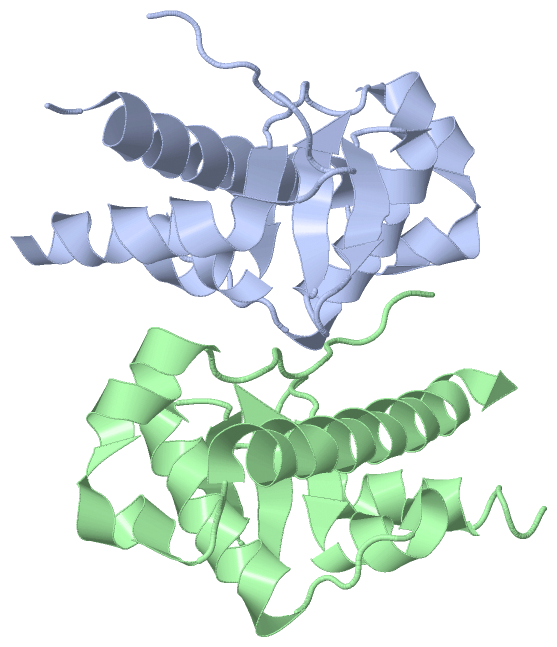
Image Asymmetric Unit
Asymmetric Unit  (Jmol Viewer)
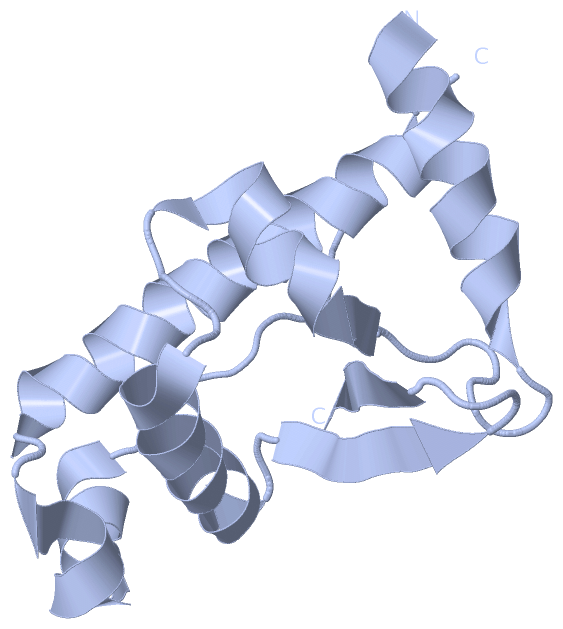
Image Biological Unit 1
Biological Unit 1  (Jmol Viewer)
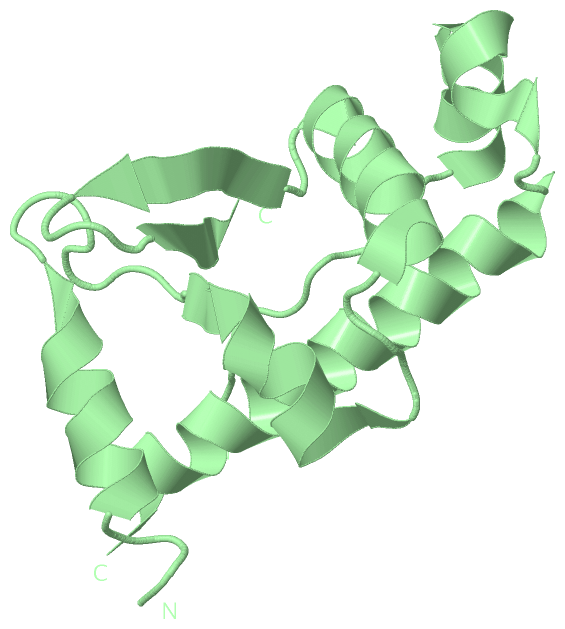
Image Biological Unit 2
Biological Unit 2  (Jmol Viewer)

(-) Description

Title :  STRUCTURAL BASIS FOR THE MICROTUBULE BINDING OF THE HUMAN KINETOCHORE SKA COMPLEX
 
Authors :  M. Abad, B. Medina, A. Santamaria, J. Zou, C. Plasberg-Hill, A. Madhuma U. Jayachandran, P. M. Redli, J. Rappsilber, E. A. Nigg, A. A. Jeyaprak
Date :  04 Oct 13  (Deposition) - 22 Jan 14  (Release) - 22 Jan 14  (Revision)
Method :  X-RAY DIFFRACTION
Resolution :  2.26
Chains :  Asym. Unit :  A,B
Biol. Unit 1:  A  (1x)
Biol. Unit 2:  B  (1x)
Keywords :  Cell Cycle, Cell Divison, Kinetochore-Microtubule Attachment, Winged-Helix Domain (Keyword Search: [Gene Ontology, PubMed, Web (Google))
 
Reference :  M. A. Abad, B. Medina, A. Santamaria, J. Zou, C. Plasberg-Hill, A. Madhumalar, U. Jayachandran, P. M. Redli, J. Rappsilber, E. A. Nigg A. A. Jeyaprakash
Structural Basis For Microtubule Recognition By The Human Kinetochore Ska Complex.
Nat. Commun. V. 5 2964 2014
PubMed-ID: 24413531  |  Reference-DOI: 10.1038/NCOMMS3964

(-) Compounds

Molecule 1 - SPINDLE AND KINETOCHORE-ASSOCIATED PROTEIN 1
    ChainsA, B
    EngineeredYES
    Expression SystemESCHERICHIA COLI
    Expression System PlasmidPEC-CDF-HIS
    Expression System StrainBL21(DE3)
    Expression System Taxid469008
    Expression System VariantGOLD
    Expression System Vector TypePLASMID
    FragmentMT-BINDING DOMAIN, RESDUES 133-255
    Organism CommonHUMAN
    Organism ScientificHOMO SAPIENS
    Organism Taxid9606
    SynonymSKA1

 Structural Features

(-) Chains, Units

  12
Asymmetric Unit AB
Biological Unit 1 (1x)A 
Biological Unit 2 (1x) B

Summary Information (see also Sequences/Alignments below)

(-) Ligands, Modified Residues, Ions  (0, 0)

(no "Ligand,Modified Residues,Ions" information available for 4CA0)

(-) Sites  (0, 0)

(no "Site" information available for 4CA0)

(-) SS Bonds  (1, 1)

Asymmetric Unit
No.Residues
1A:11 -B:11

(-) Cis Peptide Bonds  (0, 0)

(no "Cis Peptide Bond" information available for 4CA0)

 Sequence-Structure Mapping

(-) SAPs(SNPs)/Variants  (0, 0)

(no "SAP(SNP)/Variant" information available for 4CA0)

(-) PROSITE Motifs  (0, 0)

(no "PROSITE Motif" information available for 4CA0)

(-) Exons   (0, 0)

(no "Exon" information available for 4CA0)

(-) Sequences/Alignments

Asymmetric Unit
   Reformat: Number of residues per line =  ('0' or empty: single-line sequence representation)
  Number of residues per labelling interval =   
  UniProt sequence: complete  aligned part    
   Show mapping: SCOP domains CATH domains Pfam domains Secondary structure (by author)
SAPs(SNPs) PROSITE motifs Exons
(details for a mapped element are shown in a popup box when the mouse pointer rests over it)
Chain A from PDB  Type:PROTEIN  Length:119
 aligned with SKA1_HUMAN | Q96BD8 from UniProtKB/Swiss-Prot  Length:255

    Alignment length:124
                                   141       151       161       171       181       191       201       211       221       231       241       251    
           SKA1_HUMAN   132 RSIKEMPFITCDEFNGVPSYMKSRLTYNQINDVIKEINKAVISKYKILHQPKKSMNSVTRNLYHRFIDEETKDTKGRYFIVEADIKEFTTLKADKKFHVLLNILRHCRRLSEVRGGGLTRYVIT 255
               SCOP domains ---------------------------------------------------------------------------------------------------------------------------- SCOP domains
               CATH domains ---------------------------------------------------------------------------------------------------------------------------- CATH domains
               Pfam domains ---------------------------------------------------------------------------------------------------------------------------- Pfam domains
         Sec.struct. author .........hhhhhhhhhhhhhh..hhhhhhhhhhhhhhhhhhhhhhhh..-----hhhhhhhhhhhhhh........eeehhhhhhhh....hhhhhhhhhhhhhh..eeeee....eeeee. Sec.struct. author
                 SAPs(SNPs) ---------------------------------------------------------------------------------------------------------------------------- SAPs(SNPs)
                    PROSITE ---------------------------------------------------------------------------------------------------------------------------- PROSITE
                 Transcript ---------------------------------------------------------------------------------------------------------------------------- Transcript
                 4ca0 A   1 MSIKEMPFITCDEFNGVPSYMKSRLTYNQINDVIKEINKAVISKYKILHQP-----SVTRNLYHRFIDEETKDTKGRYFIVEADIKEFTTLKADKKFHVLLNILRHCRRLSEVRGGGLTRYVIT 124
                                    10        20        30        40        50|     | 60        70        80        90       100       110       120    
                                                                             51    57                                                                   

Chain B from PDB  Type:PROTEIN  Length:119
 aligned with SKA1_HUMAN | Q96BD8 from UniProtKB/Swiss-Prot  Length:255

    Alignment length:124
                                   141       151       161       171       181       191       201       211       221       231       241       251    
           SKA1_HUMAN   132 RSIKEMPFITCDEFNGVPSYMKSRLTYNQINDVIKEINKAVISKYKILHQPKKSMNSVTRNLYHRFIDEETKDTKGRYFIVEADIKEFTTLKADKKFHVLLNILRHCRRLSEVRGGGLTRYVIT 255
               SCOP domains ---------------------------------------------------------------------------------------------------------------------------- SCOP domains
               CATH domains ---------------------------------------------------------------------------------------------------------------------------- CATH domains
               Pfam domains ---------------------------------------------------------------------------------------------------------------------------- Pfam domains
         Sec.struct. author .........hhhhhhhhhhhhhh..hhhhhhhhhhhhhhhhhhhhhhhhh.-----....hhhhhhhhhh........eeehhhhhhhh....hhhhhhhhhhhhhh..eeeee....eeeee. Sec.struct. author
                 SAPs(SNPs) ---------------------------------------------------------------------------------------------------------------------------- SAPs(SNPs)
                    PROSITE ---------------------------------------------------------------------------------------------------------------------------- PROSITE
                 Transcript ---------------------------------------------------------------------------------------------------------------------------- Transcript
                 4ca0 B   1 MSIKEMPFITCDEFNGVPSYMKSRLTYNQINDVIKEINKAVISKYKILHQP-----SVTRNLYHRFIDEETKDTKGRYFIVEADIKEFTTLKADKKFHVLLNILRHCRRLSEVRGGGLTRYVIT 124
                                    10        20        30        40        50|     | 60        70        80        90       100       110       120    
                                                                             51    57                                                                   

   Legend:   → Mismatch (orange background)
  - → Gap (green background, '-', border residues have a numbering label)
    → Modified Residue (blue background, lower-case, 'x' indicates undefined single-letter code, labelled with number + name)
  x → Chemical Group (purple background, 'x', labelled with number + name, e.g. ACE or NH2)
  extra numbering lines below/above indicate numbering irregularities and modified residue names etc., number ends below/above '|'

 Classification and Annotation

(-) SCOP Domains  (0, 0)

(no "SCOP Domain" information available for 4CA0)

(-) CATH Domains  (0, 0)

(no "CATH Domain" information available for 4CA0)

(-) Pfam Domains  (0, 0)

(no "Pfam Domain" information available for 4CA0)

(-) Gene Ontology  (18, 18)

Asymmetric Unit(hide GO term definitions)
Chain A,B   (SKA1_HUMAN | Q96BD8)
molecular function
    GO:0008017    microtubule binding    Interacting selectively and non-covalently with microtubules, filaments composed of tubulin monomers.
    GO:0005515    protein binding    Interacting selectively and non-covalently with any protein or protein complex (a complex of two or more proteins that may include other nonprotein molecules).
biological process
    GO:0007049    cell cycle    The progression of biochemical and morphological phases and events that occur in a cell during successive cell replication or nuclear replication events. Canonically, the cell cycle comprises the replication and segregation of genetic material followed by the division of the cell, but in endocycles or syncytial cells nuclear replication or nuclear division may not be followed by cell division.
    GO:0051301    cell division    The process resulting in division and partitioning of components of a cell to form more cells; may or may not be accompanied by the physical separation of a cell into distinct, individually membrane-bounded daughter cells.
    GO:0007059    chromosome segregation    The process in which genetic material, in the form of chromosomes, is organized into specific structures and then physically separated and apportioned to two or more sets. In eukaryotes, chromosome segregation begins with the condensation of chromosomes, includes chromosome separation, and ends when chromosomes have completed movement to the spindle poles.
    GO:0031110    regulation of microtubule polymerization or depolymerization    Any process that modulates the frequency, rate or extent of microtubule polymerization or depolymerization by the addition or removal of tubulin heterodimers from a microtubule.
    GO:0007062    sister chromatid cohesion    The cell cycle process in which the sister chromatids of a replicated chromosome become tethered to each other.
cellular component
    GO:0005694    chromosome    A structure composed of a very long molecule of DNA and associated proteins (e.g. histones) that carries hereditary information.
    GO:0000775    chromosome, centromeric region    The region of a chromosome that includes the centromeric DNA and associated proteins. In monocentric chromosomes, this region corresponds to a single area of the chromosome, whereas in holocentric chromosomes, it is evenly distributed along the chromosome.
    GO:0000777    condensed chromosome kinetochore    A multisubunit complex that is located at the centromeric region of a condensed chromosome and provides an attachment point for the spindle microtubules.
    GO:0000940    condensed chromosome outer kinetochore    The region of a condensed chromosome kinetochore most external to centromeric DNA; this outer region mediates kinetochore-microtubule interactions.
    GO:0005737    cytoplasm    All of the contents of a cell excluding the plasma membrane and nucleus, but including other subcellular structures.
    GO:0005856    cytoskeleton    Any of the various filamentous elements that form the internal framework of cells, and typically remain after treatment of the cells with mild detergent to remove membrane constituents and soluble components of the cytoplasm. The term embraces intermediate filaments, microfilaments, microtubules, the microtrabecular lattice, and other structures characterized by a polymeric filamentous nature and long-range order within the cell. The various elements of the cytoskeleton not only serve in the maintenance of cellular shape but also have roles in other cellular functions, including cellular movement, cell division, endocytosis, and movement of organelles.
    GO:0005829    cytosol    The part of the cytoplasm that does not contain organelles but which does contain other particulate matter, such as protein complexes.
    GO:0000776    kinetochore    A multisubunit complex that is located at the centromeric region of DNA and provides an attachment point for the spindle microtubules.
    GO:0005874    microtubule    Any of the long, generally straight, hollow tubes of internal diameter 12-15 nm and external diameter 24 nm found in a wide variety of eukaryotic cells; each consists (usually) of 13 protofilaments of polymeric tubulin, staggered in such a manner that the tubulin monomers are arranged in a helical pattern on the microtubular surface, and with the alpha/beta axes of the tubulin subunits parallel to the long axis of the tubule; exist in equilibrium with pool of tubulin monomers and can be rapidly assembled or disassembled in response to physiological stimuli; concerned with force generation, e.g. in the spindle.
    GO:0005819    spindle    The array of microtubules and associated molecules that forms between opposite poles of a eukaryotic cell during mitosis or meiosis and serves to move the duplicated chromosomes apart.
    GO:0005876    spindle microtubule    Any microtubule that is part of a mitotic or meiotic spindle; anchored at one spindle pole.

 Visualization

(-) Interactive Views

Asymmetric Unit
  Complete Structure
    Jena3D(integrated viewing of ligand, site, SAP, PROSITE, SCOP information)
    WebMol | AstexViewer[tm]@PDBe
(Java Applets, require no local installation except for Java; loading may be slow)
    STRAP
(Java WebStart application, automatic local installation, requires Java; full application with system access!)
    RasMol
(require local installation)
    Molscript (VRML)
(requires installation of a VRML viewer; select preferred view via VRML and generate a mono or stereo PDF format file)
 
  Ligands, Modified Residues, Ions
(no "Ligands, Modified Residues, Ions" information available for 4ca0)
 
  Sites
(no "Sites" information available for 4ca0)
 
  Cis Peptide Bonds
(no "Cis Peptide Bonds" information available for 4ca0)
 
Biological Units
  Complete Structure
    Biological Unit 1  [ Jena3D ]
    Biological Unit 2  [ Jena3D ]

(-) Still Images

Jmol
  protein: cartoon or spacefill or dots and stick; nucleic acid: cartoon and stick; ligands: spacefill; active site: stick
Molscript
  protein, nucleic acid: cartoon; ligands: spacefill; active site: ball and stick

 Databases and Analysis Tools

(-) Databases

Access by PDB/NDB ID
  4ca0
    Family and Domain InformationProDom | SYSTERS
    General Structural InformationGlycoscienceDB | MMDB | NDB | OCA | PDB | PDBe | PDBj | PDBsum | PDBWiki | PQS | PROTEOPEDIA
    Orientation in MembranesOPM
    Protein SurfaceSURFACE
    Secondary StructureDSSP (structure derived) | HSSP (homology derived)
    Structural GenomicsGeneCensus
    Structural NeighboursCE | VAST
    Structure ClassificationCATH | Dali | SCOP
    Validation and Original DataBMRB Data View | BMRB Restraints Grid | EDS | PROCHECK | RECOORD | WHAT_CHECK
 
Access by UniProt ID/Accession number
  SKA1_HUMAN | Q96BD8
    Comparative Protein Structure ModelsModBase
    Genomic InformationEnsembl
    Protein-protein InteractionDIP
    Sequence, Family and Domain InformationInterPro | Pfam | SMART | UniProtKB/SwissProt
 
Access by Enzyme Classificator   (EC Number)
  (no 'Enzyme Classificator' available)
    General Enzyme InformationBRENDA | EC-PDB | Enzyme | IntEnz
    PathwayKEGG | MetaCyc
 
Access by Disease Identifier   (MIM ID)
  (no 'MIM ID' available)
    Disease InformationOMIM
 
Access by GenAge ID
  (no 'GenAge ID' available)
    Age Related InformationGenAge

(-) Analysis Tools

Access by PDB/NDB ID
    Domain InformationXDom
    Interatomic Contacts of Structural UnitsCSU
    Ligand-protein ContactsLPC
    Protein CavitiescastP
    Sequence and Secondary StructurePDBCartoon
    Structure AlignmentSTRAP(Java WebStart application, automatic local installation, requires Java; full application with system access!)
    Structure and Sequence BrowserSTING
 
Access by UniProt ID/Accession number
  SKA1_HUMAN | Q96BD8
    Protein Disorder PredictionDisEMBL | FoldIndex | GLOBPLOT (for more information see DisProt)

 Related Entries

(-) Entries Sharing at Least One Protein Chain (UniProt ID)

UniProtKB/Swiss-Prot
        SKA1_HUMAN | Q96BD84aj5 4c9y

(-) Related Entries Specified in the PDB File

4c9y STRUCTURAL BASIS FOR THE MICROTUBULE BINDING OF THE HUMAN KINETOCHORE SKA COMPLEX