Show PDB file:   
         Plain Text   HTML   (compressed file size)
QuickSearch:   
by PDB,NDB,UniProt,PROSITE Code or Search Term(s)  
(-)Asymmetric Unit
(-)Biological Unit 1
(-)Biological Unit 2
(-)Biological Unit 3
collapse expand < >
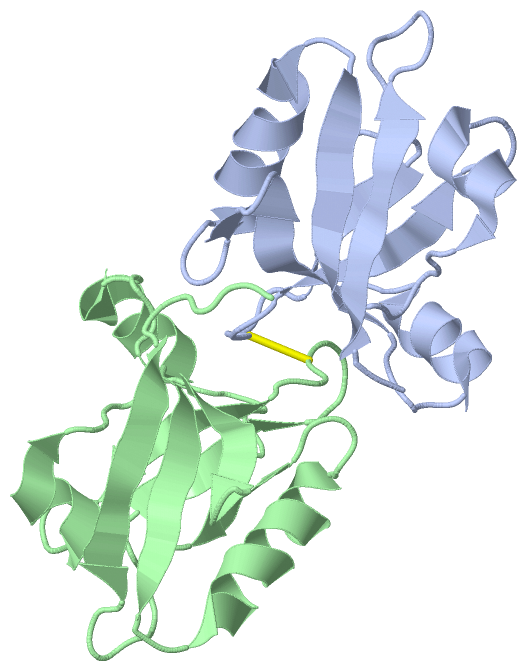
Image Asymmetric Unit
Asymmetric Unit  (Jmol Viewer)
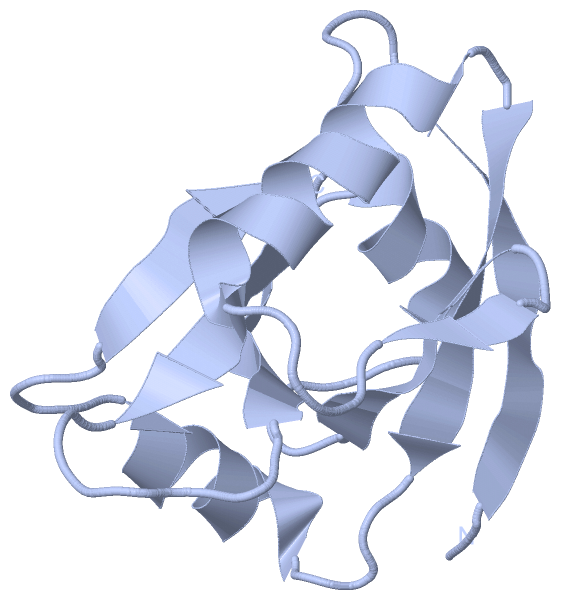
Image Biological Unit 1
Biological Unit 1  (Jmol Viewer)
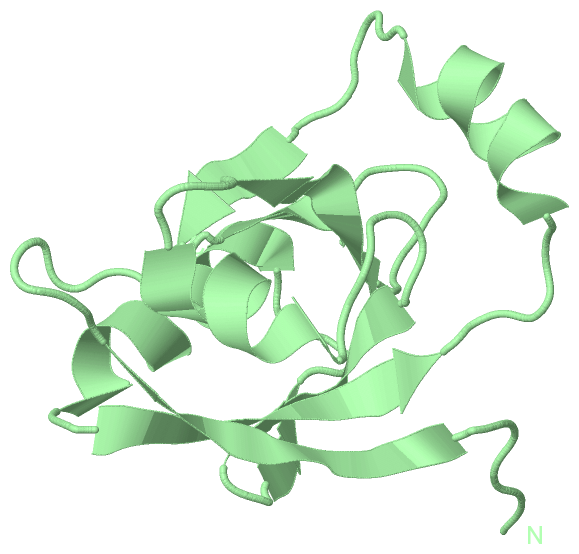
Image Biological Unit 2
Biological Unit 2  (Jmol Viewer)
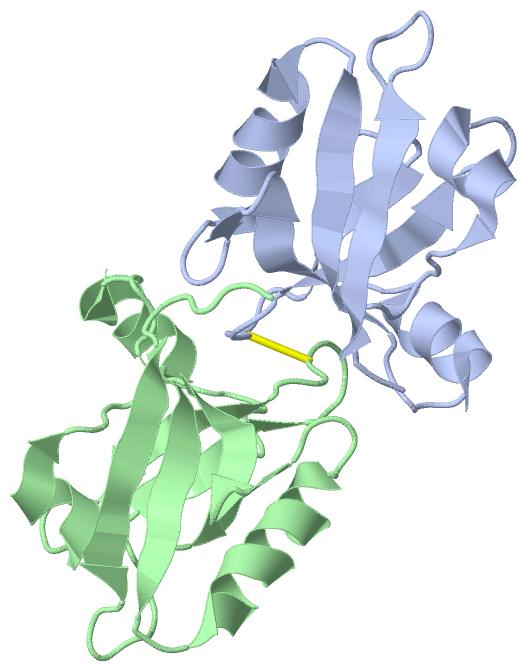
Image Biological Unit 3
Biological Unit 3  (Jmol Viewer)

(-) Description

Title :  OXIDIZED DIMERIC PICK1 PDZ C46G MUTANT IN COMPLEX WITH THE CARBOXYL TAIL PEPTIDE OF GLUR2
 
Authors :  J. Yu, Y. Shi, M. Zhang
Date :  04 Jun 09  (Deposition) - 09 Jun 10  (Release) - 21 Jun 17  (Revision)
Method :  X-RAY DIFFRACTION
Resolution :  2.80
Chains :  Asym. Unit :  A,B
Biol. Unit 1:  A  (1x)
Biol. Unit 2:  B  (1x)
Biol. Unit 3:  A,B  (1x)
Keywords :  Oxidized, Pdz Domain, Protein Binding (Keyword Search: [Gene Ontology, PubMed, Web (Google))
 
Reference :  Y. Shi, J. Yu, Y. Jia, L. Pan, C. Shen, J. Xia, M. Zhang
Redox-Regulated Lipid Membrane Binding Of The Pick1 Pdz Domain.
Biochemistry V. 49 4432 2010
PubMed-ID: 20426484  |  Reference-DOI: 10.1021/BI100269T

(-) Compounds

Molecule 1 - PRKCA-BINDING PROTEIN,9-MER PEPTIDE OF THE GLUR2 SUBUNIT
    ChainsA, B
    EngineeredYES
    Expression SystemESCHERICHIA COLI
    Expression System PlasmidPET32A
    Expression System StrainBL21(DE3)
    Expression System Taxid469008
    Expression System Vector TypePLASMID
    FragmentPICK1 PDZ DOMAIN
    GenePICK1, RCG_60080
    MutationYES
    Organism CommonRAT
    Organism ScientificRATTUS NORVEGICUS, SYNTHETIC CONSTRUCT
    Organism Taxid10116, 32630
    SynonymPROTEIN INTERACTING WITH C KINASE 1,ISOFORM CRA_B,PROTEIN INTERACTING WITH PRKCA 1

 Structural Features

(-) Chains, Units

  12
Asymmetric Unit AB
Biological Unit 1 (1x)A 
Biological Unit 2 (1x) B
Biological Unit 3 (1x)AB

Summary Information (see also Sequences/Alignments below)

(-) Ligands, Modified Residues, Ions  (0, 0)

(no "Ligand,Modified Residues,Ions" information available for 3HPM)

(-) Sites  (0, 0)

(no "Site" information available for 3HPM)

(-) SS Bonds  (1, 1)

Asymmetric Unit
No.Residues
1A:44 -B:44

(-) Cis Peptide Bonds  (2, 2)

Asymmetric Unit
No.Residues
1Gly A:117 -Pro A:118
2Gly B:117 -Pro B:118

 Sequence-Structure Mapping

(-) SAPs(SNPs)/Variants  (0, 0)

(no "SAP(SNP)/Variant" information available for 3HPM)

(-) PROSITE Motifs  (1, 2)

Asymmetric Unit (1, 2)
 PROSITEUniProtKBPDB
No.IDACDescriptionIDLocationCountLocation
1PDZPS50106 PDZ domain profile.PICK1_RAT22-105
 
  2A:22-105
B:22-105
Biological Unit 1 (1, 1)
 PROSITEUniProtKBPDB
No.IDACDescriptionIDLocationCountLocation
1PDZPS50106 PDZ domain profile.PICK1_RAT22-105
 
  1A:22-105
-
Biological Unit 2 (1, 1)
 PROSITEUniProtKBPDB
No.IDACDescriptionIDLocationCountLocation
1PDZPS50106 PDZ domain profile.PICK1_RAT22-105
 
  1-
B:22-105
Biological Unit 3 (1, 2)
 PROSITEUniProtKBPDB
No.IDACDescriptionIDLocationCountLocation
1PDZPS50106 PDZ domain profile.PICK1_RAT22-105
 
  2A:22-105
B:22-105

(-) Exons   (4, 8)

Asymmetric Unit (4, 8)
 ENSEMBLUniProtKBPDB
No.Transcript IDExonExon IDGenome LocationLengthIDLocationLengthCountLocationLength
1.1ENSRNOT000000160771ENSRNOE00000284637chr7:117212957-11721297418Q6GQQ2_RAT-00--
1.2ENSRNOT000000160772ENSRNOE00000230132chr7:117213302-117213405104Q6GQQ2_RAT1-14140--
1.3ENSRNOT000000160773ENSRNOE00000230125chr7:117214213-117214324112Q6GQQ2_RAT14-51382A:18-51
B:15-51
34
37
1.4ENSRNOT000000160774ENSRNOE00000110618chr7:117223330-117223458129Q6GQQ2_RAT52-94432A:52-94
B:52-94
43
43
1.5ENSRNOT000000160775ENSRNOE00000111079chr7:117224930-11722499667Q6GQQ2_RAT95-117232A:95-114 (gaps)
B:95-114 (gaps)
23
23
1.6ENSRNOT000000160776ENSRNOE00000111513chr7:117226348-11722643790Q6GQQ2_RAT117-147312A:114-125 (gaps)
B:114-125 (gaps)
28
28
1.7ENSRNOT000000160777ENSRNOE00000111954chr7:117228100-11722815354Q6GQQ2_RAT147-165190--
1.8ENSRNOT000000160778ENSRNOE00000112421chr7:117228508-11722857063Q6GQQ2_RAT165-186220--
1.9ENSRNOT000000160779ENSRNOE00000108957chr7:117229191-117229324134Q6GQQ2_RAT186-230450--
1.10ENSRNOT0000001607710ENSRNOE00000112887chr7:117229636-11722972893Q6GQQ2_RAT231-261310--
1.11ENSRNOT0000001607711ENSRNOE00000113314chr7:117230518-11723056851Q6GQQ2_RAT262-278170--
1.12ENSRNOT0000001607712ENSRNOE00000113752chr7:117231337-117231481145Q6GQQ2_RAT279-327490--
1.13ENSRNOT0000001607713ENSRNOE00000230052chr7:117231900-117232667768Q6GQQ2_RAT327-416900--

(-) Sequences/Alignments

Asymmetric Unit
   Reformat: Number of residues per line =  ('0' or empty: single-line sequence representation)
  Number of residues per labelling interval =   
  UniProt sequence: complete  aligned part    
   Show mapping: SCOP domains CATH domains Pfam domains Secondary structure (by author)
SAPs(SNPs) PROSITE motifs Exons
(details for a mapped element are shown in a popup box when the mouse pointer rests over it)
Chain A from PDB  Type:PROTEIN  Length:108
 aligned with PICK1_RAT | Q9EP80 from UniProtKB/Swiss-Prot  Length:416

    Alignment length:127
                                    27        37        47        57        67        77        87        97       107       117       127       137       
            PICK1_RAT    18 TVPGKVTLQKDAQNLIGISIGGGAQYCPCLYIVQVFDNTPAALDGTVAAGDEITGVNGRSIKGKTKVEVAKMIQEVKGEVTIHYNKLQADPKQGMSLDIVLKKVKHRLVENMSSGTADALGLSRAIL 144
               SCOP domains ------------------------------------------------------------------------------------------------------------------------------- SCOP domains
               CATH domains ------------------------------------------------------------------------------------------------------------------------------- CATH domains
               Pfam domains ------------------------------------------------------------------------------------------------------------------------------- Pfam domains
         Sec.struct. author ..eeeeeee........eeeee.......eeeeee...hhhhhhh......eeeee..ee....hhhhhhhhhhhh..eeeeeee....hhhh---hhhhh.----------------....eeee. Sec.struct. author
                 SAPs(SNPs) ------------------------------------------------------------------------------------------------------------------------------- SAPs(SNPs)
                    PROSITE ----PDZ  PDB: A:22-105 UniProt: 22-105                                                  --------------------------------------- PROSITE
                 Transcript ------------------------------------------------------------------------------------------------------------------------------- Transcript
                 3hpm A  18 GVPGKVTLQKDAQNLIGISIGGGAQYCPGLYIVQVFDNTPAALDGTVAAGDEITGVNGRSIKGKTKVEVAKMIQEVKGEVTIHYNKLQADPKQ---LEVLFN----------------GPGIESVKI 125
                                    27        37        47        57        67        77        87        97       107  |   |114 |       -       118       
                                                                                                                      110 111  116              117        

Chain A from PDB  Type:PROTEIN  Length:108
 aligned with Q6GQQ2_RAT | Q6GQQ2 from UniProtKB/TrEMBL  Length:416

    Alignment length:127
                                    27        37        47        57        67        77        87        97       107       117       127       137       
           Q6GQQ2_RAT    18 TVPGKVTLQKDAQNLIGISIGGGAQYCPCLYIVQVFDNTPAALDGTVAAGDEITGVNGRSIKGKTKVEVAKMIQEVKGEVTIHYNKLQADPKQGMSLDIVLKKVKHRLVENMSSGTADALGLSRAIL 144
               SCOP domains ------------------------------------------------------------------------------------------------------------------------------- SCOP domains
               CATH domains ------------------------------------------------------------------------------------------------------------------------------- CATH domains
               Pfam domains ------------------------------------------------------------------------------------------------------------------------------- Pfam domains
         Sec.struct. author ..eeeeeee........eeeee.......eeeeee...hhhhhhh......eeeee..ee....hhhhhhhhhhhh..eeeeeee....hhhh---hhhhh.----------------....eeee. Sec.struct. author
                 SAPs(SNPs) ------------------------------------------------------------------------------------------------------------------------------- SAPs(SNPs)
                    PROSITE ------------------------------------------------------------------------------------------------------------------------------- PROSITE
           Transcript 1 (1) Exon 1.3  PDB: A:18-51            Exon 1.4  PDB: A:52-94 UniProt: 52-94      Exon 1.5               --------------------------- Transcript 1 (1)
           Transcript 1 (2) ---------------------------------------------------------------------------------------------------Exon 1.6 UniProt: 117-147    Transcript 1 (2)
                 3hpm A  18 GVPGKVTLQKDAQNLIGISIGGGAQYCPGLYIVQVFDNTPAALDGTVAAGDEITGVNGRSIKGKTKVEVAKMIQEVKGEVTIHYNKLQADPKQ---LEVLFN----------------GPGIESVKI 125
                                    27        37        47        57        67        77        87        97       107  |   |114 |       -       118       
                                                                                                                      110 111  116              117        

Chain B from PDB  Type:PROTEIN  Length:111
 aligned with PICK1_RAT | Q9EP80 from UniProtKB/Swiss-Prot  Length:416

    Alignment length:130
                                    24        34        44        54        64        74        84        94       104       114       124       134       144
            PICK1_RAT    15 GIPTVPGKVTLQKDAQNLIGISIGGGAQYCPCLYIVQVFDNTPAALDGTVAAGDEITGVNGRSIKGKTKVEVAKMIQEVKGEVTIHYNKLQADPKQGMSLDIVLKKVKHRLVENMSSGTADALGLSRAIL 144
               SCOP domains ---------------------------------------------------------------------------------------------------------------------------------- SCOP domains
               CATH domains ---------------------------------------------------------------------------------------------------------------------------------- CATH domains
               Pfam domains ---------------------------------------------------------------------------------------------------------------------------------- Pfam domains
         Sec.struct. author .....eeeeeee........eeeee.......eeeeee...hhhhhhh......eeeee..ee....hhhhhhhhhhhh..eeeeeee....hhhh---hhhhh.----------------.....eee. Sec.struct. author
                 SAPs(SNPs) ---------------------------------------------------------------------------------------------------------------------------------- SAPs(SNPs)
                    PROSITE -------PDZ  PDB: B:22-105 UniProt: 22-105                                                  --------------------------------------- PROSITE
                 Transcript ---------------------------------------------------------------------------------------------------------------------------------- Transcript
                 3hpm B  15 GGSGVPGKVTLQKDAQNLIGISIGGGAQYCPGLYIVQVFDNTPAALDGTVAAGDEITGVNGRSIKGKTKVEVAKMIQEVKGEVTIHYNKLQADPKQ---LEVLFN----------------GPGIESVKI 125
                                    24        34        44        54        64        74        84        94       104     | 111    |    -         - |     125
                                                                                                                         110 111  116              117        

Chain B from PDB  Type:PROTEIN  Length:111
 aligned with Q6GQQ2_RAT | Q6GQQ2 from UniProtKB/TrEMBL  Length:416

    Alignment length:130
                                    24        34        44        54        64        74        84        94       104       114       124       134       144
           Q6GQQ2_RAT    15 GIPTVPGKVTLQKDAQNLIGISIGGGAQYCPCLYIVQVFDNTPAALDGTVAAGDEITGVNGRSIKGKTKVEVAKMIQEVKGEVTIHYNKLQADPKQGMSLDIVLKKVKHRLVENMSSGTADALGLSRAIL 144
               SCOP domains ---------------------------------------------------------------------------------------------------------------------------------- SCOP domains
               CATH domains ---------------------------------------------------------------------------------------------------------------------------------- CATH domains
               Pfam domains ---------------------------------------------------------------------------------------------------------------------------------- Pfam domains
         Sec.struct. author .....eeeeeee........eeeee.......eeeeee...hhhhhhh......eeeee..ee....hhhhhhhhhhhh..eeeeeee....hhhh---hhhhh.----------------.....eee. Sec.struct. author
                 SAPs(SNPs) ---------------------------------------------------------------------------------------------------------------------------------- SAPs(SNPs)
                    PROSITE ---------------------------------------------------------------------------------------------------------------------------------- PROSITE
           Transcript 1 (1) Exon 1.3  PDB: B:15-51 UniProt: 14-51Exon 1.4  PDB: B:52-94 UniProt: 52-94      Exon 1.5               --------------------------- Transcript 1 (1)
           Transcript 1 (2) ------------------------------------------------------------------------------------------------------Exon 1.6 UniProt: 117-147    Transcript 1 (2)
                 3hpm B  15 GGSGVPGKVTLQKDAQNLIGISIGGGAQYCPGLYIVQVFDNTPAALDGTVAAGDEITGVNGRSIKGKTKVEVAKMIQEVKGEVTIHYNKLQADPKQ---LEVLFN----------------GPGIESVKI 125
                                    24        34        44        54        64        74        84        94       104     | 111    |    -         - |     125
                                                                                                                         110 111  116              117        

   Legend:   → Mismatch (orange background)
  - → Gap (green background, '-', border residues have a numbering label)
    → Modified Residue (blue background, lower-case, 'x' indicates undefined single-letter code, labelled with number + name)
  x → Chemical Group (purple background, 'x', labelled with number + name, e.g. ACE or NH2)
  extra numbering lines below/above indicate numbering irregularities and modified residue names etc., number ends below/above '|'

 Classification and Annotation

(-) SCOP Domains  (0, 0)

(no "SCOP Domain" information available for 3HPM)

(-) CATH Domains  (0, 0)

(no "CATH Domain" information available for 3HPM)

(-) Pfam Domains  (0, 0)

(no "Pfam Domain" information available for 3HPM)

(-) Gene Ontology  (48, 55)

Asymmetric Unit(hide GO term definitions)
Chain A,B   (PICK1_RAT | Q9EP80)
molecular function
    GO:0016887    ATPase activity    Catalysis of the reaction: ATP + H2O = ADP + phosphate + 2 H+. May or may not be coupled to another reaction.
    GO:0071933    Arp2/3 complex binding    Interacting selectively and non-covalently with an Arp2/3 complex, a protein complex that contains two actin-related proteins, Arp2 and Arp3, and five novel proteins (ARPC1-5).
    GO:0035256    G-protein coupled glutamate receptor binding    Interacting selectively and non-covalently with a G-protein coupled glutamate receptor (a metabotropic glutamate receptor).
    GO:0001664    G-protein coupled receptor binding    Interacting selectively and non-covalently with a G-protein coupled receptor.
    GO:0051020    GTPase binding    Interacting selectively and non-covalently with a GTPase, any enzyme that catalyzes the hydrolysis of GTP.
    GO:0003779    actin binding    Interacting selectively and non-covalently with monomeric or multimeric forms of actin, including actin filaments.
    GO:0051015    actin filament binding    Interacting selectively and non-covalently with an actin filament, also known as F-actin, a helical filamentous polymer of globular G-actin subunits.
    GO:0046875    ephrin receptor binding    Interacting selectively and non-covalently with an ephrin receptor.
    GO:0042802    identical protein binding    Interacting selectively and non-covalently with an identical protein or proteins.
    GO:0046872    metal ion binding    Interacting selectively and non-covalently with any metal ion.
    GO:0008022    protein C-terminus binding    Interacting selectively and non-covalently with a protein C-terminus, the end of any peptide chain at which the 1-carboxy function of a constituent amino acid is not attached in peptide linkage to another amino-acid residue.
    GO:0005515    protein binding    Interacting selectively and non-covalently with any protein or protein complex (a complex of two or more proteins that may include other nonprotein molecules).
    GO:0019904    protein domain specific binding    Interacting selectively and non-covalently with a specific domain of a protein.
    GO:0005080    protein kinase C binding    Interacting selectively and non-covalently with protein kinase C.
    GO:0005102    receptor binding    Interacting selectively and non-covalently with one or more specific sites on a receptor molecule, a macromolecule that undergoes combination with a hormone, neurotransmitter, drug or intracellular messenger to initiate a change in cell function.
    GO:0030971    receptor tyrosine kinase binding    Interacting selectively and non-covalently with a receptor that possesses protein tyrosine kinase activity.
biological process
    GO:0036294    cellular response to decreased oxygen levels    Any process that results in a change in state or activity of a cell (in terms of movement, secretion, enzyme production, gene expression, etc.) as a result of a stimulus reflecting a decline in the level of oxygen.
    GO:0042149    cellular response to glucose starvation    Any process that results in a change in state or activity of a cell (in terms of movement, secretion, enzyme production, gene expression, etc.) as a result of deprivation of glucose.
    GO:0097062    dendritic spine maintenance    The organization process that preserves a dendritic spine in a stable functional or structural state. A dendritic spine is a specialized protrusion from a neuronal dendrite and is involved in synaptic transmission.
    GO:0097061    dendritic spine organization    A process that is carried out at the cellular level which results in the assembly, arrangement of constituent parts, or disassembly of a dendritic spine. A dendritic spine is a specialized protrusion from a neuronal dendrite and is involved in synaptic transmission.
    GO:0015872    dopamine transport    The directed movement of dopamine into, out of or within a cell, or between cells, by means of some agent such as a transporter or pore. Dopamine is a catecholamine neurotransmitter and a metabolic precursor of noradrenaline and adrenaline.
    GO:0021782    glial cell development    The process aimed at the progression of a glial cell over time, from initial commitment of the cell to a specific fate, to the fully functional differentiated cell.
    GO:0060292    long term synaptic depression    A process that modulates synaptic plasticity such that synapses are changed resulting in the decrease in the rate, or frequency of synaptic transmission at the synapse.
    GO:0015844    monoamine transport    The directed movement of monoamines, organic compounds that contain one amino group that is connected to an aromatic ring by an ethylene group (-CH2-CH2-), into, out of or within a cell, or between cells, by means of some agent such as a transporter or pore.
    GO:0034316    negative regulation of Arp2/3 complex-mediated actin nucleation    Any process that stops, prevents, or reduces the frequency, rate or extent of actin nucleation mediated by the Arp2/3 complex and interacting proteins.
    GO:0060548    negative regulation of cell death    Any process that decreases the rate or frequency of cell death. Cell death is the specific activation or halting of processes within a cell so that its vital functions markedly cease, rather than simply deteriorating gradually over time, which culminates in cell death.
    GO:0010629    negative regulation of gene expression    Any process that decreases the frequency, rate or extent of gene expression. Gene expression is the process in which a gene's coding sequence is converted into a mature gene product or products (proteins or RNA). This includes the production of an RNA transcript as well as any processing to produce a mature RNA product or an mRNA or circRNA (for protein-coding genes) and the translation of that mRNA or circRNA into protein. Protein maturation is included when required to form an active form of a product from an inactive precursor form.
    GO:0002092    positive regulation of receptor internalization    Any process that activates or increases the frequency, rate or extent of receptor internalization.
    GO:0007205    protein kinase C-activating G-protein coupled receptor signaling pathway    The series of molecular signals generated as a consequence of a G-protein coupled receptor binding to its physiological ligand, where the pathway proceeds with activation of protein kinase C (PKC). PKC is activated by second messengers including diacylglycerol (DAG).
    GO:0006468    protein phosphorylation    The process of introducing a phosphate group on to a protein.
    GO:0043113    receptor clustering    The receptor metabolic process that results in grouping of a set of receptors at a cellular location, often to amplify the sensitivity of a signaling response.
cellular component
    GO:0005794    Golgi apparatus    A compound membranous cytoplasmic organelle of eukaryotic cells, consisting of flattened, ribosome-free vesicles arranged in a more or less regular stack. The Golgi apparatus differs from the endoplasmic reticulum in often having slightly thicker membranes, appearing in sections as a characteristic shallow semicircle so that the convex side (cis or entry face) abuts the endoplasmic reticulum, secretory vesicles emerging from the concave side (trans or exit face). In vertebrate cells there is usually one such organelle, while in invertebrates and plants, where they are known usually as dictyosomes, there may be several scattered in the cytoplasm. The Golgi apparatus processes proteins produced on the ribosomes of the rough endoplasmic reticulum; such processing includes modification of the core oligosaccharides of glycoproteins, and the sorting and packaging of proteins for transport to a variety of cellular locations. Three different regions of the Golgi are now recognized both in terms of structure and function: cis, in the vicinity of the cis face, trans, in the vicinity of the trans face, and medial, lying between the cis and trans regions.
    GO:0030054    cell junction    A cellular component that forms a specialized region of connection between two or more cells or between a cell and the extracellular matrix. At a cell junction, anchoring proteins extend through the plasma membrane to link cytoskeletal proteins in one cell to cytoskeletal proteins in neighboring cells or to proteins in the extracellular matrix.
    GO:0005737    cytoplasm    All of the contents of a cell excluding the plasma membrane and nucleus, but including other subcellular structures.
    GO:0005856    cytoskeleton    Any of the various filamentous elements that form the internal framework of cells, and typically remain after treatment of the cells with mild detergent to remove membrane constituents and soluble components of the cytoplasm. The term embraces intermediate filaments, microfilaments, microtubules, the microtrabecular lattice, and other structures characterized by a polymeric filamentous nature and long-range order within the cell. The various elements of the cytoskeleton not only serve in the maintenance of cellular shape but also have roles in other cellular functions, including cellular movement, cell division, endocytosis, and movement of organelles.
    GO:0030425    dendrite    A neuron projection that has a short, tapering, often branched, morphology, receives and integrates signals from other neurons or from sensory stimuli, and conducts a nerve impulse towards the axon or the cell body. In most neurons, the impulse is conveyed from dendrites to axon via the cell body, but in some types of unipolar neuron, the impulse does not travel via the cell body.
    GO:0016020    membrane    A lipid bilayer along with all the proteins and protein complexes embedded in it an attached to it.
    GO:0043005    neuron projection    A prolongation or process extending from a nerve cell, e.g. an axon or dendrite.
    GO:0048471    perinuclear region of cytoplasm    Cytoplasm situated near, or occurring around, the nucleus.
    GO:0005886    plasma membrane    The membrane surrounding a cell that separates the cell from its external environment. It consists of a phospholipid bilayer and associated proteins.
    GO:0014069    postsynaptic density of dendrite    An electron dense network of proteins within and adjacent to the postsynaptic membrane of the dendrite of asymetric synapses. Its major components include neurotransmitter receptors and the proteins that spatially and functionally organize them such as anchoring and scaffolding molecules, signaling enzymes and cytoskeletal components.
    GO:0045211    postsynaptic membrane    A specialized area of membrane facing the presynaptic membrane on the tip of the nerve ending and separated from it by a minute cleft (the synaptic cleft). Neurotransmitters cross the synaptic cleft and transmit the signal to the postsynaptic membrane.
    GO:0042734    presynaptic membrane    A specialized area of membrane of the axon terminal that faces the plasma membrane of the neuron or muscle fiber with which the axon terminal establishes a synaptic junction; many synaptic junctions exhibit structural presynaptic characteristics, such as conical, electron-dense internal protrusions, that distinguish it from the remainder of the axon plasma membrane.
    GO:0043234    protein complex    A stable macromolecular complex composed (only) of two or more polypeptide subunits along with any covalently attached molecules (such as lipid anchors or oligosaccharide) or non-protein prosthetic groups (such as nucleotides or metal ions). Prosthetic group in this context refers to a tightly bound cofactor. The component polypeptide subunits may be identical.
    GO:0045202    synapse    The junction between a nerve fiber of one neuron and another neuron, muscle fiber or glial cell. As the nerve fiber approaches the synapse it enlarges into a specialized structure, the presynaptic nerve ending, which contains mitochondria and synaptic vesicles. At the tip of the nerve ending is the presynaptic membrane; facing it, and separated from it by a minute cleft (the synaptic cleft) is a specialized area of membrane on the receiving cell, known as the postsynaptic membrane. In response to the arrival of nerve impulses, the presynaptic nerve ending secretes molecules of neurotransmitters into the synaptic cleft. These diffuse across the cleft and transmit the signal to the postsynaptic membrane.

Chain A,B   (Q6GQQ2_RAT | Q6GQQ2)
molecular function
    GO:0019899    enzyme binding    Interacting selectively and non-covalently with any enzyme.
    GO:0016301    kinase activity    Catalysis of the transfer of a phosphate group, usually from ATP, to a substrate molecule.
    GO:0008022    protein C-terminus binding    Interacting selectively and non-covalently with a protein C-terminus, the end of any peptide chain at which the 1-carboxy function of a constituent amino acid is not attached in peptide linkage to another amino-acid residue.
    GO:0019904    protein domain specific binding    Interacting selectively and non-covalently with a specific domain of a protein.
biological process
    GO:0015844    monoamine transport    The directed movement of monoamines, organic compounds that contain one amino group that is connected to an aromatic ring by an ethylene group (-CH2-CH2-), into, out of or within a cell, or between cells, by means of some agent such as a transporter or pore.
    GO:0016310    phosphorylation    The process of introducing a phosphate group into a molecule, usually with the formation of a phosphoric ester, a phosphoric anhydride or a phosphoric amide.
    GO:0007205    protein kinase C-activating G-protein coupled receptor signaling pathway    The series of molecular signals generated as a consequence of a G-protein coupled receptor binding to its physiological ligand, where the pathway proceeds with activation of protein kinase C (PKC). PKC is activated by second messengers including diacylglycerol (DAG).
cellular component
    GO:0005737    cytoplasm    All of the contents of a cell excluding the plasma membrane and nucleus, but including other subcellular structures.
    GO:0005886    plasma membrane    The membrane surrounding a cell that separates the cell from its external environment. It consists of a phospholipid bilayer and associated proteins.
    GO:0042734    presynaptic membrane    A specialized area of membrane of the axon terminal that faces the plasma membrane of the neuron or muscle fiber with which the axon terminal establishes a synaptic junction; many synaptic junctions exhibit structural presynaptic characteristics, such as conical, electron-dense internal protrusions, that distinguish it from the remainder of the axon plasma membrane.

 Visualization

(-) Interactive Views

Asymmetric Unit
  Complete Structure
    Jena3D(integrated viewing of ligand, site, SAP, PROSITE, SCOP information)
    WebMol | AstexViewer[tm]@PDBe
(Java Applets, require no local installation except for Java; loading may be slow)
    STRAP
(Java WebStart application, automatic local installation, requires Java; full application with system access!)
    RasMol
(require local installation)
    Molscript (VRML)
(requires installation of a VRML viewer; select preferred view via VRML and generate a mono or stereo PDF format file)
 
  Ligands, Modified Residues, Ions
(no "Ligands, Modified Residues, Ions" information available for 3hpm)
 
  Sites
(no "Sites" information available for 3hpm)
 
  Cis Peptide Bonds
    Gly A:117 - Pro A:118   [ RasMol ]  
    Gly B:117 - Pro B:118   [ RasMol ]  
 
Biological Units
  Complete Structure
    Biological Unit 1  [ Jena3D ]
    Biological Unit 2  [ Jena3D ]
    Biological Unit 3  [ Jena3D ]

(-) Still Images

Jmol
  protein: cartoon or spacefill or dots and stick; nucleic acid: cartoon and stick; ligands: spacefill; active site: stick
Molscript
  protein, nucleic acid: cartoon; ligands: spacefill; active site: ball and stick

 Databases and Analysis Tools

(-) Databases

Access by PDB/NDB ID
  3hpm
    Family and Domain InformationProDom | SYSTERS
    General Structural InformationGlycoscienceDB | MMDB | NDB | OCA | PDB | PDBe | PDBj | PDBsum | PDBWiki | PQS | PROTEOPEDIA
    Orientation in MembranesOPM
    Protein SurfaceSURFACE
    Secondary StructureDSSP (structure derived) | HSSP (homology derived)
    Structural GenomicsGeneCensus
    Structural NeighboursCE | VAST
    Structure ClassificationCATH | Dali | SCOP
    Validation and Original DataBMRB Data View | BMRB Restraints Grid | EDS | PROCHECK | RECOORD | WHAT_CHECK
 
Access by UniProt ID/Accession number
  PICK1_RAT | Q9EP80
    Comparative Protein Structure ModelsModBase
    Genomic InformationEnsembl
    Protein-protein InteractionDIP
    Sequence, Family and Domain InformationInterPro | Pfam | SMART | UniProtKB/SwissProt
  Q6GQQ2_RAT | Q6GQQ2
    Comparative Protein Structure ModelsModBase
    Genomic InformationEnsembl
    Protein-protein InteractionDIP
    Sequence, Family and Domain InformationInterPro | Pfam | SMART | UniProtKB/SwissProt
 
Access by Enzyme Classificator   (EC Number)
  (no 'Enzyme Classificator' available)
    General Enzyme InformationBRENDA | EC-PDB | Enzyme | IntEnz
    PathwayKEGG | MetaCyc
 
Access by Disease Identifier   (MIM ID)
  (no 'MIM ID' available)
    Disease InformationOMIM
 
Access by GenAge ID
  (no 'GenAge ID' available)
    Age Related InformationGenAge

(-) Analysis Tools

Access by PDB/NDB ID
    Domain InformationXDom
    Interatomic Contacts of Structural UnitsCSU
    Ligand-protein ContactsLPC
    Protein CavitiescastP
    Sequence and Secondary StructurePDBCartoon
    Structure AlignmentSTRAP(Java WebStart application, automatic local installation, requires Java; full application with system access!)
    Structure and Sequence BrowserSTING
 
Access by UniProt ID/Accession number
  PICK1_RAT | Q9EP80
    Protein Disorder PredictionDisEMBL | FoldIndex | GLOBPLOT (for more information see DisProt)
  Q6GQQ2_RAT | Q6GQQ2
    Protein Disorder PredictionDisEMBL | FoldIndex | GLOBPLOT (for more information see DisProt)

 Related Entries

(-) Entries Sharing at Least One Protein Chain (UniProt ID)

UniProtKB/Swiss-Prot
        PICK1_RAT | Q9EP802lui 2pku 3hpk
        Q6GQQ2_RAT | Q6GQQ23hpk

(-) Related Entries Specified in the PDB File

2pku 3hpk