Show PDB file:   
         Plain Text   HTML   (compressed file size)
QuickSearch:   
by PDB,NDB,UniProt,PROSITE Code or Search Term(s)  
(-)Asymmetric Unit
(-)Biological Unit 1
(-)Biological Unit 2
(-)Biological Unit 3
collapse expand < >
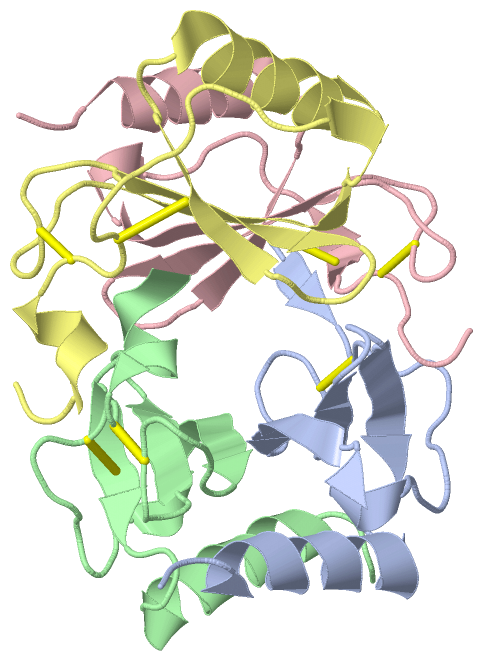
Image Asymmetric Unit
Asymmetric Unit  (Jmol Viewer)
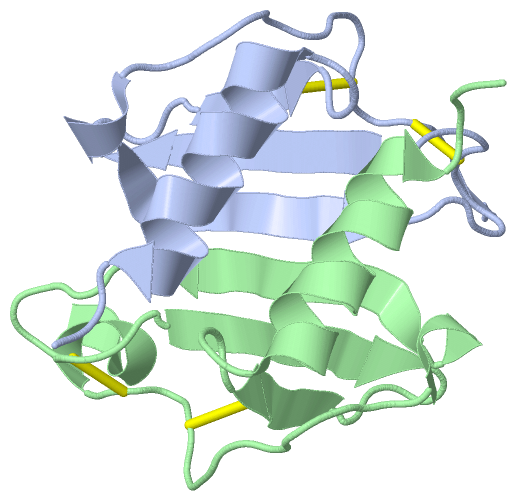
Image Biological Unit 1
Biological Unit 1  (Jmol Viewer)
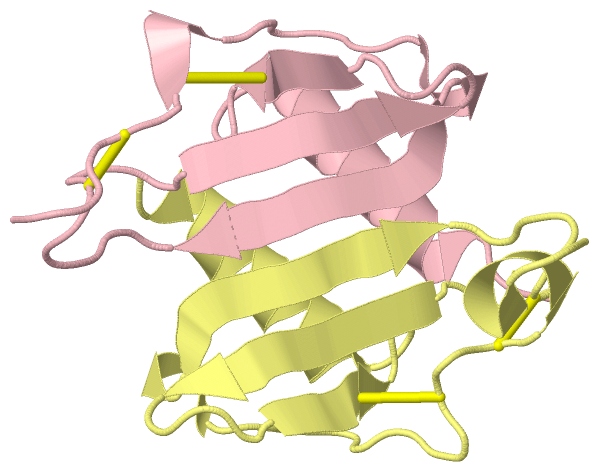
Image Biological Unit 2
Biological Unit 2  (Jmol Viewer)
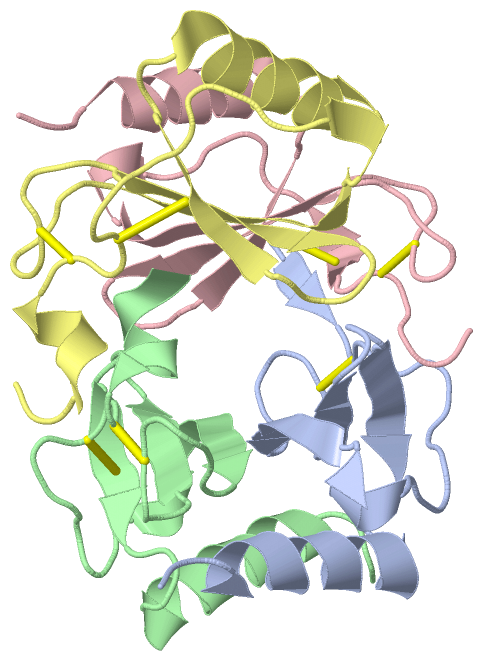
Image Biological Unit 3
Biological Unit 3  (Jmol Viewer)

(-) Description

Title :  CRYSTAL STRUCTURE ANALYSIS OF MIP2
 
Authors :  D. Rajasekaran
Date :  24 May 10  (Deposition) - 08 Jun 11  (Release) - 03 Oct 12  (Revision)
Method :  X-RAY DIFFRACTION
Resolution :  1.90
Chains :  Asym. Unit :  A,B,C,D
Biol. Unit 1:  A,B  (1x)
Biol. Unit 2:  C,D  (1x)
Biol. Unit 3:  A,B,C,D  (1x)
Keywords :  Mip-2 Structure, Macrophage Inflammatory Protein 2, Cxcl2, Cytokine (Keyword Search: [Gene Ontology, PubMed, Web (Google))
 
Reference :  D. Rajasekaran, C. Keeler, M. A. Syed, M. C. Jones, J. K. Harrison, D. Wu V. Bhandari, M. E. Hodsdon, E. J. Lolis
A Model Of Gag/Mip-2/Cxcr2 Interfaces And Its Functional Effects.
Biochemistry V. 51 5642 2012
PubMed-ID: 22686371  |  Reference-DOI: 10.1021/BI3001566

(-) Compounds

Molecule 1 - C-X-C MOTIF CHEMOKINE 2
    ChainsA, B, C, D
    EngineeredYES
    Expression SystemPICHIA PASTORIS
    Expression System StrainGS115
    Expression System Taxid644223
    FragmentRESIDUES 28-100
    GeneCXCL2, MIP-2, MIP2, SCYB2
    Organism CommonMOUSE
    Organism ScientificMUS MUSCULUS
    Organism Taxid10090
    SynonymMACROPHAGE INFLAMMATORY PROTEIN 2, MIP2

 Structural Features

(-) Chains, Units

  1234
Asymmetric Unit ABCD
Biological Unit 1 (1x)AB  
Biological Unit 2 (1x)  CD
Biological Unit 3 (1x)ABCD

Summary Information (see also Sequences/Alignments below)

(-) Ligands, Modified Residues, Ions  (0, 0)

(no "Ligand,Modified Residues,Ions" information available for 3N52)

(-) Sites  (0, 0)

(no "Site" information available for 3N52)

(-) SS Bonds  (8, 8)

Asymmetric Unit
No.Residues
1A:9 -A:35
2A:11 -A:51
3B:9 -B:35
4B:11 -B:51
5C:9 -C:35
6C:11 -C:51
7D:9 -D:35
8D:11 -D:51

(-) Cis Peptide Bonds  (0, 0)

(no "Cis Peptide Bond" information available for 3N52)

 Sequence-Structure Mapping

(-) SAPs(SNPs)/Variants  (0, 0)

(no "SAP(SNP)/Variant" information available for 3N52)

(-) PROSITE Motifs  (1, 4)

Asymmetric Unit (1, 4)
 PROSITEUniProtKBPDB
No.IDACDescriptionIDLocationCountLocation
1SMALL_CYTOKINES_CXCPS00471 Small cytokines (intercrine/chemokine) C-x-C subfamily signature.CXCL2_MOUSE36-80


  4A:9-53
B:9-53
C:9-53
D:9-53
Biological Unit 1 (1, 2)
 PROSITEUniProtKBPDB
No.IDACDescriptionIDLocationCountLocation
1SMALL_CYTOKINES_CXCPS00471 Small cytokines (intercrine/chemokine) C-x-C subfamily signature.CXCL2_MOUSE36-80


  2A:9-53
B:9-53
-
-
Biological Unit 2 (1, 2)
 PROSITEUniProtKBPDB
No.IDACDescriptionIDLocationCountLocation
1SMALL_CYTOKINES_CXCPS00471 Small cytokines (intercrine/chemokine) C-x-C subfamily signature.CXCL2_MOUSE36-80


  2-
-
C:9-53
D:9-53
Biological Unit 3 (1, 4)
 PROSITEUniProtKBPDB
No.IDACDescriptionIDLocationCountLocation
1SMALL_CYTOKINES_CXCPS00471 Small cytokines (intercrine/chemokine) C-x-C subfamily signature.CXCL2_MOUSE36-80


  4A:9-53
B:9-53
C:9-53
D:9-53

(-) Exons   (0, 0)

(no "Exon" information available for 3N52)

(-) Sequences/Alignments

Asymmetric Unit
   Reformat: Number of residues per line =  ('0' or empty: single-line sequence representation)
  Number of residues per labelling interval =   
  UniProt sequence: complete  aligned part    
   Show mapping: SCOP domains CATH domains Pfam domains Secondary structure (by author)
SAPs(SNPs) PROSITE motifs Exons
(details for a mapped element are shown in a popup box when the mouse pointer rests over it)
Chain A from PDB  Type:PROTEIN  Length:67
 aligned with CXCL2_MOUSE | P10889 from UniProtKB/Swiss-Prot  Length:100

    Alignment length:67
                                    41        51        61        71        81        91       
           CXCL2_MOUSE   32 SELRCQCLKTLPRVDFKNIQSLSVTPPGPHCAQTEVIATLKGGQKVCLDPEAPLVQKIIQKILNKGK 98
               SCOP domains d3n52a_ A: Macrophage inflammatory protein-2                        SCOP domains
               CATH domains ------------------------------------------------------------------- CATH domains
               Pfam domains ------------------------------------------------------------------- Pfam domains
         Sec.struct. author .ee...........hhh.eeeeeee.........eeeeee....eeee...hhhhhhhhhhhhh... Sec.struct. author
                 SAPs(SNPs) ------------------------------------------------------------------- SAPs(SNPs)
                    PROSITE ----SMALL_CYTOKINES_CXC  PDB: A:9-53             ------------------ PROSITE
                 Transcript ------------------------------------------------------------------- Transcript
                  3n52 A  5 SELRCQCLKTLPRVDFKNIQSLSVTPPGPHCAQTEVIATLKGGQKVCLDPEAPLVQKIIQKILNKGK 71
                                    14        24        34        44        54        64       

Chain B from PDB  Type:PROTEIN  Length:71
 aligned with CXCL2_MOUSE | P10889 from UniProtKB/Swiss-Prot  Length:100

    Alignment length:71
                                    38        48        58        68        78        88        98 
           CXCL2_MOUSE   29 VVASELRCQCLKTLPRVDFKNIQSLSVTPPGPHCAQTEVIATLKGGQKVCLDPEAPLVQKIIQKILNKGKA 99
               SCOP domains d3n52b_ B: Macrophage inflammatory protein-2                            SCOP domains
               CATH domains ----------------------------------------------------------------------- CATH domains
               Pfam domains ----------------------------------------------------------------------- Pfam domains
         Sec.struct. author hhhhhh...........hhh.eeeeeee.........eeeeee....eeee...hhhhhhhhhhhhh.... Sec.struct. author
                 SAPs(SNPs) ----------------------------------------------------------------------- SAPs(SNPs)
                    PROSITE -------SMALL_CYTOKINES_CXC  PDB: B:9-53             ------------------- PROSITE
                 Transcript ----------------------------------------------------------------------- Transcript
                  3n52 B  2 VVASELRCQCLKTLPRVDFKNIQSLSVTPPGPHCAQTEVIATLKGGQKVCLDPEAPLVQKIIQKILNKGKA 72
                                    11        21        31        41        51        61        71 

Chain C from PDB  Type:PROTEIN  Length:67
 aligned with CXCL2_MOUSE | P10889 from UniProtKB/Swiss-Prot  Length:100

    Alignment length:67
                                    41        51        61        71        81        91       
           CXCL2_MOUSE   32 SELRCQCLKTLPRVDFKNIQSLSVTPPGPHCAQTEVIATLKGGQKVCLDPEAPLVQKIIQKILNKGK 98
               SCOP domains d3n52c_ C: Macrophage inflammatory protein-2                        SCOP domains
               CATH domains ------------------------------------------------------------------- CATH domains
               Pfam domains ------------------------------------------------------------------- Pfam domains
         Sec.struct. author ......eee.....hhh.eeeeeee.........eeeeee....eeee...hhhhhhhhhhhhh... Sec.struct. author
                 SAPs(SNPs) ------------------------------------------------------------------- SAPs(SNPs)
                    PROSITE ----SMALL_CYTOKINES_CXC  PDB: C:9-53             ------------------ PROSITE
                 Transcript ------------------------------------------------------------------- Transcript
                  3n52 C  5 SELRCQCLKTLPRVDFKNIQSLSVTPPGPHCAQTEVIATLKGGQKVCLDPEAPLVQKIIQKILNKGK 71
                                    14        24        34        44        54        64       

Chain D from PDB  Type:PROTEIN  Length:70
 aligned with CXCL2_MOUSE | P10889 from UniProtKB/Swiss-Prot  Length:100

    Alignment length:70
                                    37        47        57        67        77        87        97
           CXCL2_MOUSE   28 AVVASELRCQCLKTLPRVDFKNIQSLSVTPPGPHCAQTEVIATLKGGQKVCLDPEAPLVQKIIQKILNKG 97
               SCOP domains d3n52d_ D: Macrophage inflammatory protein-2                           SCOP domains
               CATH domains ---------------------------------------------------------------------- CATH domains
           Pfam domains (1) IL8-3n52D01 D:1-67                                                 --- Pfam domains (1)
           Pfam domains (2) IL8-3n52D02 D:1-67                                                 --- Pfam domains (2)
           Pfam domains (3) IL8-3n52D03 D:1-67                                                 --- Pfam domains (3)
           Pfam domains (4) IL8-3n52D04 D:1-67                                                 --- Pfam domains (4)
         Sec.struct. author ..hhhhh...........hhh.eeeeeee.........eeeeee....eeee...hhhhhhhhhhhhh.. Sec.struct. author
                 SAPs(SNPs) ---------------------------------------------------------------------- SAPs(SNPs)
                    PROSITE --------SMALL_CYTOKINES_CXC  PDB: D:9-53             ----------------- PROSITE
                 Transcript ---------------------------------------------------------------------- Transcript
                  3n52 D  1 AVVASELRCQCLKTLPRVDFKNIQSLSVTPPGPHCAQTEVIATLKGGQKVCLDPEAPLVQKIIQKILNKG 70
                                    10        20        30        40        50        60        70

   Legend:   → Mismatch (orange background)
  - → Gap (green background, '-', border residues have a numbering label)
    → Modified Residue (blue background, lower-case, 'x' indicates undefined single-letter code, labelled with number + name)
  x → Chemical Group (purple background, 'x', labelled with number + name, e.g. ACE or NH2)
  extra numbering lines below/above indicate numbering irregularities and modified residue names etc., number ends below/above '|'

 Classification and Annotation

(-) SCOP Domains  (1, 4)

Asymmetric Unit

(-) CATH Domains  (0, 0)

(no "CATH Domain" information available for 3N52)

(-) Pfam Domains  (1, 4)

Asymmetric Unit
(-)
Family: IL8 (55)

(-) Gene Ontology  (27, 27)

Asymmetric Unit(hide GO term definitions)
Chain A,B,C,D   (CXCL2_MOUSE | P10889)
molecular function
    GO:0045236    CXCR chemokine receptor binding    Interacting selectively and non-covalently with a chemokine receptor in the CXCR family.
    GO:0008009    chemokine activity    The function of a family of small chemotactic cytokines; their name is derived from their ability to induce directed chemotaxis in nearby responsive cells. All chemokines possess a number of conserved cysteine residues involved in intramolecular disulfide bond formation. Some chemokines are considered pro-inflammatory and can be induced during an immune response to recruit cells of the immune system to a site of infection, while others are considered homeostatic and are involved in controlling the migration of cells during normal processes of tissue maintenance or development. Chemokines are found in all vertebrates, some viruses and some bacteria.
    GO:0005125    cytokine activity    Functions to control the survival, growth, differentiation and effector function of tissues and cells.
biological process
    GO:0007186    G-protein coupled receptor signaling pathway    A series of molecular signals that proceeds with an activated receptor promoting the exchange of GDP for GTP on the alpha-subunit of an associated heterotrimeric G-protein complex. The GTP-bound activated alpha-G-protein then dissociates from the beta- and gamma-subunits to further transmit the signal within the cell. The pathway begins with receptor-ligand interaction, or for basal GPCR signaling the pathway begins with the receptor activating its G protein in the absence of an agonist, and ends with regulation of a downstream cellular process, e.g. transcription. The pathway can start from the plasma membrane, Golgi or nuclear membrane (PMID:24568158 and PMID:16902576).
    GO:0071347    cellular response to interleukin-1    Any process that results in a change in state or activity of a cell (in terms of movement, secretion, enzyme production, gene expression, etc.) as a result of an interleukin-1 stimulus.
    GO:0071222    cellular response to lipopolysaccharide    Any process that results in a change in state or activity of a cell (in terms of movement, secretion, enzyme production, gene expression, etc.) as a result of a lipopolysaccharide stimulus; lipopolysaccharide is a major component of the cell wall of gram-negative bacteria.
    GO:0070098    chemokine-mediated signaling pathway    A series of molecular signals initiated by the binding of a chemokine to a receptor on the surface of a cell, and ending with regulation of a downstream cellular process, e.g. transcription.
    GO:0006935    chemotaxis    The directed movement of a motile cell or organism, or the directed growth of a cell guided by a specific chemical concentration gradient. Movement may be towards a higher concentration (positive chemotaxis) or towards a lower concentration (negative chemotaxis).
    GO:0006955    immune response    Any immune system process that functions in the calibrated response of an organism to a potential internal or invasive threat.
    GO:0006954    inflammatory response    The immediate defensive reaction (by vertebrate tissue) to infection or injury caused by chemical or physical agents. The process is characterized by local vasodilation, extravasation of plasma into intercellular spaces and accumulation of white blood cells and macrophages.
    GO:0030595    leukocyte chemotaxis    The movement of a leukocyte in response to an external stimulus.
    GO:0070997    neuron death    The process of cell death in a neuron.
    GO:0030593    neutrophil chemotaxis    The directed movement of a neutrophil cell, the most numerous polymorphonuclear leukocyte found in the blood, in response to an external stimulus, usually an infection or wounding.
    GO:0007204    positive regulation of cytosolic calcium ion concentration    Any process that increases the concentration of calcium ions in the cytosol.
    GO:0090023    positive regulation of neutrophil chemotaxis    Any process that increases the frequency, rate, or extent of neutrophil chemotaxis. Neutrophil chemotaxis is the directed movement of a neutrophil cell, the most numerous polymorphonuclear leukocyte found in the blood, in response to an external stimulus, usually an infection or wounding.
    GO:0042127    regulation of cell proliferation    Any process that modulates the frequency, rate or extent of cell proliferation.
    GO:0001975    response to amphetamine    Any process that results in a change in state or activity of a cell or an organism (in terms of movement, secretion, enzyme production, gene expression, etc.) as a result of an amphetamine stimulus. Amphetamines consist of a group of compounds related to alpha-methylphenethylamine.
    GO:0032355    response to estradiol    Any process that results in a change in state or activity of a cell or an organism (in terms of movement, secretion, enzyme production, gene expression, etc.) as a result of stimulus by estradiol, a C18 steroid hormone hydroxylated at C3 and C17 that acts as a potent estrogen.
    GO:0010332    response to gamma radiation    Any process that results in a change in state or activity of a cell or an organism (in terms of movement, secretion, enzyme production, gene expression, etc.) as a result of a gamma radiation stimulus. Gamma radiation is a form of electromagnetic radiation (EMR) or light emission of a specific frequency produced from sub-atomic particle interaction, such as electron-positron annihilation and radioactive decay. Gamma rays are generally characterized as EMR having the highest frequency and energy, and also the shortest wavelength, within the electromagnetic radiation spectrum.
    GO:0051384    response to glucocorticoid    Any process that results in a change in state or activity of a cell or an organism (in terms of movement, secretion, enzyme production, gene expression, etc.) as a result of a glucocorticoid stimulus. Glucocorticoids are hormonal C21 corticosteroids synthesized from cholesterol with the ability to bind with the cortisol receptor and trigger similar effects. Glucocorticoids act primarily on carbohydrate and protein metabolism, and have anti-inflammatory effects.
    GO:0009408    response to heat    Any process that results in a change in state or activity of a cell or an organism (in terms of movement, secretion, enzyme production, gene expression, etc.) as a result of a heat stimulus, a temperature stimulus above the optimal temperature for that organism.
    GO:0032496    response to lipopolysaccharide    Any process that results in a change in state or activity of an organism (in terms of movement, secretion, enzyme production, gene expression, etc.) as a result of a lipopolysaccharide stimulus; lipopolysaccharide is a major component of the cell wall of gram-negative bacteria.
    GO:0002237    response to molecule of bacterial origin    Any process that results in a change in state or activity of an organism (in terms of movement, secretion, enzyme production, gene expression, etc.) as a result of a stimulus by molecules of bacterial origin such as peptides derived from bacterial flagellin.
    GO:0042060    wound healing    The series of events that restore integrity to a damaged tissue, following an injury.
cellular component
    GO:0005829    cytosol    The part of the cytoplasm that does not contain organelles but which does contain other particulate matter, such as protein complexes.
    GO:0005576    extracellular region    The space external to the outermost structure of a cell. For cells without external protective or external encapsulating structures this refers to space outside of the plasma membrane. This term covers the host cell environment outside an intracellular parasite.
    GO:0005615    extracellular space    That part of a multicellular organism outside the cells proper, usually taken to be outside the plasma membranes, and occupied by fluid.

 Visualization

(-) Interactive Views

Asymmetric Unit
  Complete Structure
    Jena3D(integrated viewing of ligand, site, SAP, PROSITE, SCOP information)
    WebMol | AstexViewer[tm]@PDBe
(Java Applets, require no local installation except for Java; loading may be slow)
    STRAP
(Java WebStart application, automatic local installation, requires Java; full application with system access!)
    RasMol
(require local installation)
    Molscript (VRML)
(requires installation of a VRML viewer; select preferred view via VRML and generate a mono or stereo PDF format file)
 
  Ligands, Modified Residues, Ions
(no "Ligands, Modified Residues, Ions" information available for 3n52)
 
  Sites
(no "Sites" information available for 3n52)
 
  Cis Peptide Bonds
(no "Cis Peptide Bonds" information available for 3n52)
 
Biological Units
  Complete Structure
    Biological Unit 1  [ Jena3D ]
    Biological Unit 2  [ Jena3D ]
    Biological Unit 3  [ Jena3D ]

(-) Still Images

Jmol
  protein: cartoon or spacefill or dots and stick; nucleic acid: cartoon and stick; ligands: spacefill; active site: stick
Molscript
  protein, nucleic acid: cartoon; ligands: spacefill; active site: ball and stick

 Databases and Analysis Tools

(-) Databases

Access by PDB/NDB ID
  3n52
    Family and Domain InformationProDom | SYSTERS
    General Structural InformationGlycoscienceDB | MMDB | NDB | OCA | PDB | PDBe | PDBj | PDBsum | PDBWiki | PQS | PROTEOPEDIA
    Orientation in MembranesOPM
    Protein SurfaceSURFACE
    Secondary StructureDSSP (structure derived) | HSSP (homology derived)
    Structural GenomicsGeneCensus
    Structural NeighboursCE | VAST
    Structure ClassificationCATH | Dali | SCOP
    Validation and Original DataBMRB Data View | BMRB Restraints Grid | EDS | PROCHECK | RECOORD | WHAT_CHECK
 
Access by UniProt ID/Accession number
  CXCL2_MOUSE | P10889
    Comparative Protein Structure ModelsModBase
    Genomic InformationEnsembl
    Protein-protein InteractionDIP
    Sequence, Family and Domain InformationInterPro | Pfam | SMART | UniProtKB/SwissProt
 
Access by Enzyme Classificator   (EC Number)
  (no 'Enzyme Classificator' available)
    General Enzyme InformationBRENDA | EC-PDB | Enzyme | IntEnz
    PathwayKEGG | MetaCyc
 
Access by Disease Identifier   (MIM ID)
  (no 'MIM ID' available)
    Disease InformationOMIM
 
Access by GenAge ID
  (no 'GenAge ID' available)
    Age Related InformationGenAge

(-) Analysis Tools

Access by PDB/NDB ID
    Domain InformationXDom
    Interatomic Contacts of Structural UnitsCSU
    Ligand-protein ContactsLPC
    Protein CavitiescastP
    Sequence and Secondary StructurePDBCartoon
    Structure AlignmentSTRAP(Java WebStart application, automatic local installation, requires Java; full application with system access!)
    Structure and Sequence BrowserSTING
 
Access by UniProt ID/Accession number
  CXCL2_MOUSE | P10889
    Protein Disorder PredictionDisEMBL | FoldIndex | GLOBPLOT (for more information see DisProt)

 Related Entries

(-) Entries Sharing at Least One Protein Chain (UniProt ID)

UniProtKB/Swiss-Prot
        CXCL2_MOUSE | P108891mi2

(-) Related Entries Specified in the PDB File

(no "Related Entries Specified in the PDB File" available for 3N52)