Show PDB file:   
         Plain Text   HTML   (compressed file size)
QuickSearch:   
by PDB,NDB,UniProt,PROSITE Code or Search Term(s)  
(-)Asym./Biol. Unit
(-)Asym./Biol. Unit - sites
collapse expand < >
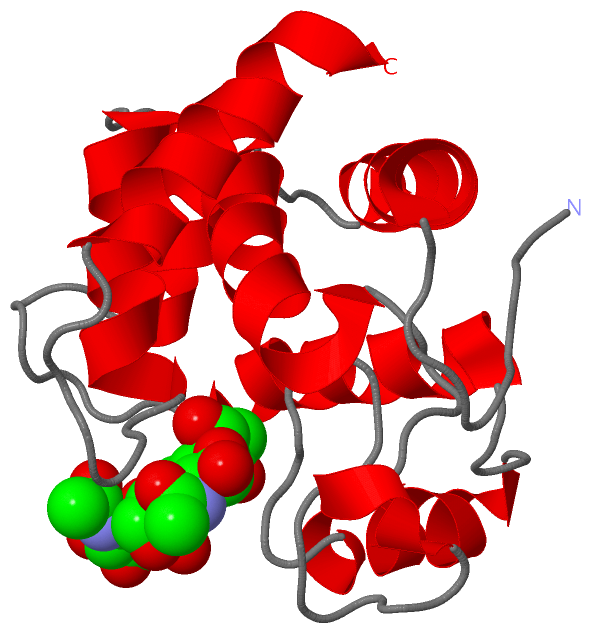
Image Asym./Biol. Unit
Asym./Biol. Unit  (Jmol Viewer)
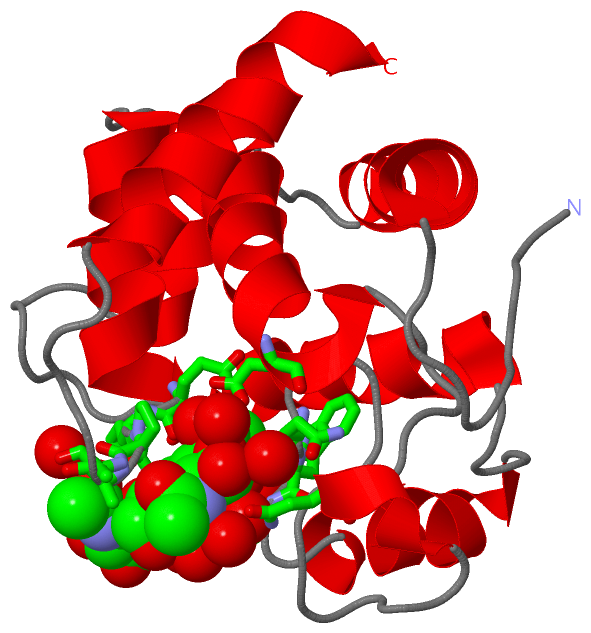
Image Asym./Biol. Unit - sites
Asym./Biol. Unit - sites  (Jmol Viewer)

(-) Description

Title :  CRYSTAL AND CRYOEM STRUCTURAL STUDIES OF A CELL WALL DEGRADING ENZYME IN THE BACTERIOPHAGE PHI29 TAIL
 
Authors :  Y. Xiang, M. G. Rossmann
Date :  11 Apr 08  (Deposition) - 01 Jul 08  (Release) - 13 Jul 11  (Revision)
Method :  X-RAY DIFFRACTION
Resolution :  1.37
Chains :  Asym./Biol. Unit :  A
Keywords :  Cell Wall, Phi29, Hydrolase, Infection, Late Protein (Keyword Search: [Gene Ontology, PubMed, Web (Google))
 
Reference :  Y. Xiang, M. C. Morais, D. N. Cohen, V. D. Bowman, D. L. Anderson, M. G. Rossmann
Crystal And Cryoem Structural Studies Of A Cell Wall Degrading Enzyme In The Bacteriophage Phi29 Tail.
Proc. Natl. Acad. Sci. Usa V. 105 9552 2008
PubMed-ID: 18606992  |  Reference-DOI: 10.1073/PNAS.0803787105

(-) Compounds

Molecule 1 - MORPHOGENESIS PROTEIN 1
    ChainsA
    EngineeredYES
    Expression SystemESCHERICHIA COLI
    Expression System PlasmidPTYB1
    Expression System StrainBL21DE3 CODON PLUS RP
    Expression System Vector TypePLASMID
    Gene13
    Organism ScientificBACTERIOPHAGE PHI-29
    SynonymLATE PROTEIN GP13

 Structural Features

(-) Chains, Units

  1
Asymmetric/Biological Unit A

Summary Information (see also Sequences/Alignments below)

(-) Ligands, Modified Residues, Ions  (1, 3)

Asymmetric/Biological Unit (1, 3)
No.NameCountTypeFull Name
1NAG3Ligand/IonN-ACETYL-D-GLUCOSAMINE

(-) Sites  (3, 3)

Asymmetric Unit (3, 3)
No.NameEvidenceResiduesDescription
1AC1SOFTWAREGLU A:45 , GLN A:54 , GLN A:69 , THR A:71 , GLU A:137 , PRO A:139 , ALA A:140 , HOH A:215 , HOH A:221 , HOH A:272 , HOH A:313BINDING SITE FOR RESIDUE NAG A 201
2AC2SOFTWARETRP A:70 , THR A:71 , GLN A:106 , GLU A:137 , ARG A:138 , HOH A:228 , HOH A:283 , HOH A:310BINDING SITE FOR RESIDUE NAG A 202
3AC3SOFTWAREARG A:138 , HOH A:259 , HOH A:316BINDING SITE FOR RESIDUE NAG A 203

(-) SS Bonds  (0, 0)

(no "SS Bond" information available for 3CT5)

(-) Cis Peptide Bonds  (1, 1)

Asymmetric/Biological Unit
No.Residues
1Thr A:71 -Pro A:72

 Sequence-Structure Mapping

(-) SAPs(SNPs)/Variants  (0, 0)

(no "SAP(SNP)/Variant" information available for 3CT5)

(-) PROSITE Motifs  (0, 0)

(no "PROSITE Motif" information available for 3CT5)

(-) Exons   (0, 0)

(no "Exon" information available for 3CT5)

(-) Sequences/Alignments

Asymmetric/Biological Unit
   Reformat: Number of residues per line =  ('0' or empty: single-line sequence representation)
  Number of residues per labelling interval =   
  UniProt sequence: complete  aligned part    
   Show mapping: SCOP domains CATH domains Pfam domains Secondary structure (by author)
SAPs(SNPs) PROSITE motifs Exons
(details for a mapped element are shown in a popup box when the mouse pointer rests over it)
Chain A from PDB  Type:PROTEIN  Length:159
 aligned with GP13_BPPH2 | P15132 from UniProtKB/Swiss-Prot  Length:365

    Alignment length:159
                                    10        20        30        40        50        60        70        80        90       100       110       120       130       140       150         
           GP13_BPPH2     1 MVYVSNKYLTMSEMKVNAQYILNYLSSNGWTKQAICGMLGNMQSESTINPGLWQNLDEGNTSLGFGLVQWTPASNYINWANSQGLPYKDMDSELKRIIWEVNNNAQWINLRDMTFKEYIKSTKTPRELAMIFLASYERPANPNQPERGDQAEYWYKNLS 159
               SCOP domains --------------------------------------------------------------------------------------------------------------------------------------------------------------- SCOP domains
               CATH domains --------------------------------------------------------------------------------------------------------------------------------------------------------------- CATH domains
               Pfam domains --------------------------------------------------------------------------------------------------------------------------------------------------------------- Pfam domains
         Sec.struct. author .........hhhhhhhhhhhhhhhhhh...hhhhhhhhhhhhhhhhh.....hhhhh...............hhhhhhhhhhhh....hhhhhhhhhhhhhhhh.........hhhhhhhh..hhhhhhhhhhhhh........hhhhhhhhhhhhhh. Sec.struct. author
                 SAPs(SNPs) --------------------------------------------------------------------------------------------------------------------------------------------------------------- SAPs(SNPs)
                    PROSITE --------------------------------------------------------------------------------------------------------------------------------------------------------------- PROSITE
                 Transcript --------------------------------------------------------------------------------------------------------------------------------------------------------------- Transcript
                 3ct5 A   1 MVYVSNKYLTMSEMKVNAQYILNYLSSNGWTKQAICGMLGNMQSESTINPGLWQNLDEGNTSLGFGLVQWTPASNYINWANSQGLPYKNMDSELKRIIWEVNNNAQWINLRDMTFKEYIKSTKTPRELAMIFLASYERPANPNQPERGDQAEYWYKNLS 159
                                    10        20        30        40        50        60        70        80        90       100       110       120       130       140       150         

   Legend:   → Mismatch (orange background)
  - → Gap (green background, '-', border residues have a numbering label)
    → Modified Residue (blue background, lower-case, 'x' indicates undefined single-letter code, labelled with number + name)
  x → Chemical Group (purple background, 'x', labelled with number + name, e.g. ACE or NH2)
  extra numbering lines below/above indicate numbering irregularities and modified residue names etc., number ends below/above '|'

 Classification and Annotation

(-) SCOP Domains  (0, 0)

(no "SCOP Domain" information available for 3CT5)

(-) CATH Domains  (0, 0)

(no "CATH Domain" information available for 3CT5)

(-) Pfam Domains  (0, 0)

(no "Pfam Domain" information available for 3CT5)

(-) Gene Ontology  (15, 15)

Asymmetric/Biological Unit(hide GO term definitions)
Chain A   (GP13_BPPH2 | P15132)
molecular function
    GO:0003824    catalytic activity    Catalysis of a biochemical reaction at physiological temperatures. In biologically catalyzed reactions, the reactants are known as substrates, and the catalysts are naturally occurring macromolecular substances known as enzymes. Enzymes possess specific binding sites for substrates, and are usually composed wholly or largely of protein, but RNA that has catalytic activity (ribozyme) is often also regarded as enzymatic.
    GO:0016787    hydrolase activity    Catalysis of the hydrolysis of various bonds, e.g. C-O, C-N, C-C, phosphoric anhydride bonds, etc. Hydrolase is the systematic name for any enzyme of EC class 3.
    GO:0016798    hydrolase activity, acting on glycosyl bonds    Catalysis of the hydrolysis of any glycosyl bond.
    GO:0046872    metal ion binding    Interacting selectively and non-covalently with any metal ion.
    GO:0008237    metallopeptidase activity    Catalysis of the hydrolysis of peptide bonds by a mechanism in which water acts as a nucleophile, one or two metal ions hold the water molecule in place, and charged amino acid side chains are ligands for the metal ions.
    GO:0008233    peptidase activity    Catalysis of the hydrolysis of a peptide bond. A peptide bond is a covalent bond formed when the carbon atom from the carboxyl group of one amino acid shares electrons with the nitrogen atom from the amino group of a second amino acid.
biological process
    GO:0071555    cell wall organization    A process that results in the assembly, arrangement of constituent parts, or disassembly of the cell wall, the rigid or semi-rigid envelope lying outside the cell membrane of plant, fungal and most prokaryotic cells, maintaining their shape and protecting them from osmotic lysis.
    GO:0019835    cytolysis    The rupture of cell membranes and the loss of cytoplasm.
    GO:0042742    defense response to bacterium    Reactions triggered in response to the presence of a bacterium that act to protect the cell or organism.
    GO:0008152    metabolic process    The chemical reactions and pathways, including anabolism and catabolism, by which living organisms transform chemical substances. Metabolic processes typically transform small molecules, but also include macromolecular processes such as DNA repair and replication, and protein synthesis and degradation.
    GO:0006508    proteolysis    The hydrolysis of proteins into smaller polypeptides and/or amino acids by cleavage of their peptide bonds.
    GO:0046718    viral entry into host cell    The process that occurs after viral attachment by which a virus, or viral nucleic acid, breaches the plasma membrane or cell envelope and enters the host cell. The process ends when the viral nucleic acid is released into the host cell cytoplasm.
    GO:0019076    viral release from host cell    The dissemination of mature viral particles from the host cell, e.g. by cell lysis or the budding of virus particles from the cell membrane.
cellular component
    GO:0019012    virion    The complete fully infectious extracellular virus particle.
    GO:0098023    virus tail, tip    The basal end of the virus tail, which is used by the virus to attach to the host cell.

 Visualization

(-) Interactive Views

Asymmetric/Biological Unit
  Complete Structure
    Jena3D(integrated viewing of ligand, site, SAP, PROSITE, SCOP information)
    WebMol | AstexViewer[tm]@PDBe
(Java Applets, require no local installation except for Java; loading may be slow)
    STRAP
(Java WebStart application, automatic local installation, requires Java; full application with system access!)
    RasMol
(require local installation)
    Molscript (VRML)
(requires installation of a VRML viewer; select preferred view via VRML and generate a mono or stereo PDF format file)
 
  Ligands, Modified Residues, Ions
    NAG  [ RasMol | Jena3D ]  +environment [ RasMol | Jena3D ]
 
  Sites
    AC1  [ RasMol ]  +environment [ RasMol ]
    AC2  [ RasMol ]  +environment [ RasMol ]
    AC3  [ RasMol ]  +environment [ RasMol ]
 
  Cis Peptide Bonds
    Thr A:71 - Pro A:72   [ RasMol ]  
 

(-) Still Images

Jmol
  protein: cartoon or spacefill or dots and stick; nucleic acid: cartoon and stick; ligands: spacefill; active site: stick
Molscript
  protein, nucleic acid: cartoon; ligands: spacefill; active site: ball and stick

 Databases and Analysis Tools

(-) Databases

Access by PDB/NDB ID
  3ct5
    Family and Domain InformationProDom | SYSTERS
    General Structural InformationGlycoscienceDB | MMDB | NDB | OCA | PDB | PDBe | PDBj | PDBsum | PDBWiki | PQS | PROTEOPEDIA
    Orientation in MembranesOPM
    Protein SurfaceSURFACE
    Secondary StructureDSSP (structure derived) | HSSP (homology derived)
    Structural GenomicsGeneCensus
    Structural NeighboursCE | VAST
    Structure ClassificationCATH | Dali | SCOP
    Validation and Original DataBMRB Data View | BMRB Restraints Grid | EDS | PROCHECK | RECOORD | WHAT_CHECK
 
Access by UniProt ID/Accession number
  GP13_BPPH2 | P15132
    Comparative Protein Structure ModelsModBase
    Genomic InformationEnsembl
    Protein-protein InteractionDIP
    Sequence, Family and Domain InformationInterPro | Pfam | SMART | UniProtKB/SwissProt
 
Access by Enzyme Classificator   (EC Number)
  (no 'Enzyme Classificator' available)
    General Enzyme InformationBRENDA | EC-PDB | Enzyme | IntEnz
    PathwayKEGG | MetaCyc
 
Access by Disease Identifier   (MIM ID)
  (no 'MIM ID' available)
    Disease InformationOMIM
 
Access by GenAge ID
  (no 'GenAge ID' available)
    Age Related InformationGenAge

(-) Analysis Tools

Access by PDB/NDB ID
    Domain InformationXDom
    Interatomic Contacts of Structural UnitsCSU
    Ligand-protein ContactsLPC
    Protein CavitiescastP
    Sequence and Secondary StructurePDBCartoon
    Structure AlignmentSTRAP(Java WebStart application, automatic local installation, requires Java; full application with system access!)
    Structure and Sequence BrowserSTING
 
Access by UniProt ID/Accession number
  GP13_BPPH2 | P15132
    Protein Disorder PredictionDisEMBL | FoldIndex | GLOBPLOT (for more information see DisProt)

 Related Entries

(-) Entries Sharing at Least One Protein Chain (UniProt ID)

UniProtKB/Swiss-Prot
        GP13_BPPH2 | P151323csq 3csr 3csz 3ct0 3ct1

(-) Related Entries Specified in the PDB File

3csq GP13DC(RESIDUES 1 - 334)
3csr GP13NTD(RESIDUES 1 - 159)
3csz GP13NTD(RESIDUES 1 - 159) + NAG3
3ct0 GP13NTD(RESIDUES 1 - 159) + NAG4
3ct1 GP13NTD(RESIDUES 1 - 159) + NAG5