Show PDB file:   
         Plain Text   HTML   (compressed file size)
QuickSearch:   
by PDB,NDB,UniProt,PROSITE Code or Search Term(s)  
(-)Asymmetric Unit
(-)Biological Unit 1
collapse expand < >
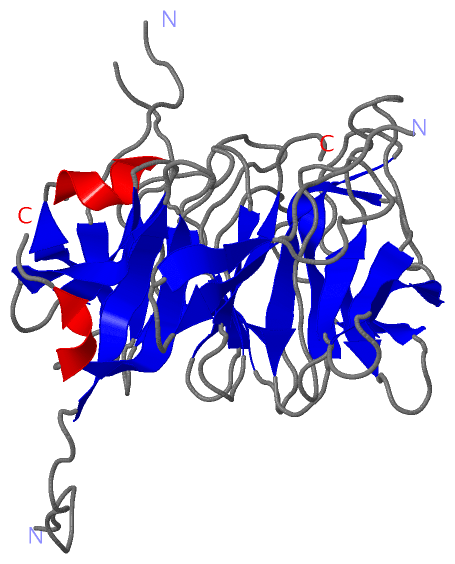
Image Asymmetric Unit
Asymmetric Unit  (Jmol Viewer)
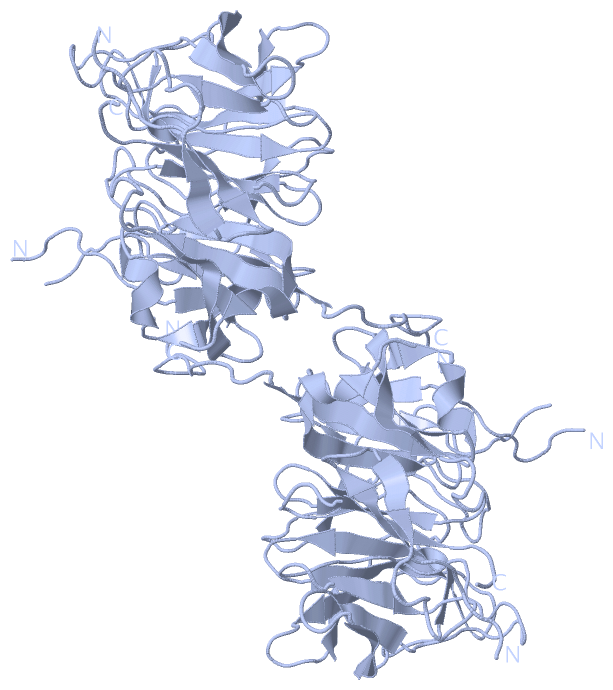
Image Biological Unit 1
Biological Unit 1  (Jmol Viewer)

(-) Description

Title :  THE NOVEL BETA-PROPELLER OF THE BTB-KELCH PROTEIN KRP1 PROVIDES THE BINDING SITE FOR LASP-1 THAT IS NECESSARY FOR PSEUDOPODIA EXTENSION
 
Authors :  C. H. Gray, L. C. Mcgarry, H. J. Spence, A. Riboldi-Tunnicliffe, B. W. Ozanne
Date :  31 Jul 09  (Deposition) - 01 Sep 09  (Release) - 13 Jul 11  (Revision)
Method :  X-RAY DIFFRACTION
Resolution :  2.00
Chains :  Asym. Unit :  A
Biol. Unit 1:  A  (2x)
Keywords :  Protein Binding, Invasion And Metastasis, Ubl Conjugation Pathway, Ubl Protein Folding, Cell Projection, Cytoskeleton, Kelch Repeat, Kelch Domain (Keyword Search: [Gene Ontology, PubMed, Web (Google))
 
Reference :  C. H. Gray, L. C. Mcgarry, H. J. Spence, A. Riboldi-Tunnicliffe, B. W. Ozanne
The Novel Beta-Propeller Of The Btb-Kelch Protein Krp1 Provides The Binding Site For Lasp-1 That Is Necessary For Pseudopodia Extension.
J. Biol. Chem. V. 284 30498 2009
PubMed-ID: 19726686  |  Reference-DOI: 10.1074/JBC.M109.023259

(-) Compounds

Molecule 1 - KELCH REPEAT AND BTB DOMAIN-CONTAINING PROTEIN 10
    ChainsA
    EngineeredYES
    Expression SystemESCHERICHIA COLI
    Expression System PlasmidPGEX6P-1
    Expression System StrainBL21(DE3) PLYSS
    Expression System Taxid469008
    FragmentKELCH DOMAIN, RESIDUES 289-606
    Organism CommonRAT
    Organism ScientificRATTUS NORVEGICUS
    Organism Taxid10116
    SynonymKRP1, KELCH-RELATED PROTEIN 1, KEL-LIKE PROTEIN 23, SARCOSIN

 Structural Features

(-) Chains, Units

  1
Asymmetric Unit A
Biological Unit 1 (2x)A

Summary Information (see also Sequences/Alignments below)

(-) Ligands, Modified Residues, Ions  (0, 0)

(no "Ligand,Modified Residues,Ions" information available for 2WOZ)

(-) Sites  (0, 0)

(no "Site" information available for 2WOZ)

(-) SS Bonds  (0, 0)

(no "SS Bond" information available for 2WOZ)

(-) Cis Peptide Bonds  (3, 3)

Asymmetric Unit
No.Residues
1Leu A:353 -Tyr A:354
2Gly A:405 -Lys A:406
3Ala A:551 -Met A:552

 Sequence-Structure Mapping

(-) SAPs(SNPs)/Variants  (0, 0)

(no "SAP(SNP)/Variant" information available for 2WOZ)

(-) PROSITE Motifs  (0, 0)

(no "PROSITE Motif" information available for 2WOZ)

(-) Exons   (0, 0)

(no "Exon" information available for 2WOZ)

(-) Sequences/Alignments

Asymmetric Unit
   Reformat: Number of residues per line =  ('0' or empty: single-line sequence representation)
  Number of residues per labelling interval =   
  UniProt sequence: complete  aligned part    
   Show mapping: SCOP domains CATH domains Pfam domains Secondary structure (by author)
SAPs(SNPs) PROSITE motifs Exons
(details for a mapped element are shown in a popup box when the mouse pointer rests over it)
Chain A from PDB  Type:PROTEIN  Length:307
 aligned with KLH41_RAT | Q9ER30 from UniProtKB/Swiss-Prot  Length:606

    Alignment length:318
                                   298       308       318       328       338       348       358       368       378       388       398       408       418       428       438       448       458       468       478       488       498       508       518       528       538       548       558       568       578       588       598        
            KLH41_RAT   289 PGYLNDIPRHGMFVKDLILLVNDTAAVAYDPMENECYLTALAEQIPRNHSSIVTQQNQVYVVGGLYVDEENKDQPLQSYFFQLDNVSSEWVGLPPLPSARCLFGLGEVDDKIYVVAGKDLQTEASLDSVLCYDPVAAKWSEVKNLPIKVYGHNVISHNGMIYCLGGKTDDKKCTNRVFIYNPKKGDWKDLAPMKTPRSMFGVAIHKGKIVIAGGVTEDGLSASVEAFDLKTNKWEVMTEFPQERSSISLVSLAGSLYAIGGFAMIQLESKEFAPTEVNDIWKYEDDKKEWAGMLKEIRYASGASCLATRLNLFKLSKL 606
               SCOP domains ------------------------------------------------------------------------------------------------------------------------------------------------------------------------------------------------------------------------------------------------------------------------------------------------------------------------------ SCOP domains
               CATH domains ------------------------------------------------------------------------------------------------------------------------------------------------------------------------------------------------------------------------------------------------------------------------------------------------------------------------------ CATH domains
               Pfam domains ------------------------------------------------------------------------------------------------------------------------------------------------------------------------------------------------------------------------------------------------------------------------------------------------------------------------------ Pfam domains
         Sec.struct. author .............eeeeeeee...eeeeee....eeeeeee........eeee.....eeee.....-------......eeee....eee....................eeee.............eeeee....eeeee......eeeeeeee....eeeeeeee........eeee......eeee............ee....eee.............eee......eee...........eeee....eeee.......----.........eeeee....eeeeee..hhhhh..eeeeeeee.hhh... Sec.struct. author
                 SAPs(SNPs) ------------------------------------------------------------------------------------------------------------------------------------------------------------------------------------------------------------------------------------------------------------------------------------------------------------------------------ SAPs(SNPs)
                    PROSITE ------------------------------------------------------------------------------------------------------------------------------------------------------------------------------------------------------------------------------------------------------------------------------------------------------------------------------ PROSITE
                 Transcript ------------------------------------------------------------------------------------------------------------------------------------------------------------------------------------------------------------------------------------------------------------------------------------------------------------------------------ Transcript
                 2woz A 289 PGYLNDIPRHGMFVKDLILLVNDTAAVAYDPMENECYLTALAEQIPRNHSSIVTQQNQVYVVGGLYV-------PLQSYFFQLDNVSSEWVGLPPLPSARCLFGLGEVDDKIYVVAGKDLQTEASLDSVLCYDPVAAKWSEVKNLPIKVYGHNVISHNGMIYCLGGKTDDKKCTNRVFIYNPKKGDWKDLAPMKTPRSMFGVAIHKGKIVIAGGVTEDGLSASVEAFDLKTNKWEVMTEFPQERSSISLVSLAGSLYAIGGFAMIQ----EFAPTEVNDIWKYEDDKKEWAGMLKEIRYASGASCLATRLNLFKLSKL 606
                                   298       308       318       328       338       348      |  -    |  368       378       388       398       408       418       428       438       448       458       468       478       488       498       508       518       528       538       548     |   -|      568       578       588       598        
                                                                                            355     363                                                                                                                                                                                            554  559                                               

   Legend:   → Mismatch (orange background)
  - → Gap (green background, '-', border residues have a numbering label)
    → Modified Residue (blue background, lower-case, 'x' indicates undefined single-letter code, labelled with number + name)
  x → Chemical Group (purple background, 'x', labelled with number + name, e.g. ACE or NH2)
  extra numbering lines below/above indicate numbering irregularities and modified residue names etc., number ends below/above '|'

 Classification and Annotation

(-) SCOP Domains  (0, 0)

(no "SCOP Domain" information available for 2WOZ)

(-) CATH Domains  (0, 0)

(no "CATH Domain" information available for 2WOZ)

(-) Pfam Domains  (0, 0)

(no "Pfam Domain" information available for 2WOZ)

(-) Gene Ontology  (25, 25)

Asymmetric Unit(hide GO term definitions)
Chain A   (KLH41_RAT | Q9ER30)
molecular function
    GO:0005515    protein binding    Interacting selectively and non-covalently with any protein or protein complex (a complex of two or more proteins that may include other nonprotein molecules).
    GO:0004842    ubiquitin-protein transferase activity    Catalysis of the transfer of ubiquitin from one protein to another via the reaction X-Ub + Y --> Y-Ub + X, where both X-Ub and Y-Ub are covalent linkages.
biological process
    GO:0030239    myofibril assembly    Formation of myofibrils, the repeating units of striated muscle.
    GO:0016567    protein ubiquitination    The process in which one or more ubiquitin groups are added to a protein.
    GO:0031275    regulation of lateral pseudopodium assembly    Any process that modulates the frequency, rate or extent of the assembly of pseudopodia from the lateral side of the cell.
    GO:0045661    regulation of myoblast differentiation    Any process that modulates the frequency, rate or extent of myoblast differentiation. A myoblast is a mononucleate cell type that, by fusion with other myoblasts, gives rise to the myotubes that eventually develop into skeletal muscle fibers.
    GO:2000291    regulation of myoblast proliferation    Any process that modulates the frequency, rate or extent of myoblast proliferation.
    GO:2001014    regulation of skeletal muscle cell differentiation    Any process that modulates the frequency, rate or extent of skeletal muscle cell differentiation.
    GO:0045214    sarcomere organization    The myofibril assembly process that results in the organization of muscle actomyosin into sarcomeres. The sarcomere is the repeating unit of a myofibril in a muscle cell, composed of an array of overlapping thick and thin filaments between two adjacent Z discs.
    GO:0035914    skeletal muscle cell differentiation    The process in which a relatively unspecialized cell acquires specialized features of a skeletal muscle cell, a somatic cell located in skeletal muscle.
    GO:0048741    skeletal muscle fiber development    The process whose specific outcome is the progression of the skeletal muscle fiber over time, from its formation to the mature structure. Muscle fibers are formed by the maturation of myotubes. They can be classed as slow, intermediate/fast or fast.
cellular component
    GO:0031463    Cul3-RING ubiquitin ligase complex    A ubiquitin ligase complex in which a cullin from the Cul3 subfamily and a RING domain protein form the catalytic core; substrate specificity is conferred by a BTB-domain-containing protein.
    GO:0031430    M band    The midline of aligned thick filaments in a sarcomere; location of specific proteins that link thick filaments. Depending on muscle type the M band consists of different numbers of M lines.
    GO:0042995    cell projection    A prolongation or process extending from a cell, e.g. a flagellum or axon.
    GO:0005737    cytoplasm    All of the contents of a cell excluding the plasma membrane and nucleus, but including other subcellular structures.
    GO:0005856    cytoskeleton    Any of the various filamentous elements that form the internal framework of cells, and typically remain after treatment of the cells with mild detergent to remove membrane constituents and soluble components of the cytoplasm. The term embraces intermediate filaments, microfilaments, microtubules, the microtrabecular lattice, and other structures characterized by a polymeric filamentous nature and long-range order within the cell. The various elements of the cytoskeleton not only serve in the maintenance of cellular shape but also have roles in other cellular functions, including cellular movement, cell division, endocytosis, and movement of organelles.
    GO:0005783    endoplasmic reticulum    The irregular network of unit membranes, visible only by electron microscopy, that occurs in the cytoplasm of many eukaryotic cells. The membranes form a complex meshwork of tubular channels, which are often expanded into slitlike cavities called cisternae. The ER takes two forms, rough (or granular), with ribosomes adhering to the outer surface, and smooth (with no ribosomes attached).
    GO:0005789    endoplasmic reticulum membrane    The lipid bilayer surrounding the endoplasmic reticulum.
    GO:0016020    membrane    A lipid bilayer along with all the proteins and protein complexes embedded in it an attached to it.
    GO:0005634    nucleus    A membrane-bounded organelle of eukaryotic cells in which chromosomes are housed and replicated. In most cells, the nucleus contains all of the cell's chromosomes except the organellar chromosomes, and is the site of RNA synthesis and processing. In some species, or in specialized cell types, RNA metabolism or DNA replication may be absent.
    GO:0005886    plasma membrane    The membrane surrounding a cell that separates the cell from its external environment. It consists of a phospholipid bilayer and associated proteins.
    GO:0031143    pseudopodium    A temporary protrusion or retractile process of a cell, associated with flowing movements of the protoplasm, and serving for locomotion and feeding.
    GO:0001726    ruffle    Projection at the leading edge of a crawling cell; the protrusions are supported by a microfilament meshwork.
    GO:0016529    sarcoplasmic reticulum    A fine reticular network of membrane-limited elements that pervades the sarcoplasm of a muscle cell; continuous over large portions of the cell and with the nuclear envelope; that part of the endoplasmic reticulum specialized for calcium release, uptake and storage.
    GO:0033017    sarcoplasmic reticulum membrane    The lipid bilayer surrounding the sarcoplasmic reticulum.

 Visualization

(-) Interactive Views

Asymmetric Unit
  Complete Structure
    Jena3D(integrated viewing of ligand, site, SAP, PROSITE, SCOP information)
    WebMol | AstexViewer[tm]@PDBe
(Java Applets, require no local installation except for Java; loading may be slow)
    STRAP
(Java WebStart application, automatic local installation, requires Java; full application with system access!)
    RasMol
(require local installation)
    Molscript (VRML)
(requires installation of a VRML viewer; select preferred view via VRML and generate a mono or stereo PDF format file)
 
  Ligands, Modified Residues, Ions
(no "Ligands, Modified Residues, Ions" information available for 2woz)
 
  Sites
(no "Sites" information available for 2woz)
 
  Cis Peptide Bonds
    Ala A:551 - Met A:552   [ RasMol ]  
    Gly A:405 - Lys A:406   [ RasMol ]  
    Leu A:353 - Tyr A:354   [ RasMol ]  
 
Biological Unit
  Complete Structure
    Biological Unit 1  [ Jena3D ]

(-) Still Images

Jmol
  protein: cartoon or spacefill or dots and stick; nucleic acid: cartoon and stick; ligands: spacefill; active site: stick
Molscript
  protein, nucleic acid: cartoon; ligands: spacefill; active site: ball and stick

 Databases and Analysis Tools

(-) Databases

Access by PDB/NDB ID
  2woz
    Family and Domain InformationProDom | SYSTERS
    General Structural InformationGlycoscienceDB | MMDB | NDB | OCA | PDB | PDBe | PDBj | PDBsum | PDBWiki | PQS | PROTEOPEDIA
    Orientation in MembranesOPM
    Protein SurfaceSURFACE
    Secondary StructureDSSP (structure derived) | HSSP (homology derived)
    Structural GenomicsGeneCensus
    Structural NeighboursCE | VAST
    Structure ClassificationCATH | Dali | SCOP
    Validation and Original DataBMRB Data View | BMRB Restraints Grid | EDS | PROCHECK | RECOORD | WHAT_CHECK
 
Access by UniProt ID/Accession number
  KLH41_RAT | Q9ER30
    Comparative Protein Structure ModelsModBase
    Genomic InformationEnsembl
    Protein-protein InteractionDIP
    Sequence, Family and Domain InformationInterPro | Pfam | SMART | UniProtKB/SwissProt
 
Access by Enzyme Classificator   (EC Number)
  (no 'Enzyme Classificator' available)
    General Enzyme InformationBRENDA | EC-PDB | Enzyme | IntEnz
    PathwayKEGG | MetaCyc
 
Access by Disease Identifier   (MIM ID)
  (no 'MIM ID' available)
    Disease InformationOMIM
 
Access by GenAge ID
  (no 'GenAge ID' available)
    Age Related InformationGenAge

(-) Analysis Tools

Access by PDB/NDB ID
    Domain InformationXDom
    Interatomic Contacts of Structural UnitsCSU
    Ligand-protein ContactsLPC
    Protein CavitiescastP
    Sequence and Secondary StructurePDBCartoon
    Structure AlignmentSTRAP(Java WebStart application, automatic local installation, requires Java; full application with system access!)
    Structure and Sequence BrowserSTING
 
Access by UniProt ID/Accession number
  KLH41_RAT | Q9ER30
    Protein Disorder PredictionDisEMBL | FoldIndex | GLOBPLOT (for more information see DisProt)

 Related Entries

(-) Entries Sharing at Least One Protein Chain (UniProt ID)

(no "Entries Sharing at Least One Protein Chain" available for 2WOZ)

(-) Related Entries Specified in the PDB File

(no "Related Entries Specified in the PDB File" available for 2WOZ)