| molecular function |
|---|
| | GO:0016829 | | lyase activity | | Catalysis of the cleavage of C-C, C-O, C-N and other bonds by other means than by hydrolysis or oxidation, or conversely adding a group to a double bond. They differ from other enzymes in that two substrates are involved in one reaction direction, but only one in the other direction. When acting on the single substrate, a molecule is eliminated and this generates either a new double bond or a new ring. |
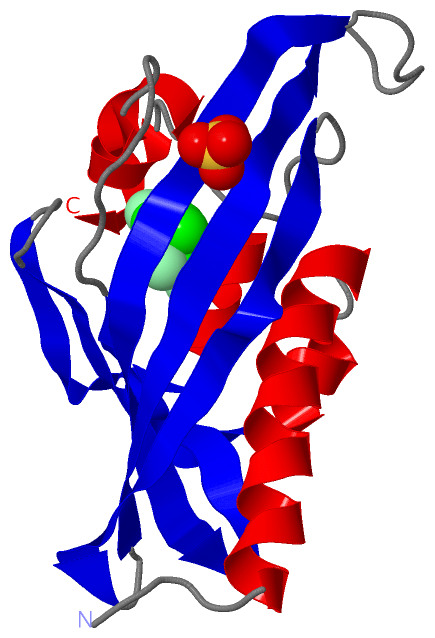
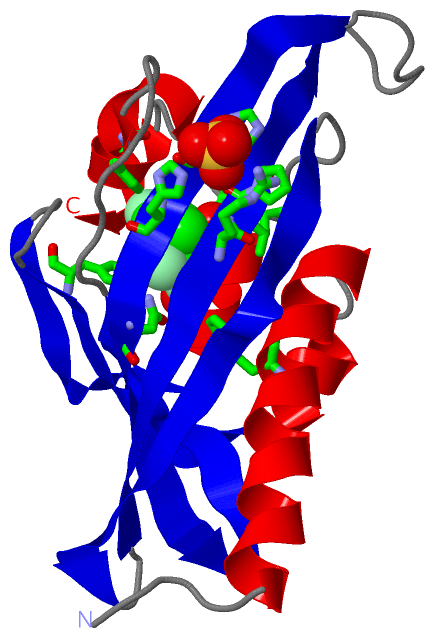
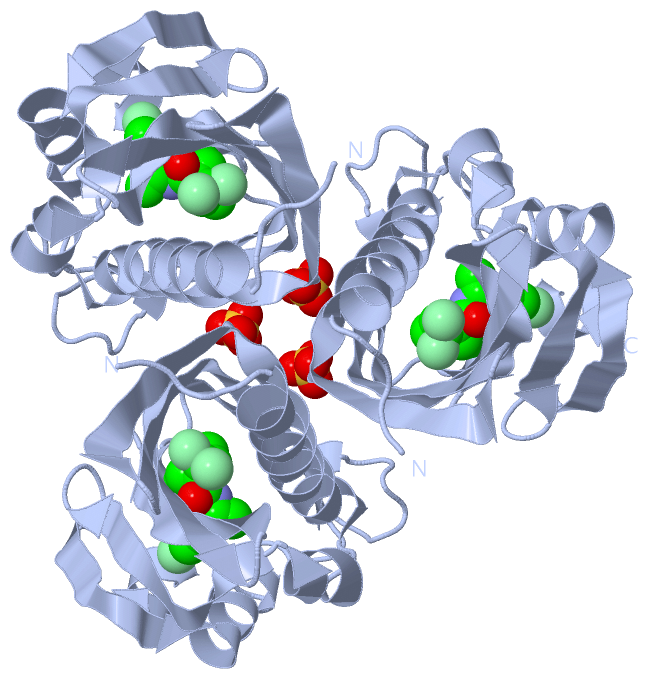
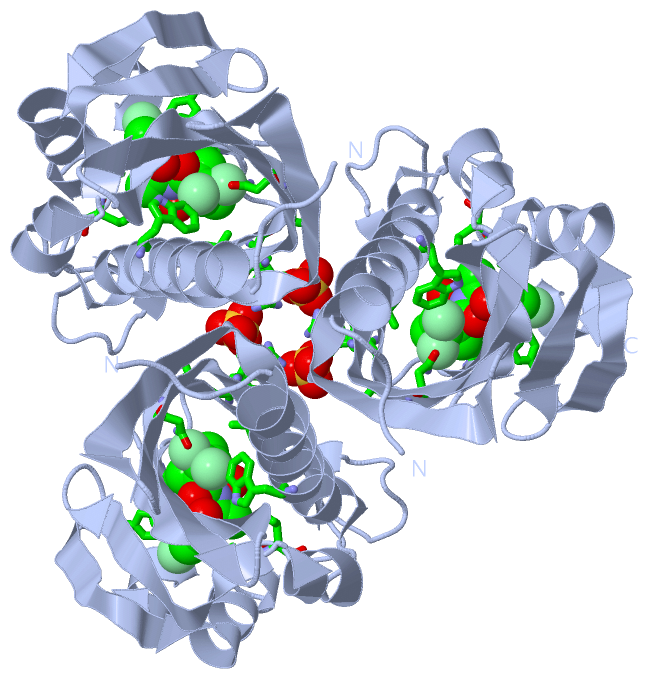
| | GO:0030411 | | scytalone dehydratase activity | | Catalysis of the reaction: scytalone = 1,3,8-trihydroxynaphthalene + H(2)O. |
| biological process |
|---|
| | GO:0042438 | | melanin biosynthetic process | | The chemical reactions and pathways resulting in the formation of melanins, pigments largely of animal origin. High molecular weight polymers of indole quinone, they are irregular polymeric structures and are divided into three groups: allomelanins in the plant kingdom and eumelanins and phaeomelanins in the animal kingdom. |
| | GO:0006582 | | melanin metabolic process | | The chemical reactions and pathways involving melanins, pigments largely of animal origin. High molecular weight polymers of indole quinone, they are irregular polymeric structures and are divided into three groups: allomelanins in the plant kingdom and eumelanins and phaeomelanins in the animal kingdom. |
| | GO:0043581 | | obsolete mycelium development | | OBSOLETE. The process whose specific outcome is the progression of the mycelium over time, from its formation to the mature structure. A mycelium consists of a mass of branching, thread-like hyphae. |
| cellular component |
|---|
| | GO:0005575 | | cellular_component | | The part of a cell, extracellular environment or virus in which a gene product is located. A gene product may be located in one or more parts of a cell and its location may be as specific as a particular macromolecular complex, that is, a stable, persistent association of macromolecules that function together. |

 Description