Show PDB file:   
         Plain Text   HTML   (compressed file size)
QuickSearch:   
by PDB,NDB,UniProt,PROSITE Code or Search Term(s)  
(-)Asymmetric Unit
(-)Biological Unit 1
(-)Biological Unit 2
collapse expand < >
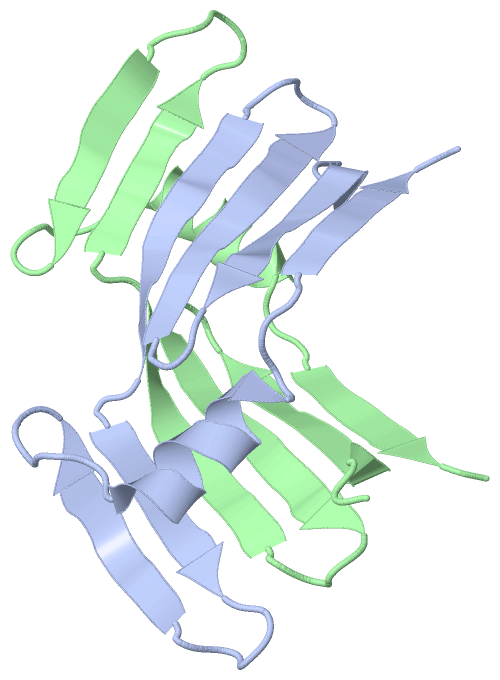
Image Asymmetric Unit
Asymmetric Unit  (Jmol Viewer)
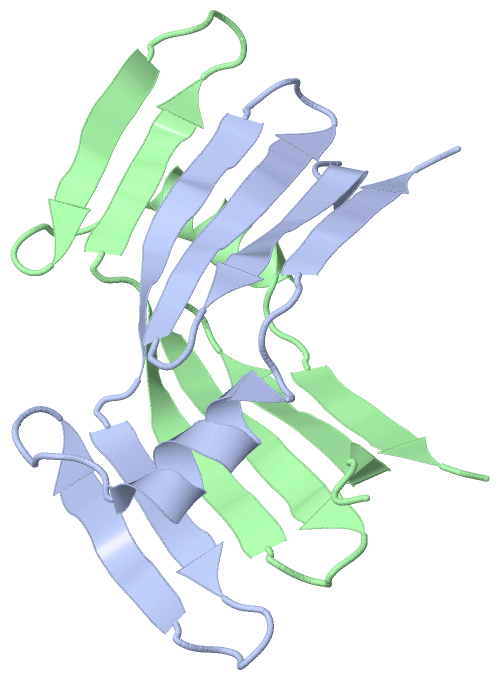
Image Biological Unit 1
Biological Unit 1  (Jmol Viewer)
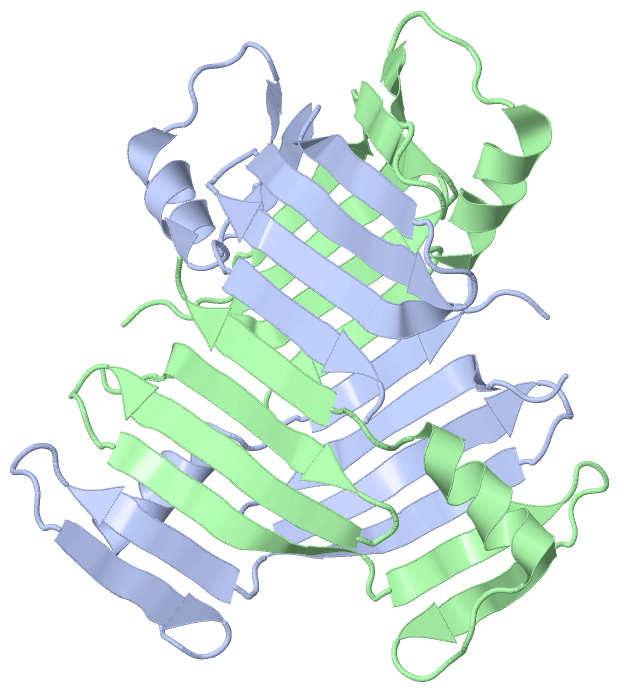
Image Biological Unit 2
Biological Unit 2  (Jmol Viewer)

(-) Description

Title :  MURINE SAK POLO DOMAIN
 
Authors :  G. C. Leung, J. W. Hudson, A. Kozarova, A. Davidson, J. W. Dennis, F. Sicheri
Date :  04 Aug 02  (Deposition) - 30 Oct 02  (Release) - 24 Feb 09  (Revision)
Method :  X-RAY DIFFRACTION
Resolution :  2.00
Chains :  Asym. Unit :  A,B
Biol. Unit 1:  A,B  (1x)
Biol. Unit 2:  A,B  (2x)
Keywords :  Polo Domain, Strand Exchange, Transferase (Keyword Search: [Gene Ontology, PubMed, Web (Google)] )
 
Reference :  G. C. Leung, J. W. Hudson, A. Kozarova, A. Davidson, J. W. Dennis, F. Sicheri
The Sak Polo-Box Comprises A Structural Domain Sufficient For Mitotic Subcellular Localization.
Nat. Struct. Biol. V. 9 719 2002
PubMed-ID: 12352953  |  Reference-DOI: 10.1038/NSB848
(for further references see the PDB file header)

(-) Compounds

Molecule 1 - SERINE/THREONINE KINASE
    Chains: A, B
    EC Number: 2.7.1.37
    Engineered: YES
    Expression System: ESCHERICHIA COLI
    Expression System Plasmid: PGEX-2T
    Expression System Strain: DE3 BL21
    Expression System Taxid: 562
    Expression System Vector: PLASMID
    Fragment: POLO DOMAIN (RESIDUES 839-925)
    Gene: SAK
    Mutation: YES
    Organism Common: HOUSE MOUSE
    Organism Scientific: MUS MUSCULUS
    Organism Taxid: 10090
    Synonym: SAK

 Structural Features

(-) Chains, Units

  12
Asymmetric Unit : AB
Biological Unit 1 (1x): AB
Biological Unit 2 (2x): AB

Summary Information (see also Sequences/Alignments below)

(-) Ligands, Modified Residues, Ions  (0, 0)

(no "Ligand,Modified Residues,Ions" information available for 1MBY)

(-) Sites  (0, 0)

(no "Site" information available for 1MBY)

(-) SS Bonds  (0, 0)

(no "SS Bond" information available for 1MBY)

(-) Cis Peptide Bonds  (0, 0)

(no "Cis Peptide Bond" information available for 1MBY)

 Sequence-Structure Mapping

(-) SAPs(SNPs)/Variants  (0, 0)

(no "SAP(SNP)/Variant" information available for 1MBY)

(-) PROSITE Motifs  (1, 2)

Asymmetric Unit (1, 2)
 PROSITEUniProtKBPDB
No.IDACDescriptionIDLocationCountLocation
1POLO_BOXPS50078 POLO box domain profile.PLK4_MOUSE847-911
 
  2A:847-911
B:847-911
Biological Unit 1 (1, 2)
 PROSITEUniProtKBPDB
No.IDACDescriptionIDLocationCountLocation
1POLO_BOXPS50078 POLO box domain profile.PLK4_MOUSE847-911
 
  2A:847-911
B:847-911
Biological Unit 2 (1, 4)
 PROSITEUniProtKBPDB
No.IDACDescriptionIDLocationCountLocation
1POLO_BOXPS50078 POLO box domain profile.PLK4_MOUSE847-911
 
  4A:847-911
B:847-911

(-) Exons   (3, 6)

Asymmetric Unit (3, 6)
 ENSEMBLUniProtKBPDB
No.Transcript IDExonExon IDGenome LocationLengthIDLocationLengthCountLocationLength
1.1aENSMUST000000268581aENSMUSE00000365127chr3:40603941-40604205265PLK4_MOUSE1-10100--
1.3ENSMUST000000268583ENSMUSE00000152975chr3:40604922-4060501796PLK4_MOUSE11-42320--
1.4bENSMUST000000268584bENSMUSE00000152970chr3:40605707-4060580296PLK4_MOUSE43-74320--
1.5bENSMUST000000268585bENSMUSE00000152974chr3:40605880-40605994115PLK4_MOUSE75-113390--
1.6bENSMUST000000268586bENSMUSE00000152969chr3:40608930-40609842913PLK4_MOUSE113-4173050--
1.7aENSMUST000000268587aENSMUSE00000152980chr3:40610409-40610509101PLK4_MOUSE417-451350--
1.8aENSMUST000000268588aENSMUSE00000275861chr3:40612669-40613030362PLK4_MOUSE451-5711210--
1.9bENSMUST000000268589bENSMUSE00000275853chr3:40614199-40614303105PLK4_MOUSE572-606350--
1.10ENSMUST0000002685810ENSMUSE00000152973chr3:40614584-40614686103PLK4_MOUSE607-641350--
1.11ENSMUST0000002685811ENSMUSE00000152972chr3:40615156-40615305150PLK4_MOUSE641-691510--
1.12ENSMUST0000002685812ENSMUSE00000152978chr3:40615802-40615935134PLK4_MOUSE691-735450--
1.13ENSMUST0000002685813ENSMUSE00000152968chr3:40616016-4061610792PLK4_MOUSE736-766310--
1.14aENSMUST0000002685814aENSMUSE00000152981chr3:40616653-40616797145PLK4_MOUSE766-814490--
1.15ENSMUST0000002685815ENSMUSE00000152976chr3:40617388-40617513126PLK4_MOUSE815-856422A:845-856
B:845-856
12
12
1.16ENSMUST0000002685816ENSMUSE00000152967chr3:40618904-40619010107PLK4_MOUSE857-892362A:857-892
B:857-892
36
36
1.17cENSMUST0000002685817cENSMUSE00000152966chr3:40620237-40620805569PLK4_MOUSE892-925342A:892-919
B:892-919
28
28

(-) Sequences/Alignments

Asymmetric Unit
   Reformat: Number of residues per line =  ('0' or empty: single-line sequence representation)
  Number of residues per labelling interval =   
  UniProt sequence: complete  aligned part    
   Show mapping: SCOP domains CATH domains Pfam domains Secondary structure (by author)
SAPs(SNPs) PROSITE motifs Exons
(details for a mapped element are shown in a popup box when the mouse pointer rests over it)
Chain A from PDB  Type:PROTEIN  Length:75
 aligned with PLK4_MOUSE | Q64702 from UniProtKB/Swiss-Prot  Length:925

    Alignment length:75
                                   854       864       874       884       894       904       914     
           PLK4_MOUSE   845 SVFVKNVGWATQLTSGAVWVQFNDGSQLVVQAGVSSISYTSPDGQTTRYGENEKLPEYIKQKLQCLSSILLMFSN 919
               SCOP domains d1mbya_ A: Serine/threonine-protein kinase Sak C-terminal domain            SCOP domains
               CATH domains --------------------------------------------------------------------------- CATH domains
               Pfam domains --------------------------------------------------------------------------- Pfam domains
         Sec.struct. author ...eeeeeeee...eeeeeeee....eeeeeee..eeeee.....eeeee.....hhhhhhhhh....eeeee.. Sec.struct. author
                 SAPs(SNPs) --------------------------------------------------------------------------- SAPs(SNPs)
                    PROSITE --POLO_BOX  PDB: A:847-911 UniProt: 847-911                        -------- PROSITE
           Transcript 1 (1) Exon 1.15   Exon 1.16  PDB: A:857-892           --------------------------- Transcript 1 (1)
           Transcript 1 (2) -----------------------------------------------Exon 1.17c  PDB: A:892-919   Transcript 1 (2)
                 1mby A 845 SVFVKNVGWATQLTSGAVWVQFNDGSQLVMQAGVSSISYTSPDGQTTRYGENEKLPEYIKQKLQLLSSILLMFSN 919
                                   854       864       874       884       894       904       914     

Chain B from PDB  Type:PROTEIN  Length:75
 aligned with PLK4_MOUSE | Q64702 from UniProtKB/Swiss-Prot  Length:925

    Alignment length:75
                                   854       864       874       884       894       904       914     
           PLK4_MOUSE   845 SVFVKNVGWATQLTSGAVWVQFNDGSQLVVQAGVSSISYTSPDGQTTRYGENEKLPEYIKQKLQCLSSILLMFSN 919
               SCOP domains d1mbyb_ B: Serine/threonine-protein kinase Sak C-terminal domain            SCOP domains
               CATH domains --------------------------------------------------------------------------- CATH domains
           Pfam domains (1) --POLO_box-1mbyB01 B:847-911                                       -------- Pfam domains (1)
           Pfam domains (2) --POLO_box-1mbyB02 B:847-911                                       -------- Pfam domains (2)
         Sec.struct. author ...eeeeeeee...eeeeeeee....eeeeeee..eeeee.....eeeee.....hhhhhhhhhh...eeeee.. Sec.struct. author
                 SAPs(SNPs) --------------------------------------------------------------------------- SAPs(SNPs)
                    PROSITE --POLO_BOX  PDB: B:847-911 UniProt: 847-911                        -------- PROSITE
           Transcript 1 (1) Exon 1.15   Exon 1.16  PDB: B:857-892           --------------------------- Transcript 1 (1)
           Transcript 1 (2) -----------------------------------------------Exon 1.17c  PDB: B:892-919   Transcript 1 (2)
                 1mby B 845 SVFVKNVGWATQLTSGAVWVQFNDGSQLVMQAGVSSISYTSPDGQTTRYGENEKLPEYIKQKLQLLSSILLMFSN 919
                                   854       864       874       884       894       904       914     

   Legend:   → Mismatch (orange background)
  - → Gap (green background, '-', border residues have a numbering label)
    → Modified Residue (blue background, lower-case, 'x' indicates undefined single-letter code, labelled with number + name)
  x → Chemical Group (purple background, 'x', labelled with number + name, e.g. ACE or NH2)
  extra numbering lines below/above indicate numbering irregularities and modified residue names etc., number ends below/above '|'

 Classification and Annotation

(-) SCOP Domains  (1, 2)

Asymmetric Unit

(-) CATH Domains  (0, 0)

(no "CATH Domain" information available for 1MBY)

(-) Pfam Domains  (1, 2)

Asymmetric Unit

(-) Gene Ontology  (23, 23)

Asymmetric Unit(hide GO term definitions)
Chain A,B   (PLK4_MOUSE | Q64702)
molecular function
    GO:0005524    ATP binding    Interacting selectively and non-covalently with ATP, adenosine 5'-triphosphate, a universally important coenzyme and enzyme regulator.
    GO:0042802    identical protein binding    Interacting selectively and non-covalently with an identical protein or proteins.
    GO:0016301    kinase activity    Catalysis of the transfer of a phosphate group, usually from ATP, to a substrate molecule.
    GO:0000166    nucleotide binding    Interacting selectively and non-covalently with a nucleotide, any compound consisting of a nucleoside that is esterified with (ortho)phosphate or an oligophosphate at any hydroxyl group on the ribose or deoxyribose.
    GO:0005515    protein binding    Interacting selectively and non-covalently with any protein or protein complex (a complex of two or more proteins that may include other nonprotein molecules).
    GO:0004672    protein kinase activity    Catalysis of the phosphorylation of an amino acid residue in a protein, usually according to the reaction: a protein + ATP = a phosphoprotein + ADP.
    GO:0004674    protein serine/threonine kinase activity    Catalysis of the reactions: ATP + protein serine = ADP + protein serine phosphate, and ATP + protein threonine = ADP + protein threonine phosphate.
    GO:0016740    transferase activity    Catalysis of the transfer of a group, e.g. a methyl group, glycosyl group, acyl group, phosphorus-containing, or other groups, from one compound (generally regarded as the donor) to another compound (generally regarded as the acceptor). Transferase is the systematic name for any enzyme of EC class 2.
biological process
    GO:0007099    centriole replication    The cell cycle process in which a daughter centriole is formed perpendicular to an existing centriole. An immature centriole contains a ninefold radially symmetric array of single microtubules; mature centrioles consist of a radial array of nine microtubule triplets, doublets, or singlets depending upon the species and cell type. Duplicated centrioles also become the ciliary basal body in cells that form cilia during G0.
    GO:0098535    de novo centriole assembly involved in multi-ciliated epithelial cell differentiation    Centriole assembly in which a centriole arises de novo by a process involving an electron-dense structure known as a deuterosome, rather than by duplication of an existing centriole, and occurring as part of multi-ciliated epithelial cell differentiation.
    GO:0016310    phosphorylation    The process of introducing a phosphate group into a molecule, usually with the formation of a phosphoric ester, a phosphoric anhydride or a phosphoric amide.
    GO:0046601    positive regulation of centriole replication    Any process that activates or increases the frequency, rate or extent of centriole replication.
    GO:0006468    protein phosphorylation    The process of introducing a phosphate group on to a protein.
    GO:0060707    trophoblast giant cell differentiation    The process in which a relatively unspecialized cell acquires specialized features of a trophoblast giant cell of the placenta. Trophoblast giant cells are the cell of the placenta that line the maternal decidua.
cellular component
    GO:0001741    XY body    A structure found in a male mammalian spermatocyte containing an unpaired X chromosome that has become densely heterochromatic, silenced and localized at the nuclear periphery.
    GO:0005814    centriole    A cellular organelle, found close to the nucleus in many eukaryotic cells, consisting of a small cylinder with microtubular walls, 300-500 nm long and 150-250 nm in diameter. It contains nine short, parallel, peripheral microtubular fibrils, each fibril consisting of one complete microtubule fused to two incomplete microtubules. Cells usually have two centrioles, lying at right angles to each other. At division, each pair of centrioles generates another pair and the twin pairs form the pole of the mitotic spindle.
    GO:0005813    centrosome    A structure comprised of a core structure (in most organisms, a pair of centrioles) and peripheral material from which a microtubule-based structure, such as a spindle apparatus, is organized. Centrosomes occur close to the nucleus during interphase in many eukaryotic cells, though in animal cells it changes continually during the cell-division cycle.
    GO:0032154    cleavage furrow    The cleavage furrow is a plasma membrane invagination at the cell division site. The cleavage furrow begins as a shallow groove and eventually deepens to divide the cytoplasm.
    GO:0005737    cytoplasm    All of the contents of a cell excluding the plasma membrane and nucleus, but including other subcellular structures.
    GO:0005856    cytoskeleton    Any of the various filamentous elements that form the internal framework of cells, and typically remain after treatment of the cells with mild detergent to remove membrane constituents and soluble components of the cytoplasm. The term embraces intermediate filaments, microfilaments, microtubules, the microtrabecular lattice, and other structures characterized by a polymeric filamentous nature and long-range order within the cell. The various elements of the cytoskeleton not only serve in the maintenance of cellular shape but also have roles in other cellular functions, including cellular movement, cell division, endocytosis, and movement of organelles.
    GO:0098536    deuterosome    A spherical, electron dense, cytoplasmic structure that is involved in de novo assembly of centrioles.
    GO:0005730    nucleolus    A small, dense body one or more of which are present in the nucleus of eukaryotic cells. It is rich in RNA and protein, is not bounded by a limiting membrane, and is not seen during mitosis. Its prime function is the transcription of the nucleolar DNA into 45S ribosomal-precursor RNA, the processing of this RNA into 5.8S, 18S, and 28S components of ribosomal RNA, and the association of these components with 5S RNA and proteins synthesized outside the nucleolus. This association results in the formation of ribonucleoprotein precursors; these pass into the cytoplasm and mature into the 40S and 60S subunits of the ribosome.
    GO:0005634    nucleus    A membrane-bounded organelle of eukaryotic cells in which chromosomes are housed and replicated. In most cells, the nucleus contains all of the cell's chromosomes except the organellar chromosomes, and is the site of RNA synthesis and processing. In some species, or in specialized cell types, RNA metabolism or DNA replication may be absent.

 Visualization

(-) Interactive Views

Asymmetric Unit
  Complete Structure
    Jena3D(integrated viewing of ligand, site, SAP, PROSITE, SCOP information)
    WebMol | AstexViewer[tm]@PDBe
(Java Applets, require no local installation except for Java; loading may be slow)
    STRAP
(Java WebStart application, automatic local installation, requires Java; full application with system access!)
    RasMol
(require local installation)
    Molscript (VRML)
(requires installation of a VRML viewer; select preferred view via VRML and generate a mono or stereo PDF format file)
 
  Ligands, Modified Residues, Ions
(no "Ligands, Modified Residues, Ions" information available for 1mby)
 
  Sites
(no "Sites" information available for 1mby)
 
  Cis Peptide Bonds
(no "Cis Peptide Bonds" information available for 1mby)
 
Biological Units
  Complete Structure
    Biological Unit 1  [ Jena3D ]
    Biological Unit 2  [ Jena3D ]

(-) Still Images

Jmol
  protein: cartoon or spacefill or dots and stick; nucleic acid: cartoon and stick; ligands: spacefill; active site: stick
Molscript
  protein, nucleic acid: cartoon; ligands: spacefill; active site: ball and stick

 Databases and Analysis Tools

(-) Databases

Access by PDB/NDB ID
  1mby
    Family and Domain Information: ProDom | SYSTERS
    General Structural Information: GlycoscienceDB | MMDB | NDB | OCA | PDB | PDBe | PDBj | PDBsum | PDBWiki | PQS | PROTEOPEDIA
    Orientation in Membranes: OPM
    Protein Surface: SURFACE
    Secondary Structure: DSSP (structure derived) | HSSP (homology derived)
    Structural Genomics: GeneCensus
    Structural Neighbours: CE | VAST
    Structure Classification: CATH | Dali | SCOP
    Validation and Original Data: BMRB Data View | BMRB Restraints Grid | EDS | PROCHECK | RECOORD | WHAT_CHECK
 
Access by UniProt ID/Accession number
  PLK4_MOUSE | Q64702
    Comparative Protein Structure Models: ModBase
    Genomic Information: Ensembl
    Protein-protein Interaction: DIP
    Sequence, Family and Domain Information: InterPro | Pfam | SMART | UniProtKB/SwissProt
 
Access by Enzyme Classificator   (EC Number)
  2.7.1.37
    General Enzyme Information: BRENDA | EC-PDB | Enzyme | IntEnz
    Pathway: KEGG | MetaCyc
 
Access by Disease Identifier   (MIM ID)
  (no 'MIM ID' available)
    Disease Information: OMIM
 
Access by GenAge ID
  (no 'GenAge ID' available)
    Age Related Information: GenAge

(-) Analysis Tools

Access by PDB/NDB ID
    Domain Information: XDom
    Interatomic Contacts of Structural Units: CSU
    Ligand-protein Contacts: LPC
    Protein Cavities: castP
    Sequence and Secondary Structure: PDBCartoon
    Structure Alignment: STRAP(Java WebStart application, automatic local installation, requires Java; full application with system access!)
    Structure and Sequence Browser: STING
 
Access by UniProt ID/Accession number
  PLK4_MOUSE | Q64702
    Protein Disorder Prediction: DisEMBL | FoldIndex | GLOBPLOT (for more information see DisProt)

 Related Entries

(-) Entries Sharing at Least One Protein Chain (UniProt ID)

(no "Entries Sharing at Least One Protein Chain" available for 1MBY)

(-) Related Entries Specified in the PDB File

(no "Related Entries Specified in the PDB File" available for 1MBY)