Asymmetric/Biological Unit(hide GO term definitions)
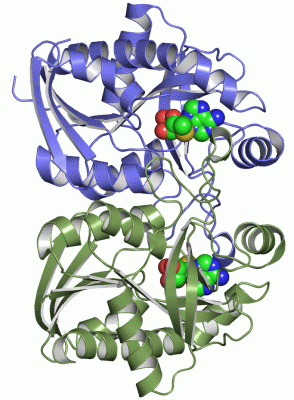
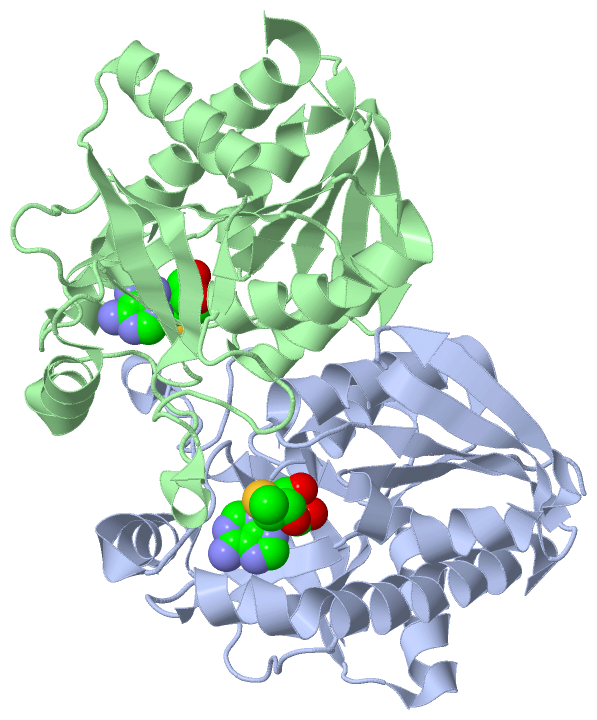
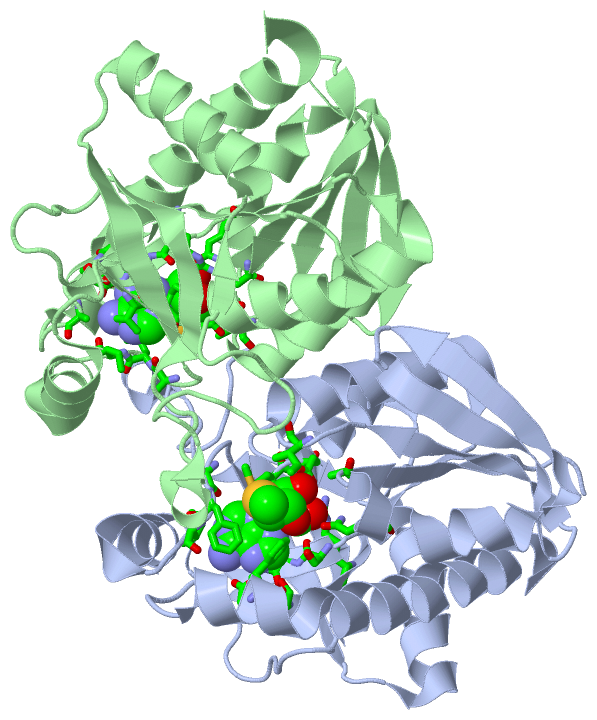
Chain A,B ( MTNN_ECO57 | P0AF14)
| molecular function |
|---|
| | GO:0008782 | | adenosylhomocysteine nucleosidase activity | | Catalysis of the reaction: S-adenosyl-L-homocysteine + H2O = adenine + S-D-ribosyl-L-homocysteine. |
| | GO:0003824 | | catalytic activity | | Catalysis of a biochemical reaction at physiological temperatures. In biologically catalyzed reactions, the reactants are known as substrates, and the catalysts are naturally occurring macromolecular substances known as enzymes. Enzymes possess specific binding sites for substrates, and are usually composed wholly or largely of protein, but RNA that has catalytic activity (ribozyme) is often also regarded as enzymatic. |
| | GO:0016787 | | hydrolase activity | | Catalysis of the hydrolysis of various bonds, e.g. C-O, C-N, C-C, phosphoric anhydride bonds, etc. Hydrolase is the systematic name for any enzyme of EC class 3. |
| | GO:0008930 | | methylthioadenosine nucleosidase activity | | Catalysis of the reaction: methylthioadenosine + H2O = adenine + 5-methylthio-D-ribose. |
| biological process |
|---|
| | GO:0019284 | | L-methionine salvage from S-adenosylmethionine | | The chemical reactions and pathways resulting in the formation of L-methionine from S-adenosylmethionine. |
| | GO:0019509 | | L-methionine salvage from methylthioadenosine | | The generation of L-methionine (2-amino-4-(methylthio)butanoic acid) from methylthioadenosine. |
| | GO:0008652 | | cellular amino acid biosynthetic process | | The chemical reactions and pathways resulting in the formation of amino acids, organic acids containing one or more amino substituents. |
| | GO:0009086 | | methionine biosynthetic process | | The chemical reactions and pathways resulting in the formation of methionine (2-amino-4-(methylthio)butanoic acid), a sulfur-containing, essential amino acid found in peptide linkage in proteins. |
| | GO:0009164 | | nucleoside catabolic process | | The chemical reactions and pathways resulting in the breakdown of any one of a family of organic molecules consisting of a purine or pyrimidine base covalently bonded to a sugar ribose (a ribonucleoside) or deoxyribose (a deoxyribonucleoside). |
| | GO:0009116 | | nucleoside metabolic process | | The chemical reactions and pathways involving a nucleoside, a nucleobase linked to either beta-D-ribofuranose (a ribonucleoside) or 2-deoxy-beta-D-ribofuranose, (a deoxyribonucleoside), e.g. adenosine, guanosine, inosine, cytidine, uridine and deoxyadenosine, deoxyguanosine, deoxycytidine and thymidine (= deoxythymidine). |
Chain A,B ( MTNN_ECOLI | P0AF12)
| molecular function |
|---|
| | GO:0008782 | | adenosylhomocysteine nucleosidase activity | | Catalysis of the reaction: S-adenosyl-L-homocysteine + H2O = adenine + S-D-ribosyl-L-homocysteine. |
| | GO:0003824 | | catalytic activity | | Catalysis of a biochemical reaction at physiological temperatures. In biologically catalyzed reactions, the reactants are known as substrates, and the catalysts are naturally occurring macromolecular substances known as enzymes. Enzymes possess specific binding sites for substrates, and are usually composed wholly or largely of protein, but RNA that has catalytic activity (ribozyme) is often also regarded as enzymatic. |
| | GO:0016787 | | hydrolase activity | | Catalysis of the hydrolysis of various bonds, e.g. C-O, C-N, C-C, phosphoric anhydride bonds, etc. Hydrolase is the systematic name for any enzyme of EC class 3. |
| | GO:0008930 | | methylthioadenosine nucleosidase activity | | Catalysis of the reaction: methylthioadenosine + H2O = adenine + 5-methylthio-D-ribose. |
| biological process |
|---|
| | GO:0019284 | | L-methionine salvage from S-adenosylmethionine | | The chemical reactions and pathways resulting in the formation of L-methionine from S-adenosylmethionine. |
| | GO:0019509 | | L-methionine salvage from methylthioadenosine | | The generation of L-methionine (2-amino-4-(methylthio)butanoic acid) from methylthioadenosine. |
| | GO:0008652 | | cellular amino acid biosynthetic process | | The chemical reactions and pathways resulting in the formation of amino acids, organic acids containing one or more amino substituents. |
| | GO:0009086 | | methionine biosynthetic process | | The chemical reactions and pathways resulting in the formation of methionine (2-amino-4-(methylthio)butanoic acid), a sulfur-containing, essential amino acid found in peptide linkage in proteins. |
| | GO:0009164 | | nucleoside catabolic process | | The chemical reactions and pathways resulting in the breakdown of any one of a family of organic molecules consisting of a purine or pyrimidine base covalently bonded to a sugar ribose (a ribonucleoside) or deoxyribose (a deoxyribonucleoside). |
| | GO:0009116 | | nucleoside metabolic process | | The chemical reactions and pathways involving a nucleoside, a nucleobase linked to either beta-D-ribofuranose (a ribonucleoside) or 2-deoxy-beta-D-ribofuranose, (a deoxyribonucleoside), e.g. adenosine, guanosine, inosine, cytidine, uridine and deoxyadenosine, deoxyguanosine, deoxycytidine and thymidine (= deoxythymidine). |
| cellular component |
|---|
| | GO:0005829 | | cytosol | | The part of the cytoplasm that does not contain organelles but which does contain other particulate matter, such as protein complexes. |
Chain A,B ( MTNN_ECOL6 | P0AF13)
| molecular function |
|---|
| | GO:0008782 | | adenosylhomocysteine nucleosidase activity | | Catalysis of the reaction: S-adenosyl-L-homocysteine + H2O = adenine + S-D-ribosyl-L-homocysteine. |
| | GO:0003824 | | catalytic activity | | Catalysis of a biochemical reaction at physiological temperatures. In biologically catalyzed reactions, the reactants are known as substrates, and the catalysts are naturally occurring macromolecular substances known as enzymes. Enzymes possess specific binding sites for substrates, and are usually composed wholly or largely of protein, but RNA that has catalytic activity (ribozyme) is often also regarded as enzymatic. |
| | GO:0016787 | | hydrolase activity | | Catalysis of the hydrolysis of various bonds, e.g. C-O, C-N, C-C, phosphoric anhydride bonds, etc. Hydrolase is the systematic name for any enzyme of EC class 3. |
| | GO:0008930 | | methylthioadenosine nucleosidase activity | | Catalysis of the reaction: methylthioadenosine + H2O = adenine + 5-methylthio-D-ribose. |
| biological process |
|---|
| | GO:0019284 | | L-methionine salvage from S-adenosylmethionine | | The chemical reactions and pathways resulting in the formation of L-methionine from S-adenosylmethionine. |
| | GO:0019509 | | L-methionine salvage from methylthioadenosine | | The generation of L-methionine (2-amino-4-(methylthio)butanoic acid) from methylthioadenosine. |
| | GO:0008652 | | cellular amino acid biosynthetic process | | The chemical reactions and pathways resulting in the formation of amino acids, organic acids containing one or more amino substituents. |
| | GO:0009086 | | methionine biosynthetic process | | The chemical reactions and pathways resulting in the formation of methionine (2-amino-4-(methylthio)butanoic acid), a sulfur-containing, essential amino acid found in peptide linkage in proteins. |
| | GO:0009164 | | nucleoside catabolic process | | The chemical reactions and pathways resulting in the breakdown of any one of a family of organic molecules consisting of a purine or pyrimidine base covalently bonded to a sugar ribose (a ribonucleoside) or deoxyribose (a deoxyribonucleoside). |
| | GO:0009116 | | nucleoside metabolic process | | The chemical reactions and pathways involving a nucleoside, a nucleobase linked to either beta-D-ribofuranose (a ribonucleoside) or 2-deoxy-beta-D-ribofuranose, (a deoxyribonucleoside), e.g. adenosine, guanosine, inosine, cytidine, uridine and deoxyadenosine, deoxyguanosine, deoxycytidine and thymidine (= deoxythymidine). |
Chain A,B ( MTNN_SHIFL | P0AF15)
| molecular function |
|---|
| | GO:0008782 | | adenosylhomocysteine nucleosidase activity | | Catalysis of the reaction: S-adenosyl-L-homocysteine + H2O = adenine + S-D-ribosyl-L-homocysteine. |
| | GO:0003824 | | catalytic activity | | Catalysis of a biochemical reaction at physiological temperatures. In biologically catalyzed reactions, the reactants are known as substrates, and the catalysts are naturally occurring macromolecular substances known as enzymes. Enzymes possess specific binding sites for substrates, and are usually composed wholly or largely of protein, but RNA that has catalytic activity (ribozyme) is often also regarded as enzymatic. |
| | GO:0016787 | | hydrolase activity | | Catalysis of the hydrolysis of various bonds, e.g. C-O, C-N, C-C, phosphoric anhydride bonds, etc. Hydrolase is the systematic name for any enzyme of EC class 3. |
| | GO:0008930 | | methylthioadenosine nucleosidase activity | | Catalysis of the reaction: methylthioadenosine + H2O = adenine + 5-methylthio-D-ribose. |
| biological process |
|---|
| | GO:0019284 | | L-methionine salvage from S-adenosylmethionine | | The chemical reactions and pathways resulting in the formation of L-methionine from S-adenosylmethionine. |
| | GO:0019509 | | L-methionine salvage from methylthioadenosine | | The generation of L-methionine (2-amino-4-(methylthio)butanoic acid) from methylthioadenosine. |
| | GO:0008652 | | cellular amino acid biosynthetic process | | The chemical reactions and pathways resulting in the formation of amino acids, organic acids containing one or more amino substituents. |
| | GO:0009086 | | methionine biosynthetic process | | The chemical reactions and pathways resulting in the formation of methionine (2-amino-4-(methylthio)butanoic acid), a sulfur-containing, essential amino acid found in peptide linkage in proteins. |
| | GO:0009164 | | nucleoside catabolic process | | The chemical reactions and pathways resulting in the breakdown of any one of a family of organic molecules consisting of a purine or pyrimidine base covalently bonded to a sugar ribose (a ribonucleoside) or deoxyribose (a deoxyribonucleoside). |
| | GO:0009116 | | nucleoside metabolic process | | The chemical reactions and pathways involving a nucleoside, a nucleobase linked to either beta-D-ribofuranose (a ribonucleoside) or 2-deoxy-beta-D-ribofuranose, (a deoxyribonucleoside), e.g. adenosine, guanosine, inosine, cytidine, uridine and deoxyadenosine, deoxyguanosine, deoxycytidine and thymidine (= deoxythymidine). |
|

 Description