Show PDB file:   
         Plain Text   HTML   (compressed file size)
QuickSearch:   
by PDB,NDB,UniProt,PROSITE Code or Search Term(s)  
(-)Asym./Biol. Unit
(-)Asym./Biol. Unit - sites
collapse expand < >
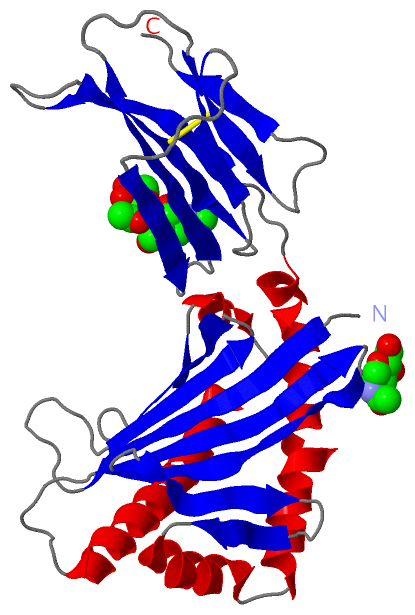
Image Asym./Biol. Unit
Asym./Biol. Unit  (Jmol Viewer)
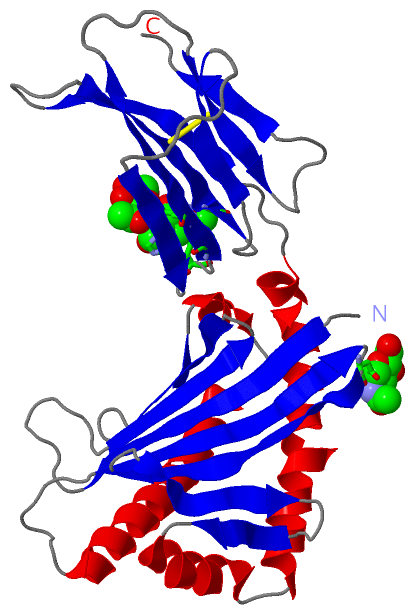
Image Asym./Biol. Unit - sites
Asym./Biol. Unit - sites  (Jmol Viewer)

(-) Description

Title :  ZN-ALPHA-2-GLYCOPROTEIN; BACULO-ZAG NO PEG, NO GLYCEROL
 
Authors :  S. L. Delker, A. P. West Jr. , L. Mcdermott, M. W. Kennedy, P. J. Bjorkman
Date :  11 May 04  (Deposition) - 21 Dec 04  (Release) - 13 Jul 11  (Revision)
Method :  X-RAY DIFFRACTION
Resolution :  3.00
Chains :  Asym./Biol. Unit :  A
Keywords :  Mhc Class I Homolog, Lipid Binding Protein (Keyword Search: [Gene Ontology, PubMed, Web (Google))
 
Reference :  S. L. Delker, A. P. West Jr. , L. Mcdermott, M. W. Kennedy, P. J. Bjorkma
Crystallographic Studies Of Ligand Binding By Zn-Alpha2-Glycoprotein.
J. Struct. Biol. V. 148 205 2004
PubMed-ID: 15477100  |  Reference-DOI: 10.1016/J.JSB.2004.04.009
(for further references see the PDB file header)

(-) Compounds

Molecule 1 - ZINC-ALPHA-2-GLYCOPROTEIN
    ChainsA
    EngineeredYES
    Expression SystemTRICHOPLUSIA NI
    Expression System CommonCABBAGE LOOPER
    Expression System PlasmidPVL1393
    Expression System Taxid7111
    Expression System Vector TypeBACULOVIRUS
    GeneAZGP1, ZAG, ZNGP1
    MutationYES
    Organism CommonHUMAN
    Organism ScientificHOMO SAPIENS
    Organism Taxid9606
    SynonymZN-ALPHA-2-GLYCOPROTEIN, ZN-ALPHA-2-GP

 Structural Features

(-) Chains, Units

  1
Asymmetric/Biological Unit A

Summary Information (see also Sequences/Alignments below)

(-) Ligands, Modified Residues, Ions  (1, 3)

Asymmetric/Biological Unit (1, 3)
No.NameCountTypeFull Name
1NAG3Ligand/IonN-ACETYL-D-GLUCOSAMINE

(-) Sites  (3, 3)

Asymmetric Unit (3, 3)
No.NameEvidenceResiduesDescription
1AC1SOFTWAREASN A:108BINDING SITE FOR RESIDUE NAG A 310
2AC2SOFTWAREASP A:209 , HIS A:236 , ASN A:239 , THR A:241 , GLN A:243 , NAG A:321BINDING SITE FOR RESIDUE NAG A 320
3AC3SOFTWAREHIS A:236 , GLN A:243 , NAG A:320BINDING SITE FOR RESIDUE NAG A 321

(-) SS Bonds  (1, 1)

Asymmetric/Biological Unit
No.Residues
1A:205 -A:260

(-) Cis Peptide Bonds  (2, 2)

Asymmetric/Biological Unit
No.Residues
1Ile A:131 -Pro A:132
2Tyr A:211 -Pro A:212

 Sequence-Structure Mapping

(-) SAPs(SNPs)/Variants  (0, 0)

(no "SAP(SNP)/Variant" information available for 1T7Z)

(-) PROSITE Motifs  (1, 1)

Asymmetric/Biological Unit (1, 1)
 PROSITEUniProtKBPDB
No.IDACDescriptionIDLocationCountLocation
1IG_MHCPS00290 Immunoglobulins and major histocompatibility complex proteins signature.ZA2G_HUMAN278-284  1A:258-264

(-) Exons   (4, 4)

Asymmetric/Biological Unit (4, 4)
 ENSEMBLUniProtKBPDB
No.Transcript IDExonExon IDGenome LocationLengthIDLocationLengthCountLocationLength
1.1aENST000002924011aENSE00001907842chr7:99573780-99573568213ZA2G_HUMAN1-26261A:5-62
1.2bENST000002924012bENSE00001055051chr7:99569629-99569369261ZA2G_HUMAN26-113881A:6-9388
1.4bENST000002924014bENSE00001801964chr7:99566053-99565778276ZA2G_HUMAN113-205931A:93-18593
1.4hENST000002924014hENSE00001820318chr7:99564909-99564353557ZA2G_HUMAN205-298941A:185-27793

(-) Sequences/Alignments

Asymmetric/Biological Unit
   Reformat: Number of residues per line =  ('0' or empty: single-line sequence representation)
  Number of residues per labelling interval =   
  UniProt sequence: complete  aligned part    
   Show mapping: SCOP domains CATH domains Pfam domains Secondary structure (by author)
SAPs(SNPs) PROSITE motifs Exons
(details for a mapped element are shown in a popup box when the mouse pointer rests over it)
Chain A from PDB  Type:PROTEIN  Length:273
 aligned with ZA2G_HUMAN | P25311 from UniProtKB/Swiss-Prot  Length:298

    Alignment length:273
                                    34        44        54        64        74        84        94       104       114       124       134       144       154       164       174       184       194       204       214       224       234       244       254       264       274       284       294   
           ZA2G_HUMAN    25 DGRYSLTYIYTGLSKHVEDVPAFQALGSLNDLQFFRYNSKDRKSQPMGLWRQVEGMEDWKQDSQLQKAREDIFMETLKDIVEYYNDSNGSHVLQGRFGCEIENNRSSGAFWKYYYDGKDYIEFNKEIPAWVPFDPAAQITKQKWEAEPVYVQRAKAYLEEECPATLRKYLKYSKNILDRQDPPSVVVTSHQAPGEKKKLKCLAYDFYPGKIDVHWTRAGEVQEPELRGDVLHNGNGTYQSWVVVAVPPQDTAPYSCHVQHSSLAQPLVVPWEA 297
               SCOP domains d1t7za2 A:5-183 Zinc-alpha-2-glycoprotein, ZAG                                                                                                                                     d1t7za1 A:184-277 Zinc-alpha-2-glycoprotein, ZAG, alpha-3 domain                               SCOP domains
               CATH domains -1t7zA01 A:6-183 Murine Class I Major Histocompatibility Complex, H2-DB, subunit A, domain 1                                                                                       1t7zA02 A:184-273 Immunoglobulins                                                         ---- CATH domains
               Pfam domains -MHC_I-1t7zA02 A:6-181                                                                                                                                                           ---------C1-set-1t7zA01 A:191-272                                                          ----- Pfam domains
         Sec.struct. author ..eeeeeeeeeee.........eeeeeee..eeeeeee......ee.hhhhhh....hhhhhhhhhhhhhhhhhhhhhhhhhhh.......eeeeeeeeeee..eeeeeeeeeee..eeeeeee....eeee.hhhhhhhhhhhh..hhhhhhhhhhhhhhhhhhhhhhhhhhhhhhh.....eeeeeeee.....eeeeeeeeee.....eeeeee........eeeeeee....eeeeeeeeee.......eeeeee.......eeee... Sec.struct. author
                 SAPs(SNPs) --------------------------------------------------------------------------------------------------------------------------------------------------------------------------------------------------------------------------------------------------------------------------------- SAPs(SNPs)
                    PROSITE -------------------------------------------------------------------------------------------------------------------------------------------------------------------------------------------------------------------------------------------------------------IG_MHC ------------- PROSITE
           Transcript 1 (1) 1.--------------------------------------------------------------------------------------Exon 1.4b  PDB: A:93-185 UniProt: 113-205                                                    -------------------------------------------------------------------------------------------- Transcript 1 (1)
           Transcript 1 (2) -Exon 1.2b  PDB: A:6-93 UniProt: 26-113                                                  -------------------------------------------------------------------------------------------Exon 1.4h  PDB: A:185-277 UniProt: 205-298 [INCOMPLETE]                                       Transcript 1 (2)
                 1t7z A   5 DGRYSLTYIYTGLSKHVEDVPAFQALGSLNDLQFFRYNSKDRKSQPMGLWRQVEGMEDWKQDSQLQKAREDIFMETLKDIVEYYKDSTGSHVLQGRFGCEIENNRSSGAFWKYYYDGKDYIEFNKEIPAWVPFDPAAQITKQKWEAEPVYVQRAKAYLEEECPATLRKYLKYSKNILDRQDPPSVVVTSHQAPGEKKKLKCLAYDFYPGKIDVHWTRAGEVQEPELRGDVLHNGNGTYQSWVVVAVPPQDTAPYSCHVQHSSLAQPLVVPWEA 277
                                    14        24        34        44        54        64        74        84        94       104       114       124       134       144       154       164       174       184       194       204       214       224       234       244       254       264       274   

   Legend:   → Mismatch (orange background)
  - → Gap (green background, '-', border residues have a numbering label)
    → Modified Residue (blue background, lower-case, 'x' indicates undefined single-letter code, labelled with number + name)
  x → Chemical Group (purple background, 'x', labelled with number + name, e.g. ACE or NH2)
  extra numbering lines below/above indicate numbering irregularities and modified residue names etc., number ends below/above '|'

 Classification and Annotation

(-) SCOP Domains  (2, 2)

Asymmetric/Biological Unit

(-) CATH Domains  (2, 2)

Asymmetric/Biological Unit
(-)
Class: Alpha Beta (26913)
(-)
Class: Mainly Beta (13760)

(-) Pfam Domains  (2, 2)

Asymmetric/Biological Unit
(-)
Clan: Ig (577)
(-)
Clan: MHC (252)

(-) Gene Ontology  (21, 21)

Asymmetric/Biological Unit(hide GO term definitions)
Chain A   (ZA2G_HUMAN | P25311)
molecular function
    GO:0003823    antigen binding    Interacting selectively and non-covalently with an antigen, any substance which is capable of inducing a specific immune response and of reacting with the products of that response, the specific antibody or specifically sensitized T-lymphocytes, or both. Binding may counteract the biological activity of the antigen.
    GO:0042605    peptide antigen binding    Interacting selectively and non-covalently with an antigen peptide.
    GO:0005515    protein binding    Interacting selectively and non-covalently with any protein or protein complex (a complex of two or more proteins that may include other nonprotein molecules).
    GO:0008320    protein transmembrane transporter activity    Enables the transfer of a protein from one side of a membrane to the other.
    GO:0004540    ribonuclease activity    Catalysis of the hydrolysis of phosphodiester bonds in chains of RNA.
biological process
    GO:0090501    RNA phosphodiester bond hydrolysis    The RNA metabolic process in which the phosphodiester bonds between ribonucleotides are cleaved by hydrolysis.
    GO:0019882    antigen processing and presentation    The process in which an antigen-presenting cell expresses antigen (peptide or lipid) on its cell surface in association with an MHC protein complex.
    GO:0002474    antigen processing and presentation of peptide antigen via MHC class I    The process in which an antigen-presenting cell expresses a peptide antigen on its cell surface in association with an MHC class I protein complex. Class I here refers to classical class I molecules.
    GO:0007155    cell adhesion    The attachment of a cell, either to another cell or to an underlying substrate such as the extracellular matrix, via cell adhesion molecules.
    GO:0001580    detection of chemical stimulus involved in sensory perception of bitter taste    The series of events required for a bitter taste stimulus to be received and converted to a molecular signal.
    GO:0006955    immune response    Any immune system process that functions in the calibrated response of an organism to a potential internal or invasive threat.
    GO:0008285    negative regulation of cell proliferation    Any process that stops, prevents or reduces the rate or extent of cell proliferation.
    GO:0071806    protein transmembrane transport    The directed movement of a protein across a membrane by means of some agent such as a transporter or pore.
    GO:0001895    retina homeostasis    A tissue homeostatic process involved in the maintenance of an internal equilibrium within the retina of the eye, including control of cellular proliferation and death and control of metabolic function.
    GO:0055085    transmembrane transport    The process in which a solute is transported across a lipid bilayer, from one side of a membrane to the other
cellular component
    GO:0042612    MHC class I protein complex    A transmembrane protein complex composed of a MHC class I alpha chain and an invariant beta2-microglobin chain, and with or without a bound peptide antigen. Class I here refers to classical class I molecules.
    GO:0070062    extracellular exosome    A vesicle that is released into the extracellular region by fusion of the limiting endosomal membrane of a multivesicular body with the plasma membrane. Extracellular exosomes, also simply called exosomes, have a diameter of about 40-100 nm.
    GO:0005576    extracellular region    The space external to the outermost structure of a cell. For cells without external protective or external encapsulating structures this refers to space outside of the plasma membrane. This term covers the host cell environment outside an intracellular parasite.
    GO:0005615    extracellular space    That part of a multicellular organism outside the cells proper, usually taken to be outside the plasma membranes, and occupied by fluid.
    GO:0005634    nucleus    A membrane-bounded organelle of eukaryotic cells in which chromosomes are housed and replicated. In most cells, the nucleus contains all of the cell's chromosomes except the organellar chromosomes, and is the site of RNA synthesis and processing. In some species, or in specialized cell types, RNA metabolism or DNA replication may be absent.
    GO:0005886    plasma membrane    The membrane surrounding a cell that separates the cell from its external environment. It consists of a phospholipid bilayer and associated proteins.

 Visualization

(-) Interactive Views

Asymmetric/Biological Unit
  Complete Structure
    Jena3D(integrated viewing of ligand, site, SAP, PROSITE, SCOP information)
    WebMol | AstexViewer[tm]@PDBe
(Java Applets, require no local installation except for Java; loading may be slow)
    STRAP
(Java WebStart application, automatic local installation, requires Java; full application with system access!)
    RasMol
(require local installation)
    Molscript (VRML)
(requires installation of a VRML viewer; select preferred view via VRML and generate a mono or stereo PDF format file)
 
  Ligands, Modified Residues, Ions
    NAG  [ RasMol | Jena3D ]  +environment [ RasMol | Jena3D ]
 
  Sites
    AC1  [ RasMol ]  +environment [ RasMol ]
    AC2  [ RasMol ]  +environment [ RasMol ]
    AC3  [ RasMol ]  +environment [ RasMol ]
 
  Cis Peptide Bonds
    Ile A:131 - Pro A:132   [ RasMol ]  
    Tyr A:211 - Pro A:212   [ RasMol ]  
 

(-) Still Images

Jmol
  protein: cartoon or spacefill or dots and stick; nucleic acid: cartoon and stick; ligands: spacefill; active site: stick
Molscript
  protein, nucleic acid: cartoon; ligands: spacefill; active site: ball and stick

 Databases and Analysis Tools

(-) Databases

Access by PDB/NDB ID
  1t7z
    Family and Domain InformationProDom | SYSTERS
    General Structural InformationGlycoscienceDB | MMDB | NDB | OCA | PDB | PDBe | PDBj | PDBsum | PDBWiki | PQS | PROTEOPEDIA
    Orientation in MembranesOPM
    Protein SurfaceSURFACE
    Secondary StructureDSSP (structure derived) | HSSP (homology derived)
    Structural GenomicsGeneCensus
    Structural NeighboursCE | VAST
    Structure ClassificationCATH | Dali | SCOP
    Validation and Original DataBMRB Data View | BMRB Restraints Grid | EDS | PROCHECK | RECOORD | WHAT_CHECK
 
Access by UniProt ID/Accession number
  ZA2G_HUMAN | P25311
    Comparative Protein Structure ModelsModBase
    Genomic InformationEnsembl
    Protein-protein InteractionDIP
    Sequence, Family and Domain InformationInterPro | Pfam | SMART | UniProtKB/SwissProt
 
Access by Enzyme Classificator   (EC Number)
  (no 'Enzyme Classificator' available)
    General Enzyme InformationBRENDA | EC-PDB | Enzyme | IntEnz
    PathwayKEGG | MetaCyc
 
Access by Disease Identifier   (MIM ID)
  (no 'MIM ID' available)
    Disease InformationOMIM
 
Access by GenAge ID
  (no 'GenAge ID' available)
    Age Related InformationGenAge

(-) Analysis Tools

Access by PDB/NDB ID
    Domain InformationXDom
    Interatomic Contacts of Structural UnitsCSU
    Ligand-protein ContactsLPC
    Protein CavitiescastP
    Sequence and Secondary StructurePDBCartoon
    Structure AlignmentSTRAP(Java WebStart application, automatic local installation, requires Java; full application with system access!)
    Structure and Sequence BrowserSTING
 
Access by UniProt ID/Accession number
  ZA2G_HUMAN | P25311
    Protein Disorder PredictionDisEMBL | FoldIndex | GLOBPLOT (for more information see DisProt)

 Related Entries

(-) Entries Sharing at Least One Protein Chain (UniProt ID)

UniProtKB/Swiss-Prot
        ZA2G_HUMAN | P253111t7v 1t7w 1t7x 1t7y 1t80 1zag 3es6

(-) Related Entries Specified in the PDB File

1t7v 1t7w 1t7x 1t7y 1t80 1zag