Show PDB file:   
         Plain Text   HTML   (compressed file size)
QuickSearch:   
by PDB,NDB,UniProt,PROSITE Code or Search Term(s)  
(-)Asym./Biol. Unit
(-)Asym./Biol. Unit - sites
collapse expand < >
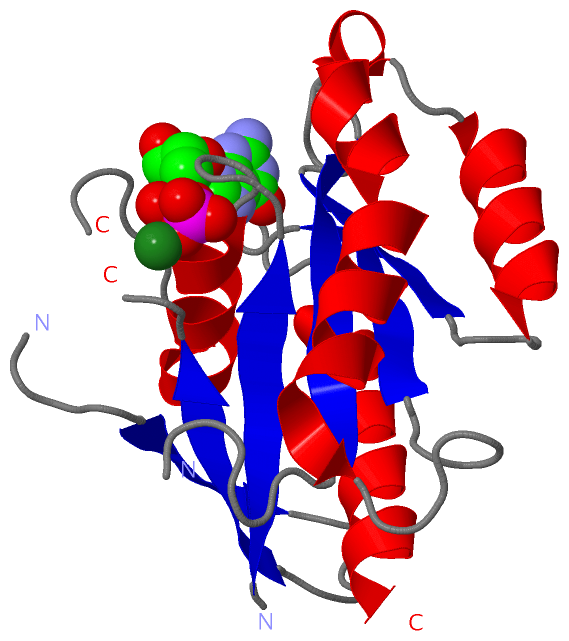
Image Asym./Biol. Unit
Asym./Biol. Unit  (Jmol Viewer)
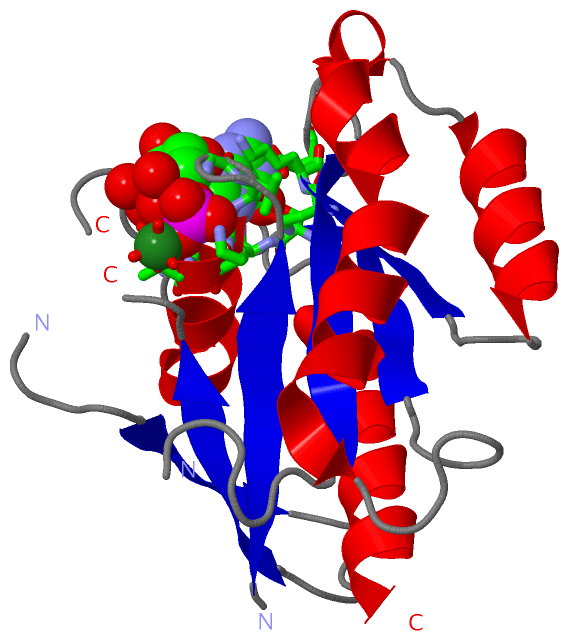
Image Asym./Biol. Unit - sites
Asym./Biol. Unit - sites  (Jmol Viewer)

(-) Description

Title :  GDP-BOUND YPT7P AT 1.35 A RESOLUTION
 
Authors :  A. -T. Constantinescu, A. Rak, A. J. Scheidig
Date :  02 Feb 02  (Deposition) - 05 Jun 02  (Release) - 24 Feb 09  (Revision)
Method :  X-RAY DIFFRACTION
Resolution :  1.35
Chains :  Asym./Biol. Unit :  A
Keywords :  G Protein, Vesicular Traffic, Gtp Hydrolysis, Ypt/Rab Protein, Endocytosis, Hydrolase, Endocytosis/Exocytosis Complex (Keyword Search: [Gene Ontology, PubMed, Web (Google))
 
Reference :  A. T. Constantinescu, A. Rak, K. Alexandrov, H. Esters, R. S. Goody, A. J. Scheidig
Rab-Subfamily-Specific Regions Of Ypt7P Are Structurally Different From Other Rabgtpases.
Structure V. 10 569 2002
PubMed-ID: 11937061  |  Reference-DOI: 10.1016/S0969-2126(02)00737-2
(for further references see the PDB file header)

(-) Compounds

Molecule 1 - GTP-BINDING PROTEIN YPT7P
    ChainsA
    EngineeredYES
    Expression SystemESCHERICHIA COLI BL21(DE3)
    Expression System PlasmidPET11
    Expression System StrainBL21/DE3
    Expression System Taxid469008
    Expression System Vector TypePLASMID
    FragmentGTPASE DOMAIN
    GeneYPT7
    Organism CommonBAKER'S YEAST
    Organism ScientificSACCHAROMYCES CEREVISIAE
    Organism Taxid4932
    SynonymGTP-BINDING PROTEIN YPT7

 Structural Features

(-) Chains, Units

  1
Asymmetric/Biological Unit A

Summary Information (see also Sequences/Alignments below)

(-) Ligands, Modified Residues, Ions  (2, 2)

Asymmetric/Biological Unit (2, 2)
No.NameCountTypeFull Name
1GDP1Ligand/IonGUANOSINE-5'-DIPHOSPHATE
2MG1Ligand/IonMAGNESIUM ION

(-) Sites  (2, 2)

Asymmetric Unit (2, 2)
No.NameEvidenceResiduesDescription
1AC1SOFTWARETHR A:22 , GDP A:400 , HOH A:583 , HOH A:584 , HOH A:585 , HOH A:586BINDING SITE FOR RESIDUE MG A 401
2AC2SOFTWAREGLY A:18 , VAL A:19 , GLY A:20 , LYS A:21 , THR A:22 , SER A:23 , TYR A:33 , ASN A:126 , LYS A:127 , ASP A:129 , SER A:158 , ALA A:159 , LYS A:160 , MG A:401 , HOH A:553 , HOH A:584 , HOH A:585 , HOH A:586 , HOH A:587 , HOH A:649BINDING SITE FOR RESIDUE GDP A 400

(-) SS Bonds  (0, 0)

(no "SS Bond" information available for 1KY3)

(-) Cis Peptide Bonds  (0, 0)

(no "Cis Peptide Bond" information available for 1KY3)

 Sequence-Structure Mapping

(-) SAPs(SNPs)/Variants  (0, 0)

(no "SAP(SNP)/Variant" information available for 1KY3)

(-) PROSITE Motifs  (0, 0)

(no "PROSITE Motif" information available for 1KY3)

(-) Exons   (1, 1)

Asymmetric/Biological Unit (1, 1)
 ENSEMBLUniProtKBPDB
No.Transcript IDExonExon IDGenome LocationLengthIDLocationLengthCountLocationLength
1.1YML001W1YML001W.1XIII:267174-267800627YPT7_YEAST1-2082081A:7-181 (gaps)175

(-) Sequences/Alignments

Asymmetric/Biological Unit
   Reformat: Number of residues per line =  ('0' or empty: single-line sequence representation)
  Number of residues per labelling interval =   
  UniProt sequence: complete  aligned part    
   Show mapping: SCOP domains CATH domains Pfam domains Secondary structure (by author)
SAPs(SNPs) PROSITE motifs Exons
(details for a mapped element are shown in a popup box when the mouse pointer rests over it)
Chain A from PDB  Type:PROTEIN  Length:162
 aligned with YPT7_YEAST | P32939 from UniProtKB/Swiss-Prot  Length:208

    Alignment length:175
                                    16        26        36        46        56        66        76        86        96       106       116       126       136       146       156       166       176     
           YPT7_YEAST     7 NILKVIILGDSGVGKTSLMHRYVNDKYSQQYKATIGADFLTKEVTVDGDKVATMQVWDTAGQERFQSLGVAFYRGADCCVLVYDVTNASSFENIKSWRDEFLVHANVNSPETFPFVILGNKIDAEESKKIVSEKSAQELAKSLGDIPLFLTSAKNAINVDTAFEEIARSALQQNQ 181
               SCOP domains d1ky3a_ A: Rab-related protein    ypt7p                                                                                                                                         SCOP domains
               CATH domains 1ky3A00 A:7-181 P-loop containi   ng nucleotide triphosphate           hydrolases                                                                                               CATH domains
               Pfam domains ---Ras-1ky3A01 A:10-178                                                                                                                                                     --- Pfam domains
         Sec.struct. author .eeeeeee.....hhhhhhhhhhhh......---.....eeeee.......eeeeee...----------.......eeeeeee..hhhhhhhhhhhhhhhhhhhh........eeeeee....hhhhh..hhhhhhhhhhhh....eeee......hhhhhhhhhhhhhhhhhh Sec.struct. author
                 SAPs(SNPs) ------------------------------------------------------------------------------------------------------------------------------------------------------------------------------- SAPs(SNPs)
                    PROSITE ------------------------------------------------------------------------------------------------------------------------------------------------------------------------------- PROSITE
               Transcript 1 Exon 1.1  PDB: A:7-181 (gaps) UniProt: 1-208 [INCOMPLETE]                                                                                                                       Transcript 1
                 1ky3 A   7 NILKVIILGDSGVGKTSLMHRYVNDKYSQQY---IGADFLTKEVTVDGDKVATMQVWDTA----------AFYRGADCCVLVYDVTNASSFENIKSWRDEFLVHANVNSPETFPFVILGNKIDAEESKKIVSEKSAQELAKSLGDIPLFLTSAKNAINVDTAFEEIARSALQQNQ 181
                                    16        26        36|   |   46        56        66         -|       86        96       106       116       126       136       146       156       166       176     
                                                         37  41                       66         77                                                                                                        

   Legend:   → Mismatch (orange background)
  - → Gap (green background, '-', border residues have a numbering label)
    → Modified Residue (blue background, lower-case, 'x' indicates undefined single-letter code, labelled with number + name)
  x → Chemical Group (purple background, 'x', labelled with number + name, e.g. ACE or NH2)
  extra numbering lines below/above indicate numbering irregularities and modified residue names etc., number ends below/above '|'

 Classification and Annotation

(-) SCOP Domains  (1, 1)

Asymmetric/Biological Unit

(-) CATH Domains  (1, 1)

Asymmetric/Biological Unit
(-)
Class: Alpha Beta (26913)

(-) Pfam Domains  (1, 1)

Asymmetric/Biological Unit

(-) Gene Ontology  (26, 26)

Asymmetric/Biological Unit(hide GO term definitions)
Chain A   (YPT7_YEAST | P32939)
molecular function
    GO:0005525    GTP binding    Interacting selectively and non-covalently with GTP, guanosine triphosphate.
    GO:0003924    GTPase activity    Catalysis of the reaction: GTP + H2O = GDP + phosphate.
    GO:0000166    nucleotide binding    Interacting selectively and non-covalently with a nucleotide, any compound consisting of a nucleoside that is esterified with (ortho)phosphate or an oligophosphate at any hydroxyl group on the ribose or deoxyribose.
    GO:0005515    protein binding    Interacting selectively and non-covalently with any protein or protein complex (a complex of two or more proteins that may include other nonprotein molecules).
biological process
    GO:0006897    endocytosis    A vesicle-mediated transport process in which cells take up external materials or membrane constituents by the invagination of a small region of the plasma membrane to form a new membrane-bounded vesicle.
    GO:0016236    macroautophagy    The major inducible pathway for the general turnover of cytoplasmic constituents in eukaryotic cells, it is also responsible for the degradation of active cytoplasmic enzymes and organelles during nutrient starvation. Macroautophagy involves the formation of double-membrane-bounded autophagosomes which enclose the cytoplasmic constituent targeted for degradation in a membrane-bounded structure. Autophagosomes then fuse with a lysosome (or vacuole) releasing single-membrane-bounded autophagic bodies that are then degraded within the lysosome (or vacuole). Though once thought to be a purely non-selective process, it appears that some types of macroautophagy, e.g. macropexophagy, macromitophagy, may involve selective targeting of the targets to be degraded.
    GO:0090385    phagosome-lysosome fusion    The creation of a phagolysosome from a phagosome and a lysosome.
    GO:0034727    piecemeal microautophagy of nucleus    Degradation of a cell nucleus by lysosomal microautophagy.
    GO:0032258    protein localization by the CVT pathway    A cytoplasm to vacuole targeting pathway that uses machinery common with autophagy. The CVT vesicle is formed when the receptor protein, Atg19, binds to the complexes of the target protein (aminopeptidase or alpha-mannosidase homododecamers), forming the Cvt complex. Atg11 binds to Atg9 and transports the CVT complex to the pre-autophagosome (PAS). The phagophore membrane expands around the CVT complex (excluding bulk cytoplasm) forming the CVT vesicle. This pathway is mostly observed in yeast.
    GO:0072665    protein localization to vacuole    A process in which a protein is transported to, or maintained at, a location in a vacuole.
    GO:0015031    protein transport    The directed movement of proteins into, out of or within a cell, or between cells, by means of some agent such as a transporter or pore.
    GO:0032889    regulation of vacuole fusion, non-autophagic    Any process that modulates the frequency, rate or extent of the fusion of two vacuole membranes to form a single vacuole.
    GO:0042147    retrograde transport, endosome to Golgi    The directed movement of membrane-bounded vesicles from endosomes back to the trans-Golgi network where they are recycled for further rounds of transport.
    GO:0007264    small GTPase mediated signal transduction    Any series of molecular signals in which a small monomeric GTPase relays one or more of the signals.
    GO:0006810    transport    The directed movement of substances (such as macromolecules, small molecules, ions) or cellular components (such as complexes and organelles) into, out of or within a cell, or between cells, or within a multicellular organism by means of some agent such as a transporter, pore or motor protein.
    GO:0000011    vacuole inheritance    The distribution of vacuoles into daughter cells after mitosis or meiosis, mediated by interactions between vacuoles and the cytoskeleton.
    GO:0016192    vesicle-mediated transport    A cellular transport process in which transported substances are moved in membrane-bounded vesicles; transported substances are enclosed in the vesicle lumen or located in the vesicle membrane. The process begins with a step that directs a substance to the forming vesicle, and includes vesicle budding and coating. Vesicles are then targeted to, and fuse with, an acceptor membrane.
cellular component
    GO:0005829    cytosol    The part of the cytoplasm that does not contain organelles but which does contain other particulate matter, such as protein complexes.
    GO:0000324    fungal-type vacuole    A vacuole that has both lytic and storage functions. The fungal vacuole is a large, membrane-bounded organelle that functions as a reservoir for the storage of small molecules (including polyphosphate, amino acids, several divalent cations (e.g. calcium), other ions, and other small molecules) as well as being the primary compartment for degradation. It is an acidic compartment, containing an ensemble of acid hydrolases. At least in S. cerevisiae, there are indications that the morphology of the vacuole is variable and correlated with the cell cycle, with logarithmically growing cells having a multilobed, reticulated vacuole, while stationary phase cells contain a single large structure.
    GO:0000329    fungal-type vacuole membrane    The lipid bilayer surrounding a vacuole, the shape of which correlates with cell cycle phase. The membrane separates its contents from the cytoplasm of the cell. An example of this structure is found in Saccharomyces cerevisiae.
    GO:0005770    late endosome    A prelysosomal endocytic organelle differentiated from early endosomes by lower lumenal pH and different protein composition. Late endosomes are more spherical than early endosomes and are mostly juxtanuclear, being concentrated near the microtubule organizing center.
    GO:0005764    lysosome    A small lytic vacuole that has cell cycle-independent morphology and is found in most animal cells and that contains a variety of hydrolases, most of which have their maximal activities in the pH range 5-6. The contained enzymes display latency if properly isolated. About 40 different lysosomal hydrolases are known and lysosomes have a great variety of morphologies and functions.
    GO:0045335    phagocytic vesicle    A membrane-bounded intracellular vesicle that arises from the ingestion of particulate material by phagocytosis.
    GO:0030906    retromer, cargo-selective complex    The trimeric subcomplex of the retromer, believed to be closely associated with the membrane. This trimeric complex is responsible for recognizing and binding to cargo molecules. The complex comprises three Vps proteins in both yeast and mammalian cells: Vps35p, Vps29p, and Vps26p in yeast, and VPS35, VPS29 and VPS26A or VPS26B in mammals.
    GO:0005773    vacuole    A closed structure, found only in eukaryotic cells, that is completely surrounded by unit membrane and contains liquid material. Cells contain one or several vacuoles, that may have different functions from each other. Vacuoles have a diverse array of functions. They can act as a storage organelle for nutrients or waste products, as a degradative compartment, as a cost-effective way of increasing cell size, and as a homeostatic regulator controlling both turgor pressure and pH of the cytosol.
    GO:1990816    vacuole-mitochondrion membrane contact site    A zone of apposition between the vacuolar membrane and the mitochondrial outer membrane, important for transfer of lipids between the two organelles.

 Visualization

(-) Interactive Views

Asymmetric/Biological Unit
  Complete Structure
    Jena3D(integrated viewing of ligand, site, SAP, PROSITE, SCOP information)
    WebMol | AstexViewer[tm]@PDBe
(Java Applets, require no local installation except for Java; loading may be slow)
    STRAP
(Java WebStart application, automatic local installation, requires Java; full application with system access!)
    RasMol
(require local installation)
    Molscript (VRML)
(requires installation of a VRML viewer; select preferred view via VRML and generate a mono or stereo PDF format file)
 
  Ligands, Modified Residues, Ions
    GDP  [ RasMol | Jena3D ]  +environment [ RasMol | Jena3D ]
    MG  [ RasMol | Jena3D ]  +environment [ RasMol | Jena3D ]
 
  Sites
    AC1  [ RasMol ]  +environment [ RasMol ]
    AC2  [ RasMol ]  +environment [ RasMol ]
 
  Cis Peptide Bonds
(no "Cis Peptide Bonds" information available for 1ky3)
 

(-) Still Images

Jmol
  protein: cartoon or spacefill or dots and stick; nucleic acid: cartoon and stick; ligands: spacefill; active site: stick
Molscript
  protein, nucleic acid: cartoon; ligands: spacefill; active site: ball and stick

 Databases and Analysis Tools

(-) Databases

Access by PDB/NDB ID
  1ky3
    Family and Domain InformationProDom | SYSTERS
    General Structural InformationGlycoscienceDB | MMDB | NDB | OCA | PDB | PDBe | PDBj | PDBsum | PDBWiki | PQS | PROTEOPEDIA
    Orientation in MembranesOPM
    Protein SurfaceSURFACE
    Secondary StructureDSSP (structure derived) | HSSP (homology derived)
    Structural GenomicsGeneCensus
    Structural NeighboursCE | VAST
    Structure ClassificationCATH | Dali | SCOP
    Validation and Original DataBMRB Data View | BMRB Restraints Grid | EDS | PROCHECK | RECOORD | WHAT_CHECK
 
Access by UniProt ID/Accession number
  YPT7_YEAST | P32939
    Comparative Protein Structure ModelsModBase
    Genomic InformationEnsembl
    Protein-protein InteractionDIP
    Sequence, Family and Domain InformationInterPro | Pfam | SMART | UniProtKB/SwissProt
 
Access by Enzyme Classificator   (EC Number)
  (no 'Enzyme Classificator' available)
    General Enzyme InformationBRENDA | EC-PDB | Enzyme | IntEnz
    PathwayKEGG | MetaCyc
 
Access by Disease Identifier   (MIM ID)
  (no 'MIM ID' available)
    Disease InformationOMIM
 
Access by GenAge ID
  (no 'GenAge ID' available)
    Age Related InformationGenAge

(-) Analysis Tools

Access by PDB/NDB ID
    Domain InformationXDom
    Interatomic Contacts of Structural UnitsCSU
    Ligand-protein ContactsLPC
    Protein CavitiescastP
    Sequence and Secondary StructurePDBCartoon
    Structure AlignmentSTRAP(Java WebStart application, automatic local installation, requires Java; full application with system access!)
    Structure and Sequence BrowserSTING
 
Access by UniProt ID/Accession number
  YPT7_YEAST | P32939
    Protein Disorder PredictionDisEMBL | FoldIndex | GLOBPLOT (for more information see DisProt)

 Related Entries

(-) Entries Sharing at Least One Protein Chain (UniProt ID)

UniProtKB/Swiss-Prot
        YPT7_YEAST | P329391ky2 4phf 4phg 4phh

(-) Related Entries Specified in the PDB File

1ky2 1KY2 IS GPPNHP-BOUND YPT7P.