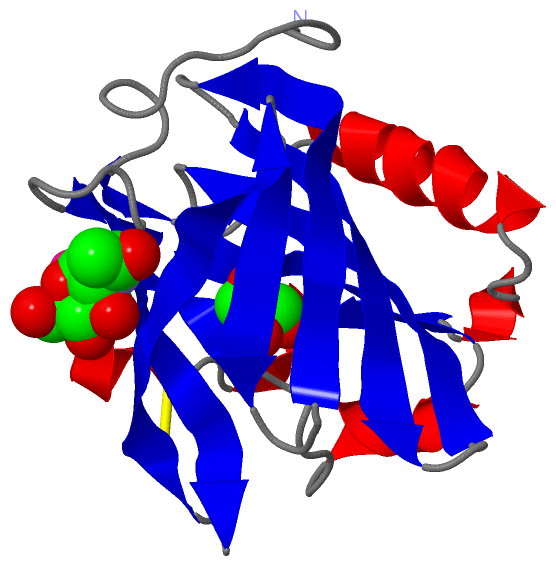
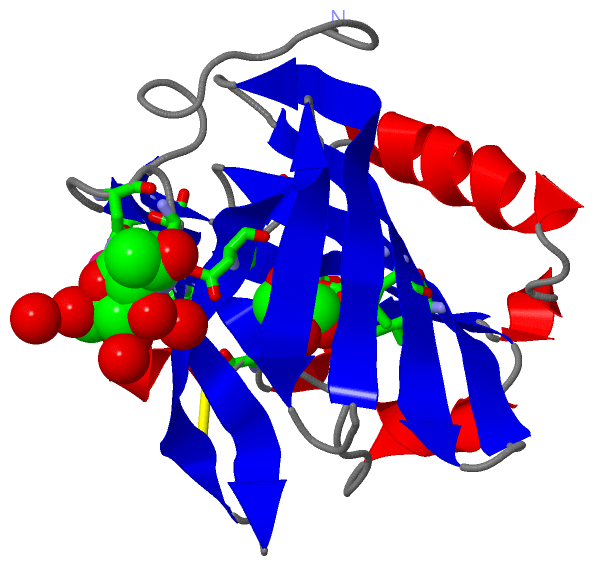
Asymmetric/Biological Unit(hide GO term definitions)
Chain A ( SAL_PIG | P81608)
| molecular function |
|---|
| | GO:0005550 | | pheromone binding | | Interacting selectively and non-covalently with a pheromone, a substance, or characteristic mixture of substances, that is secreted and released by an organism and detected by a second organism of the same or a closely related species, in which it causes a specific reaction, such as a definite behavioral reaction or a developmental process. |
| | GO:0036094 | | small molecule binding | | Interacting selectively and non-covalently with a small molecule, any low molecular weight, monomeric, non-encoded molecule. |
| | GO:0005215 | | transporter activity | | Enables the directed movement of substances (such as macromolecules, small molecules, ions) into, out of or within a cell, or between cells. |
| biological process |
|---|
| | GO:0006810 | | transport | | The directed movement of substances (such as macromolecules, small molecules, ions) or cellular components (such as complexes and organelles) into, out of or within a cell, or between cells, or within a multicellular organism by means of some agent such as a transporter, pore or motor protein. |
| cellular component |
|---|
| | GO:0005576 | | extracellular region | | The space external to the outermost structure of a cell. For cells without external protective or external encapsulating structures this refers to space outside of the plasma membrane. This term covers the host cell environment outside an intracellular parasite. |
|

 Description