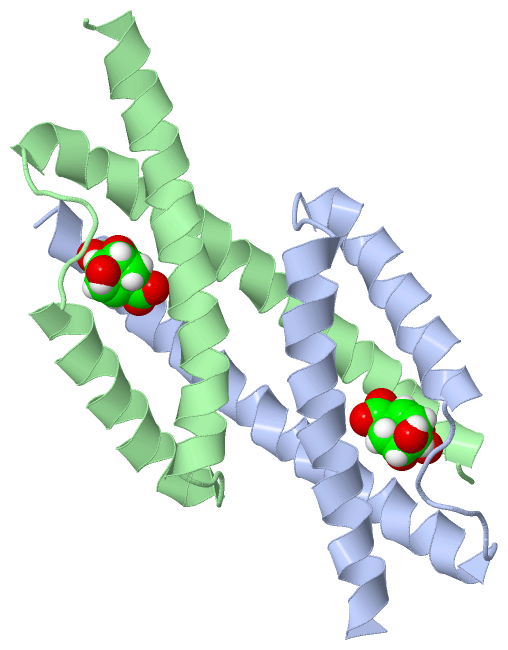
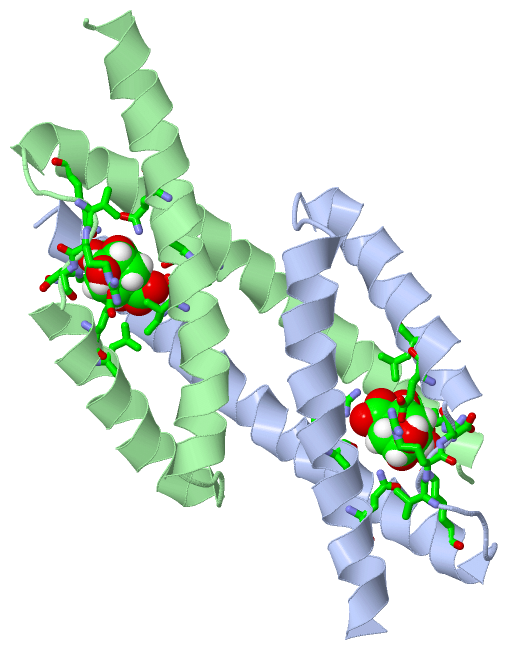
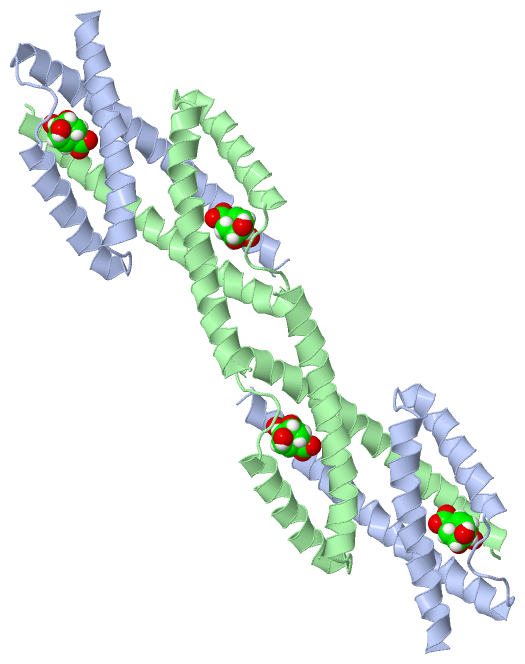
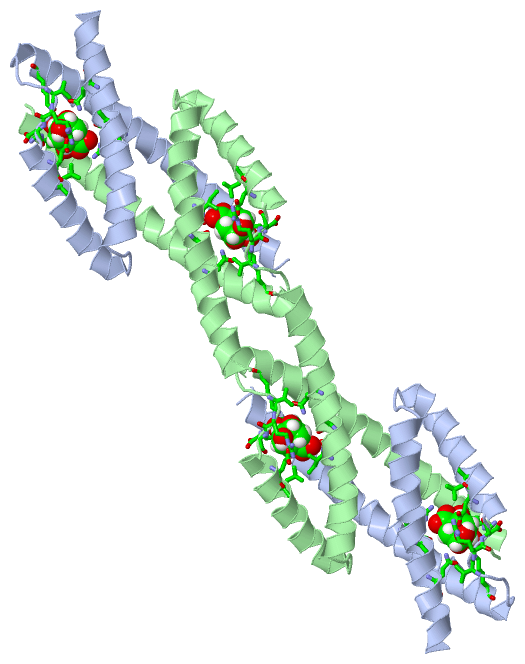
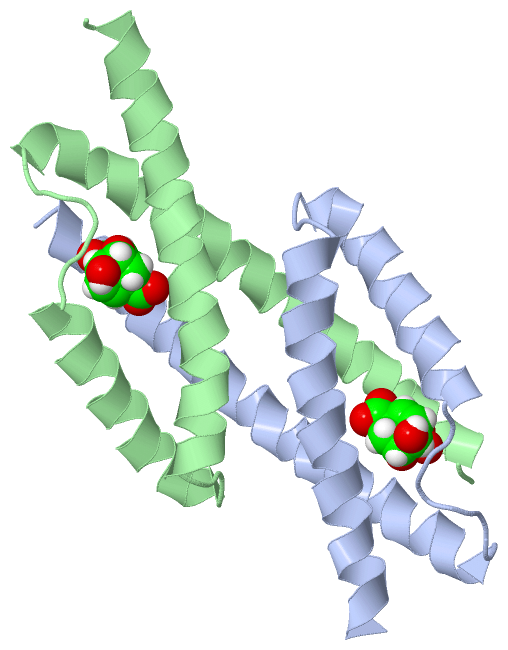
Asymmetric Unit(hide GO term definitions)
Chain A,B ( PHEA_ECOLI | P0A9J8)
| molecular function |
|---|
| | GO:0016597 | | amino acid binding | | Interacting selectively and non-covalently with an amino acid, organic acids containing one or more amino substituents. |
| | GO:0003824 | | catalytic activity | | Catalysis of a biochemical reaction at physiological temperatures. In biologically catalyzed reactions, the reactants are known as substrates, and the catalysts are naturally occurring macromolecular substances known as enzymes. Enzymes possess specific binding sites for substrates, and are usually composed wholly or largely of protein, but RNA that has catalytic activity (ribozyme) is often also regarded as enzymatic. |
| | GO:0004106 | | chorismate mutase activity | | Catalysis of the reaction: chorismate = prephenate. |
| | GO:0016853 | | isomerase activity | | Catalysis of the geometric or structural changes within one molecule. Isomerase is the systematic name for any enzyme of EC class 5. |
| | GO:0016829 | | lyase activity | | Catalysis of the cleavage of C-C, C-O, C-N and other bonds by other means than by hydrolysis or oxidation, or conversely adding a group to a double bond. They differ from other enzymes in that two substrates are involved in one reaction direction, but only one in the other direction. When acting on the single substrate, a molecule is eliminated and this generates either a new double bond or a new ring. |
| | GO:0004664 | | prephenate dehydratase activity | | Catalysis of the reaction: prephenate = phenylpyruvate + H2O + CO2. |
| biological process |
|---|
| | GO:0009094 | | L-phenylalanine biosynthetic process | | The chemical reactions and pathways resulting in the formation of L-phenylalanine, the L-enantiomer of 2-amino-3-phenylpropanoic acid, i.e. (2S)-2-amino-3-phenylpropanoic acid. |
| | GO:0009073 | | aromatic amino acid family biosynthetic process | | The chemical reactions and pathways resulting in the formation of aromatic amino acid family, amino acids with aromatic ring (phenylalanine, tyrosine, tryptophan). |
| | GO:0008652 | | cellular amino acid biosynthetic process | | The chemical reactions and pathways resulting in the formation of amino acids, organic acids containing one or more amino substituents. |
| | GO:0046417 | | chorismate metabolic process | | The chemical reactions and pathways involving chorismate, the anion of (3R-trans)-3-((1-carboxyethenyl)oxy)-4-hydroxy-1,5-cyclohexadiene-1-carboxylic acid. |
| | GO:0008152 | | metabolic process | | The chemical reactions and pathways, including anabolism and catabolism, by which living organisms transform chemical substances. Metabolic processes typically transform small molecules, but also include macromolecular processes such as DNA repair and replication, and protein synthesis and degradation. |
| | GO:0006571 | | tyrosine biosynthetic process | | The chemical reactions and pathways resulting in the formation of tyrosine, an aromatic amino acid, 2-amino-3-(4-hydroxyphenyl)propanoic acid. |
| cellular component |
|---|
| | GO:0005737 | | cytoplasm | | All of the contents of a cell excluding the plasma membrane and nucleus, but including other subcellular structures. |
Chain A,B ( PHEA_ECO57 | P0A9J9)
| molecular function |
|---|
| | GO:0016597 | | amino acid binding | | Interacting selectively and non-covalently with an amino acid, organic acids containing one or more amino substituents. |
| | GO:0003824 | | catalytic activity | | Catalysis of a biochemical reaction at physiological temperatures. In biologically catalyzed reactions, the reactants are known as substrates, and the catalysts are naturally occurring macromolecular substances known as enzymes. Enzymes possess specific binding sites for substrates, and are usually composed wholly or largely of protein, but RNA that has catalytic activity (ribozyme) is often also regarded as enzymatic. |
| | GO:0004106 | | chorismate mutase activity | | Catalysis of the reaction: chorismate = prephenate. |
| | GO:0016853 | | isomerase activity | | Catalysis of the geometric or structural changes within one molecule. Isomerase is the systematic name for any enzyme of EC class 5. |
| | GO:0016829 | | lyase activity | | Catalysis of the cleavage of C-C, C-O, C-N and other bonds by other means than by hydrolysis or oxidation, or conversely adding a group to a double bond. They differ from other enzymes in that two substrates are involved in one reaction direction, but only one in the other direction. When acting on the single substrate, a molecule is eliminated and this generates either a new double bond or a new ring. |
| | GO:0004664 | | prephenate dehydratase activity | | Catalysis of the reaction: prephenate = phenylpyruvate + H2O + CO2. |
| biological process |
|---|
| | GO:0009094 | | L-phenylalanine biosynthetic process | | The chemical reactions and pathways resulting in the formation of L-phenylalanine, the L-enantiomer of 2-amino-3-phenylpropanoic acid, i.e. (2S)-2-amino-3-phenylpropanoic acid. |
| | GO:0009073 | | aromatic amino acid family biosynthetic process | | The chemical reactions and pathways resulting in the formation of aromatic amino acid family, amino acids with aromatic ring (phenylalanine, tyrosine, tryptophan). |
| | GO:0008652 | | cellular amino acid biosynthetic process | | The chemical reactions and pathways resulting in the formation of amino acids, organic acids containing one or more amino substituents. |
| | GO:0046417 | | chorismate metabolic process | | The chemical reactions and pathways involving chorismate, the anion of (3R-trans)-3-((1-carboxyethenyl)oxy)-4-hydroxy-1,5-cyclohexadiene-1-carboxylic acid. |
| | GO:0008152 | | metabolic process | | The chemical reactions and pathways, including anabolism and catabolism, by which living organisms transform chemical substances. Metabolic processes typically transform small molecules, but also include macromolecular processes such as DNA repair and replication, and protein synthesis and degradation. |
| cellular component |
|---|
| | GO:0005737 | | cytoplasm | | All of the contents of a cell excluding the plasma membrane and nucleus, but including other subcellular structures. |
Chain A,B ( PHEA_SHIFL | P0A9K0)
| molecular function |
|---|
| | GO:0016597 | | amino acid binding | | Interacting selectively and non-covalently with an amino acid, organic acids containing one or more amino substituents. |
| | GO:0003824 | | catalytic activity | | Catalysis of a biochemical reaction at physiological temperatures. In biologically catalyzed reactions, the reactants are known as substrates, and the catalysts are naturally occurring macromolecular substances known as enzymes. Enzymes possess specific binding sites for substrates, and are usually composed wholly or largely of protein, but RNA that has catalytic activity (ribozyme) is often also regarded as enzymatic. |
| | GO:0004106 | | chorismate mutase activity | | Catalysis of the reaction: chorismate = prephenate. |
| | GO:0016853 | | isomerase activity | | Catalysis of the geometric or structural changes within one molecule. Isomerase is the systematic name for any enzyme of EC class 5. |
| | GO:0016829 | | lyase activity | | Catalysis of the cleavage of C-C, C-O, C-N and other bonds by other means than by hydrolysis or oxidation, or conversely adding a group to a double bond. They differ from other enzymes in that two substrates are involved in one reaction direction, but only one in the other direction. When acting on the single substrate, a molecule is eliminated and this generates either a new double bond or a new ring. |
| | GO:0004664 | | prephenate dehydratase activity | | Catalysis of the reaction: prephenate = phenylpyruvate + H2O + CO2. |
| biological process |
|---|
| | GO:0009094 | | L-phenylalanine biosynthetic process | | The chemical reactions and pathways resulting in the formation of L-phenylalanine, the L-enantiomer of 2-amino-3-phenylpropanoic acid, i.e. (2S)-2-amino-3-phenylpropanoic acid. |
| | GO:0009073 | | aromatic amino acid family biosynthetic process | | The chemical reactions and pathways resulting in the formation of aromatic amino acid family, amino acids with aromatic ring (phenylalanine, tyrosine, tryptophan). |
| | GO:0008652 | | cellular amino acid biosynthetic process | | The chemical reactions and pathways resulting in the formation of amino acids, organic acids containing one or more amino substituents. |
| | GO:0046417 | | chorismate metabolic process | | The chemical reactions and pathways involving chorismate, the anion of (3R-trans)-3-((1-carboxyethenyl)oxy)-4-hydroxy-1,5-cyclohexadiene-1-carboxylic acid. |
| | GO:0008152 | | metabolic process | | The chemical reactions and pathways, including anabolism and catabolism, by which living organisms transform chemical substances. Metabolic processes typically transform small molecules, but also include macromolecular processes such as DNA repair and replication, and protein synthesis and degradation. |
| cellular component |
|---|
| | GO:0005737 | | cytoplasm | | All of the contents of a cell excluding the plasma membrane and nucleus, but including other subcellular structures. |
|

 Description