Show PDB file:   
         Plain Text   HTML   (compressed file size)
QuickSearch:   
by PDB,NDB,UniProt,PROSITE Code or Search Term(s)  
(-)Biol.Unit 1 - manually
(-)Asymmetric Unit
(-)Asym. Unit - sites
(-)Biological Unit 1
(-)Biol. Unit 1 - sites
collapse expand < >
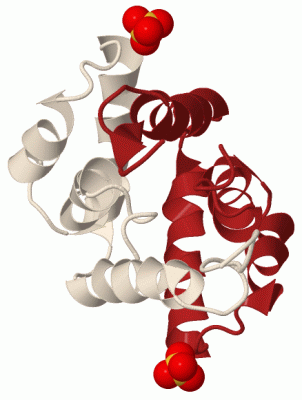
Image Biol.Unit 1 - manually
Biol.Unit 1 - manually  (Jmol Viewer)
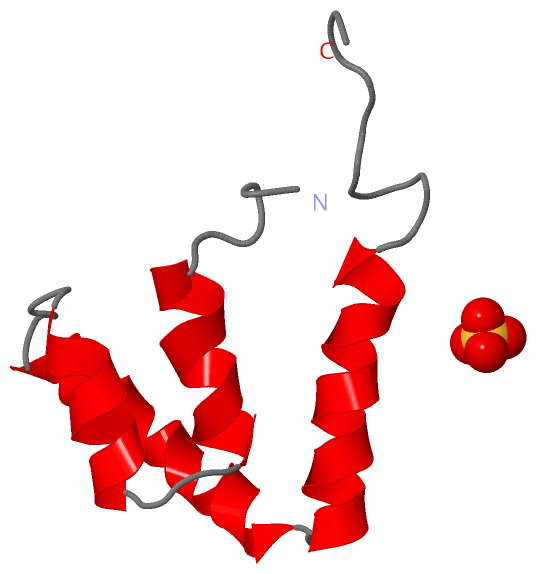
Image Asymmetric Unit
Asymmetric Unit  (Jmol Viewer)
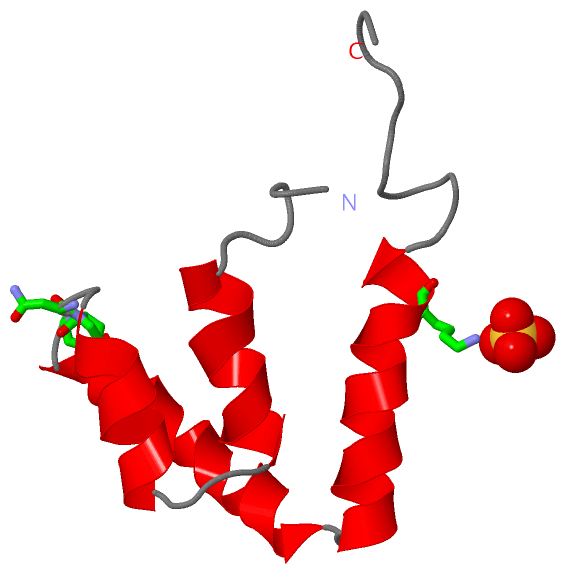
Image Asym. Unit - sites
Asym. Unit - sites  (Jmol Viewer)
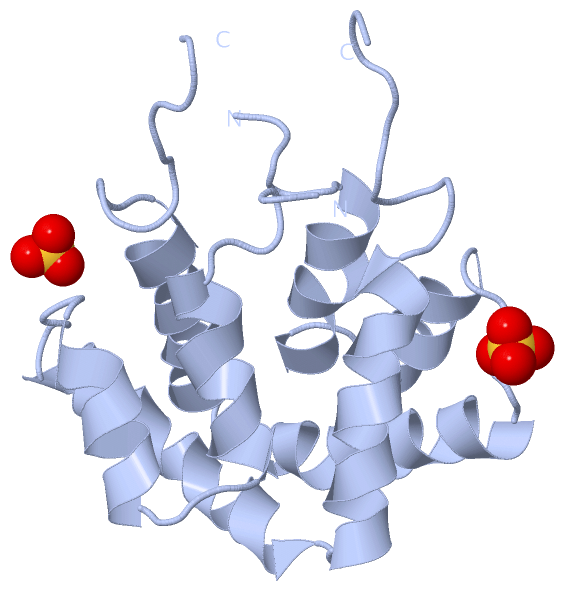
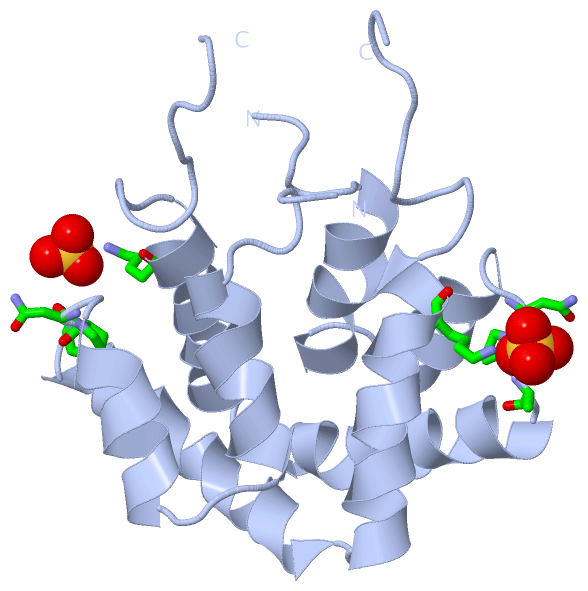
Image Biological Unit 1
Biological Unit 1  (Jmol Viewer)
Image Biol. Unit 1 - sites
Biol. Unit 1 - sites  (Jmol Viewer)

(-) Description

Title :  REFINED STRUCTURE OF RAT CLARA CELL 17 KDA PROTEIN AT 3.0 ANGSTROMS RESOLUTION
 
Authors :  T. C. Umland, S. Swaminathan, W. Furey, G. Singh, J. Pletcher, M. Sax
Date :  17 Sep 91  (Deposition) - 31 Jan 94  (Release) - 13 Jul 11  (Revision)
Method :  X-RAY DIFFRACTION
Resolution :  3.00
Chains :  Asym. Unit :  A
Biol. Unit 1:  A  (2x)
Keywords :  Phospholipase A2 Inhibitor (Keyword Search: [Gene Ontology, PubMed, Web (Google))
 
Reference :  T. C. Umland, S. Swaminathan, W. Furey, G. Singh, J. Pletcher, M. Sax
Refined Structure Of Rat Clara Cell 17 Kda Protein At 3. 0 A Resolution.
J. Mol. Biol. V. 224 441 1992
PubMed-ID: 1560460  |  Reference-DOI: 10.1016/0022-2836(92)91006-B
(for further references see the PDB file header)

(-) Compounds

Molecule 1 - CLARA CELL 17 KD PROTEIN
    ChainsA
    EngineeredYES
    Organism CommonBLACK RAT
    Organism ScientificRATTUS RATTUS
    Organism Taxid10117

 Structural Features

(-) Chains, Units

  1
Asymmetric Unit A
Biological Unit 1 (2x)A

Summary Information (see also Sequences/Alignments below)

(-) Ligands, Modified Residues, Ions  (1, 1)

Asymmetric Unit (1, 1)
No.NameCountTypeFull Name
1SO41Ligand/IonSULFATE ION
Biological Unit 1 (1, 2)
No.NameCountTypeFull Name
1SO42Ligand/IonSULFATE ION

(-) Sites  (1, 1)

Asymmetric Unit (1, 1)
No.NameEvidenceResiduesDescription
1AC1SOFTWAREASN A:29 , PRO A:30 , ALA A:31 , LYS A:62BINDING SITE FOR RESIDUE SO4 A 76

(-) SS Bonds  (1, 1)

Asymmetric Unit
No.Residues
1A:3 -A:69

(-) Cis Peptide Bonds  (0, 0)

(no "Cis Peptide Bond" information available for 1CCD)

 Sequence-Structure Mapping

(-) SAPs(SNPs)/Variants  (0, 0)

(no "SAP(SNP)/Variant" information available for 1CCD)

(-) PROSITE Motifs  (1, 1)

Asymmetric Unit (1, 1)
 PROSITEUniProtKBPDB
No.IDACDescriptionIDLocationCountLocation
1SCGBPS51311 Secretoglobin (SCGB) family profile.UTER_RAT22-91  1A:1-70
Biological Unit 1 (1, 2)
 PROSITEUniProtKBPDB
No.IDACDescriptionIDLocationCountLocation
1SCGBPS51311 Secretoglobin (SCGB) family profile.UTER_RAT22-91  2A:1-70

(-) Exons   (2, 2)

Asymmetric Unit (2, 2)
 ENSEMBLUniProtKBPDB
No.Transcript IDExonExon IDGenome LocationLengthIDLocationLengthCountLocationLength
1.1ENSRNOT000000273421ENSRNOE00000196022chr1:211761651-211761540112UTER_RAT1-19190--
1.2ENSRNOT000000273422ENSRNOE00000196051chr1:211759859-211759672188UTER_RAT19-81631A:-2-6062
1.3ENSRNOT000000273423ENSRNOE00000196078chr1:211758265-211758103163UTER_RAT82-96151A:61-7515

(-) Sequences/Alignments

Asymmetric Unit
   Reformat: Number of residues per line =  ('0' or empty: single-line sequence representation)
  Number of residues per labelling interval =   
  UniProt sequence: complete  aligned part    
   Show mapping: SCOP domains CATH domains Pfam domains Secondary structure (by author)
SAPs(SNPs) PROSITE motifs Exons
(details for a mapped element are shown in a popup box when the mouse pointer rests over it)
Chain A from PDB  Type:PROTEIN  Length:77
 aligned with UTER_RAT | P17559 from UniProtKB/Swiss-Prot  Length:96

    Alignment length:77
                                    29        39        49        59        69        79        89       
              UTER_RAT   20 SSDICPGFLQVLEALLLGSESNYEAALKPFNPASDLQNAGTQLKRLVDTLPQETRINIVKLTEKILTSPLCEQDLRV 96
               SCOP domains d1ccda_ A: Clara cell 17kDa protein                                           SCOP domains
               CATH domains 1ccdA00 A:-2-75 Uteroglobin                                                   CATH domains
               Pfam domains ----------------------------------------------------------------------------- Pfam domains
         Sec.struct. author .....hhhhhhhhhhh...hhhhhhhhh.....hhhhhhhhhhhhhhhh..hhhhhhhhhhhhhhh........... Sec.struct. author
                 SAPs(SNPs) ----------------------------------------------------------------------------- SAPs(SNPs)
                    PROSITE --SCGB  PDB: A:1-70 UniProt: 22-91                                      ----- PROSITE
               Transcript 1 Exon 1.2  PDB: A:-2-60 UniProt: 19-81 [INCOMPLETE]            Exon 1.3        Transcript 1
                  1ccd A -2 SSDICPGFLQVLEALLLGSESNYEAALKPFNPASDLQNAGTQLKRLVDTLPQETRINIVKLTEKILTSPLCEQDLRV 75
                             ||      8        18        28        38        48        58        68       
                             ||                                                                          
                            -1|                                                                          
                              1                                                                          

   Legend:   → Mismatch (orange background)
  - → Gap (green background, '-', border residues have a numbering label)
    → Modified Residue (blue background, lower-case, 'x' indicates undefined single-letter code, labelled with number + name)
  x → Chemical Group (purple background, 'x', labelled with number + name, e.g. ACE or NH2)
  extra numbering lines below/above indicate numbering irregularities and modified residue names etc., number ends below/above '|'

 Classification and Annotation

(-) SCOP Domains  (1, 1)

Asymmetric Unit

(-) CATH Domains  (1, 1)

Asymmetric Unit

(-) Pfam Domains  (0, 0)

(no "Pfam Domain" information available for 1CCD)

(-) Gene Ontology  (30, 30)

Asymmetric Unit(hide GO term definitions)
Chain A   (UTER_RAT | P17559)
molecular function
    GO:0019834    phospholipase A2 inhibitor activity    Stops, prevents or reduces the activity of the enzyme phospholipase A2.
    GO:0097160    polychlorinated biphenyl binding    Interacting selectively and non-covalently with a polychlorinated biphenyl (PCB), a biphenyl compound containing between 2 and 10 chlorine atoms attached to the two benzene rings.
biological process
    GO:0042130    negative regulation of T cell proliferation    Any process that stops, prevents or reduces the rate or extent of T cell proliferation.
    GO:0043086    negative regulation of catalytic activity    Any process that stops or reduces the activity of an enzyme.
    GO:0032689    negative regulation of interferon-gamma production    Any process that stops, prevents, or reduces the frequency, rate, or extent of interferon-gamma production. Interferon-gamma is also known as type II interferon.
    GO:0032696    negative regulation of interleukin-13 production    Any process that stops, prevents, or reduces the frequency, rate, or extent of interleukin-13 production.
    GO:0032713    negative regulation of interleukin-4 production    Any process that stops, prevents, or reduces the frequency, rate, or extent of interleukin-4 production.
    GO:0032714    negative regulation of interleukin-5 production    Any process that stops, prevents, or reduces the frequency, rate, or extent of interleukin-5 production.
    GO:0000122    negative regulation of transcription from RNA polymerase II promoter    Any process that stops, prevents, or reduces the frequency, rate or extent of transcription from an RNA polymerase II promoter.
    GO:0050727    regulation of inflammatory response    Any process that modulates the frequency, rate or extent of the inflammatory response, the immediate defensive reaction (by vertebrate tissue) to infection or injury caused by chemical or physical agents.
    GO:0043488    regulation of mRNA stability    Any process that modulates the propensity of mRNA molecules to degradation. Includes processes that both stabilize and destabilize mRNAs.
    GO:0034097    response to cytokine    Any process that results in a change in state or activity of a cell or an organism (in terms of movement, secretion, enzyme production, gene expression, etc.) as a result of a cytokine stimulus.
    GO:0042493    response to drug    Any process that results in a change in state or activity of a cell or an organism (in terms of movement, secretion, enzyme production, gene expression, etc.) as a result of a drug stimulus. A drug is a substance used in the diagnosis, treatment or prevention of a disease.
    GO:0071774    response to fibroblast growth factor    Any process that results in a change in state or activity of a cell or an organism (in terms of movement, secretion, enzyme production, gene expression, etc.) as a result of a fibroblast growth factor stimulus.
    GO:0051384    response to glucocorticoid    Any process that results in a change in state or activity of a cell or an organism (in terms of movement, secretion, enzyme production, gene expression, etc.) as a result of a glucocorticoid stimulus. Glucocorticoids are hormonal C21 corticosteroids synthesized from cholesterol with the ability to bind with the cortisol receptor and trigger similar effects. Glucocorticoids act primarily on carbohydrate and protein metabolism, and have anti-inflammatory effects.
    GO:0032496    response to lipopolysaccharide    Any process that results in a change in state or activity of an organism (in terms of movement, secretion, enzyme production, gene expression, etc.) as a result of a lipopolysaccharide stimulus; lipopolysaccharide is a major component of the cell wall of gram-negative bacteria.
    GO:0010033    response to organic substance    Any process that results in a change in state or activity of a cell or an organism (in terms of movement, secretion, enzyme production, gene expression, etc.) as a result of an organic substance stimulus.
    GO:0010193    response to ozone    Any process that results in a change in state or activity of a cell or an organism (in terms of movement, secretion, enzyme production, gene expression, etc.) as a result of a ozone stimulus.
    GO:0034021    response to silicon dioxide    Any process that results in a change in state or activity of a cell or an organism (in terms of movement, secretion, enzyme production, gene expression, etc.) as a result of a silicon dioxide stimulus.
    GO:0009410    response to xenobiotic stimulus    Any process that results in a change in state or activity of a cell or an organism (in terms of movement, secretion, enzyme production, gene expression, etc.) as a result of a xenobiotic compound stimulus. Xenobiotic compounds are compounds foreign to living organisms.
    GO:0007165    signal transduction    The cellular process in which a signal is conveyed to trigger a change in the activity or state of a cell. Signal transduction begins with reception of a signal (e.g. a ligand binding to a receptor or receptor activation by a stimulus such as light), or for signal transduction in the absence of ligand, signal-withdrawal or the activity of a constitutively active receptor. Signal transduction ends with regulation of a downstream cellular process, e.g. regulation of transcription or regulation of a metabolic process. Signal transduction covers signaling from receptors located on the surface of the cell and signaling via molecules located within the cell. For signaling between cells, signal transduction is restricted to events at and within the receiving cell.
cellular component
    GO:0005737    cytoplasm    All of the contents of a cell excluding the plasma membrane and nucleus, but including other subcellular structures.
    GO:0005783    endoplasmic reticulum    The irregular network of unit membranes, visible only by electron microscopy, that occurs in the cytoplasm of many eukaryotic cells. The membranes form a complex meshwork of tubular channels, which are often expanded into slitlike cavities called cisternae. The ER takes two forms, rough (or granular), with ribosomes adhering to the outer surface, and smooth (with no ribosomes attached).
    GO:0070062    extracellular exosome    A vesicle that is released into the extracellular region by fusion of the limiting endosomal membrane of a multivesicular body with the plasma membrane. Extracellular exosomes, also simply called exosomes, have a diameter of about 40-100 nm.
    GO:0005576    extracellular region    The space external to the outermost structure of a cell. For cells without external protective or external encapsulating structures this refers to space outside of the plasma membrane. This term covers the host cell environment outside an intracellular parasite.
    GO:0005615    extracellular space    That part of a multicellular organism outside the cells proper, usually taken to be outside the plasma membranes, and occupied by fluid.
    GO:0005622    intracellular    The living contents of a cell; the matter contained within (but not including) the plasma membrane, usually taken to exclude large vacuoles and masses of secretory or ingested material. In eukaryotes it includes the nucleus and cytoplasm.
    GO:0005635    nuclear envelope    The double lipid bilayer enclosing the nucleus and separating its contents from the rest of the cytoplasm; includes the intermembrane space, a gap of width 20-40 nm (also called the perinuclear space).
    GO:0005791    rough endoplasmic reticulum    The rough (or granular) endoplasmic reticulum (ER) has ribosomes adhering to the outer surface; the ribosomes are the site of translation of the mRNA for those proteins which are either to be retained within the cisternae (ER-resident proteins), the proteins of the lysosomes, or the proteins destined for export from the cell. Glycoproteins undergo their initial glycosylation within the cisternae.
    GO:0030141    secretory granule    A small subcellular vesicle, surrounded by a membrane, that is formed from the Golgi apparatus and contains a highly concentrated protein destined for secretion. Secretory granules move towards the periphery of the cell and upon stimulation, their membranes fuse with the cell membrane, and their protein load is exteriorized. Processing of the contained protein may take place in secretory granules.

 Visualization

(-) Interactive Views

Asymmetric Unit
  Complete Structure
    Jena3D(integrated viewing of ligand, site, SAP, PROSITE, SCOP information)
    WebMol | AstexViewer[tm]@PDBe
(Java Applets, require no local installation except for Java; loading may be slow)
    STRAP
(Java WebStart application, automatic local installation, requires Java; full application with system access!)
    RasMol
(require local installation)
    Molscript (VRML)
(requires installation of a VRML viewer; select preferred view via VRML and generate a mono or stereo PDF format file)
 
  Ligands, Modified Residues, Ions
    SO4  [ RasMol | Jena3D ]  +environment [ RasMol | Jena3D ]
 
  Sites
    AC1  [ RasMol ]  +environment [ RasMol ]
 
  Cis Peptide Bonds
(no "Cis Peptide Bonds" information available for 1ccd)
 
Biological Unit
  Complete Structure
    Biological Unit 1  [ Jena3D ]

(-) Still Images

Jmol
  protein: cartoon or spacefill or dots and stick; nucleic acid: cartoon and stick; ligands: spacefill; active site: stick
Molscript
  protein, nucleic acid: cartoon; ligands: spacefill; active site: ball and stick

 Databases and Analysis Tools

(-) Databases

Access by PDB/NDB ID
  1ccd
    Family and Domain InformationProDom | SYSTERS
    General Structural InformationGlycoscienceDB | MMDB | NDB | OCA | PDB | PDBe | PDBj | PDBsum | PDBWiki | PQS | PROTEOPEDIA
    Orientation in MembranesOPM
    Protein SurfaceSURFACE
    Secondary StructureDSSP (structure derived) | HSSP (homology derived)
    Structural GenomicsGeneCensus
    Structural NeighboursCE | VAST
    Structure ClassificationCATH | Dali | SCOP
    Validation and Original DataBMRB Data View | BMRB Restraints Grid | EDS | PROCHECK | RECOORD | WHAT_CHECK
 
Access by UniProt ID/Accession number
  UTER_RAT | P17559
    Comparative Protein Structure ModelsModBase
    Genomic InformationEnsembl
    Protein-protein InteractionDIP
    Sequence, Family and Domain InformationInterPro | Pfam | SMART | UniProtKB/SwissProt
 
Access by Enzyme Classificator   (EC Number)
  (no 'Enzyme Classificator' available)
    General Enzyme InformationBRENDA | EC-PDB | Enzyme | IntEnz
    PathwayKEGG | MetaCyc
 
Access by Disease Identifier   (MIM ID)
  (no 'MIM ID' available)
    Disease InformationOMIM
 
Access by GenAge ID
  (no 'GenAge ID' available)
    Age Related InformationGenAge

(-) Analysis Tools

Access by PDB/NDB ID
    Domain InformationXDom
    Interatomic Contacts of Structural UnitsCSU
    Ligand-protein ContactsLPC
    Protein CavitiescastP
    Sequence and Secondary StructurePDBCartoon
    Structure AlignmentSTRAP(Java WebStart application, automatic local installation, requires Java; full application with system access!)
    Structure and Sequence BrowserSTING
 
Access by UniProt ID/Accession number
  UTER_RAT | P17559
    Protein Disorder PredictionDisEMBL | FoldIndex | GLOBPLOT (for more information see DisProt)

 Related Entries

(-) Entries Sharing at Least One Protein Chain (UniProt ID)

UniProtKB/Swiss-Prot
        UTER_RAT | P175591utr

(-) Related Entries Specified in the PDB File

(no "Related Entries Specified in the PDB File" available for 1CCD)