Show PDB file:   
         Plain Text   HTML   (compressed file size)
QuickSearch:   
by PDB,NDB,UniProt,PROSITE Code or Search Term(s)  
(-)Asym./Biol. Unit
collapse expand < >
Image Asym./Biol. Unit
Asym./Biol. Unit  (Jmol Viewer)

(-) Description

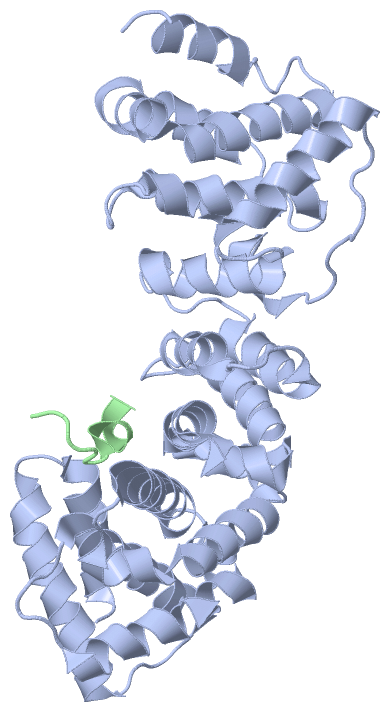
Title :  STRUCTURE OF THE WPL1 PROTEIN
 
Authors :  A. Chatterjee, S. Zakian, X. -W. Hu, M. R. Singleton
Date :  09 Jan 13  (Deposition) - 20 Feb 13  (Release) - 27 Mar 13  (Revision)
Method :  X-RAY DIFFRACTION
Resolution :  2.01
Chains :  Asym./Biol. Unit :  A,B
Keywords :  Cell Cycle, Cohesin, Chromosome Segregation (Keyword Search: [Gene Ontology, PubMed, Web (Google))
 
Reference :  A. Chatterjee, S. Zakian, X. -W. Hu, M. R. Singleton
Structural Insights Into Regulation Of Cohesion Establishment By Wpl1
Embo J. V. 32 677 2013
PubMed-ID: 23395900  |  Reference-DOI: 10.1038/EMBOJ.2013.16

(-) Compounds

Molecule 1 - AAR187CP
    ChainsA
    EngineeredYES
    Expression SystemESCHERICHIA COLI
    Expression System Taxid562
    FragmentRESIDUES 184-561
    Organism ScientificEREMOTHECIUM GOSSYPII
    Organism Taxid33169
    SynonymWPL1
 
Molecule 2 - AAL182WP
    ChainsB
    FragmentRESIDUES 136-163
    Organism ScientificEREMOTHECIUM GOSSYPII
    Organism Taxid33169
    SynonymSMC3
    SyntheticYES

 Structural Features

(-) Chains, Units

  12
Asymmetric/Biological Unit AB

Summary Information (see also Sequences/Alignments below)

(-) Ligands, Modified Residues, Ions  (0, 0)

(no "Ligand,Modified Residues,Ions" information available for 3ZIL)

(-) Sites  (0, 0)

(no "Site" information available for 3ZIL)

(-) SS Bonds  (0, 0)

(no "SS Bond" information available for 3ZIL)

(-) Cis Peptide Bonds  (1, 1)

Asymmetric/Biological Unit
No.Residues
1Tyr A:344 -Thr A:345

 Sequence-Structure Mapping

(-) SAPs(SNPs)/Variants  (0, 0)

(no "SAP(SNP)/Variant" information available for 3ZIL)

(-) PROSITE Motifs  (0, 0)

(no "PROSITE Motif" information available for 3ZIL)

(-) Exons   (0, 0)

(no "Exon" information available for 3ZIL)

(-) Sequences/Alignments

Asymmetric/Biological Unit
   Reformat: Number of residues per line =  ('0' or empty: single-line sequence representation)
  Number of residues per labelling interval =   
  UniProt sequence: complete  aligned part    
   Show mapping: SCOP domains CATH domains Pfam domains Secondary structure (by author)
SAPs(SNPs) PROSITE motifs Exons
(details for a mapped element are shown in a popup box when the mouse pointer rests over it)
Chain A from PDB  Type:PROTEIN  Length:362
 aligned with Q75E93_ASHGO | Q75E93 from UniProtKB/TrEMBL  Length:561

    Alignment length:362
                                   209       219       229       239       249       259       269       279       289       299       309       319       329       339       349       359       369       379       389       399       409       419       429       439       449       459       469       479       489       499       509       519       529       539       549       559  
         Q75E93_ASHGO   200 TLKYSEDLDFILSDNSMTTPEHRRNNMLRLCLDMMNNEDLCQYIVKYRHREVWEWCFQGTDPKQKVTSLLQCFIADKIPLLRHDKRWAMLSLENFILPLATDEVFPKKIAGSRLVKLNYQDLLRKLKFTNTCEYALYIWATYLLYTEAVYGAVPALARLISRGQLKDWDTACSLLENNIVAAPSGSDIEEYAQAFQTLAGLSREKLTNEGVLKCLIKLTNHTTVLELSADLLPSLVRSLAMSVQLHQNNIVSSISEIKTNLLILQLGLLLNIVSEATTAASTEELTNFGAVFRSVFVKKPTEMSFVLQLFLLVYAYSAGAAGVQLPPAEADFLKSELEAFATDVSSYNHNIHTRITRVLETL 561
               SCOP domains -------------------------------------------------------------------------------------------------------------------------------------------------------------------------------------------------------------------------------------------------------------------------------------------------------------------------------------------------------------------------- SCOP domains
               CATH domains -------------------------------------------------------------------------------------------------------------------------------------------------------------------------------------------------------------------------------------------------------------------------------------------------------------------------------------------------------------------------- CATH domains
               Pfam domains -------------------------------------------------------------------------------------------------------------------------------------------------------------------------------------------------------------------------------------------------------------------------------------------------------------------------------------------------------------------------- Pfam domains
         Sec.struct. author ..hhhhhhhhhh......hhhhhhhhhhhhhhhhhhhhhhhhhhhhhhhhhhhhhhh......hhhhhhhhhhhhhhh.....hhhhhhh....hhhhhhh..........hhhhhhhhhhhhhhh...hhhhhhhhhhhhhh.......hhhhhhhhhhhhh....hhhhhhhhhhh.....hhhhhhhhhhhhhhhhh.hhhhhhhhhhhhhhhhhhhhhhhhhhh..hhhhhhhhhhhhhhhhhhhhhh..hhhhhhhhhhhhhhhhhhhh.hhhhhhhhhhhhhhhhhhhhhhh.....hhhhhhhhhhhhhhhhhh....hhhhhhhhhhhhhhhhhhhh..hhhhhhhhhhhhh.. Sec.struct. author
                 SAPs(SNPs) -------------------------------------------------------------------------------------------------------------------------------------------------------------------------------------------------------------------------------------------------------------------------------------------------------------------------------------------------------------------------- SAPs(SNPs)
                    PROSITE -------------------------------------------------------------------------------------------------------------------------------------------------------------------------------------------------------------------------------------------------------------------------------------------------------------------------------------------------------------------------- PROSITE
                 Transcript -------------------------------------------------------------------------------------------------------------------------------------------------------------------------------------------------------------------------------------------------------------------------------------------------------------------------------------------------------------------------- Transcript
                 3zil A 200 TLKYSEDLDFILSDNSMTTPEHRRNNMLRLCLDMMNNEDLCQYIVKYRHREVWEWCFQGTDPKQKVTSLLQCFIADKIPLLRHDKRWAMLSLENFILPLATDEVFPKKIAGSRLVKLNYQDLLRKLKFTNTCEYALYIWATYLLYTEAVYGAVPALARLISRGQLKDWDTACSLLENNIVAAPSGSDIEEYAQAFQTLAGLSREKLTNEGVLKCLIKLTNHTTVLELSADLLPSLVRSLAMSVQLHQNNIVSSISEIKTNLLILQLGLLLNIVSEATTAASTEELTNFGAVFRSVFVKKPTEMSFVLQLFLLVYAYSAGAAGVQLPPAEADFLKSELEAFATDVSSYNHNIHTRITRVLETL 561
                                   209       219       229       239       249       259       269       279       289       299       309       319       329       339       349       359       369       379       389       399       409       419       429       439       449       459       469       479       489       499       509       519       529       539       549       559  

Chain B from PDB  Type:PROTEIN  Length:11
 aligned with Q75FB3_ASHGO | Q75FB3 from UniProtKB/TrEMBL  Length:1231

    Alignment length:11
                                   162 
         Q75FB3_ASHGO   153 QNRERLQLLEE 163
               SCOP domains ----------- SCOP domains
               CATH domains ----------- CATH domains
               Pfam domains ----------- Pfam domains
         Sec.struct. author .....hhhhhh Sec.struct. author
                 SAPs(SNPs) ----------- SAPs(SNPs)
                    PROSITE ----------- PROSITE
                 Transcript ----------- Transcript
                 3zil B 153 QNRERLQLLEE 163
                                   162 

   Legend:   → Mismatch (orange background)
  - → Gap (green background, '-', border residues have a numbering label)
    → Modified Residue (blue background, lower-case, 'x' indicates undefined single-letter code, labelled with number + name)
  x → Chemical Group (purple background, 'x', labelled with number + name, e.g. ACE or NH2)
  extra numbering lines below/above indicate numbering irregularities and modified residue names etc., number ends below/above '|'

 Classification and Annotation

(-) SCOP Domains  (0, 0)

(no "SCOP Domain" information available for 3ZIL)

(-) CATH Domains  (0, 0)

(no "CATH Domain" information available for 3ZIL)

(-) Pfam Domains  (0, 0)

(no "Pfam Domain" information available for 3ZIL)

(-) Gene Ontology  (17, 19)

Asymmetric/Biological Unit(hide GO term definitions)
Chain A   (Q75E93_ASHGO | Q75E93)
molecular function
    GO:0005515    protein binding    Interacting selectively and non-covalently with any protein or protein complex (a complex of two or more proteins that may include other nonprotein molecules).
biological process
    GO:0007064    mitotic sister chromatid cohesion    The cell cycle process in which the sister chromatids of a replicated chromosome are joined along the entire length of the chromosome, from their formation in S phase through metaphase during a mitotic cell cycle. This cohesion cycle is critical for high fidelity chromosome transmission.
    GO:1902340    negative regulation of chromosome condensation    Any process that stops, prevents or reduces the frequency, rate or extent of chromosome condensation.
    GO:0034183    negative regulation of maintenance of mitotic sister chromatid cohesion    Any process that decreases the extent to which the association between sister chromatids of a replicated chromosome is maintained during a mitotic cell cycle.

Chain B   (Q75FB3_ASHGO | Q75FB3)
molecular function
    GO:0005524    ATP binding    Interacting selectively and non-covalently with ATP, adenosine 5'-triphosphate, a universally important coenzyme and enzyme regulator.
    GO:0003682    chromatin binding    Interacting selectively and non-covalently with chromatin, the network of fibers of DNA, protein, and sometimes RNA, that make up the chromosomes of the eukaryotic nucleus during interphase.
    GO:0042802    identical protein binding    Interacting selectively and non-covalently with an identical protein or proteins.
    GO:0005515    protein binding    Interacting selectively and non-covalently with any protein or protein complex (a complex of two or more proteins that may include other nonprotein molecules).
biological process
    GO:0006281    DNA repair    The process of restoring DNA after damage. Genomes are subject to damage by chemical and physical agents in the environment (e.g. UV and ionizing radiations, chemical mutagens, fungal and bacterial toxins, etc.) and by free radicals or alkylating agents endogenously generated in metabolism. DNA is also damaged because of errors during its replication. A variety of different DNA repair pathways have been reported that include direct reversal, base excision repair, nucleotide excision repair, photoreactivation, bypass, double-strand break repair pathway, and mismatch repair pathway.
    GO:0030437    ascospore formation    The process in which cells that are products of meiosis acquire the specialized features of ascospores. Ascospores are generally found in clusters of four or eight spores within a single mother cell, the ascus, and are characteristic of the ascomycete fungi (phylum Ascomycota).
    GO:0051276    chromosome organization    A process that is carried out at the cellular level that results in the assembly, arrangement of constituent parts, or disassembly of chromosomes, structures composed of a very long molecule of DNA and associated proteins that carries hereditary information. This term covers covalent modifications at the molecular level as well as spatial relationships among the major components of a chromosome.
    GO:0051177    meiotic sister chromatid cohesion    The cell cycle process in which sister chromatids of a replicated chromosome are joined along the entire length of the chromosome during meiosis.
    GO:0007064    mitotic sister chromatid cohesion    The cell cycle process in which the sister chromatids of a replicated chromosome are joined along the entire length of the chromosome, from their formation in S phase through metaphase during a mitotic cell cycle. This cohesion cycle is critical for high fidelity chromosome transmission.
    GO:0007131    reciprocal meiotic recombination    The cell cycle process in which double strand breaks are formed and repaired through a double Holliday junction intermediate. This results in the equal exchange of genetic material between non-sister chromatids in a pair of homologous chromosomes. These reciprocal recombinant products ensure the proper segregation of homologous chromosomes during meiosis I and create genetic diversity.
    GO:1990414    replication-born double-strand break repair via sister chromatid exchange    The repair of a replication-born double-strand DNA break in which the DNA molecule is repaired using the homologous sequence of the sister chromatid which serves as a template to repair the breaks.
    GO:0007130    synaptonemal complex assembly    The cell cycle process in which the synaptonemal complex is formed. This is a structure that holds paired chromosomes together during prophase I of meiosis and that promotes genetic recombination.
cellular component
    GO:0005694    chromosome    A structure composed of a very long molecule of DNA and associated proteins (e.g. histones) that carries hereditary information.
    GO:0034990    nuclear mitotic cohesin complex    A cohesin complex that mediates sister chromatid cohesion in the nucleus during mitosis; has a subunit composition distinct from that of the meiotic cohesin complex.
    GO:0005634    nucleus    A membrane-bounded organelle of eukaryotic cells in which chromosomes are housed and replicated. In most cells, the nucleus contains all of the cell's chromosomes except the organellar chromosomes, and is the site of RNA synthesis and processing. In some species, or in specialized cell types, RNA metabolism or DNA replication may be absent.

 Visualization

(-) Interactive Views

Asymmetric/Biological Unit
  Complete Structure
    Jena3D(integrated viewing of ligand, site, SAP, PROSITE, SCOP information)
    WebMol | AstexViewer[tm]@PDBe
(Java Applets, require no local installation except for Java; loading may be slow)
    STRAP
(Java WebStart application, automatic local installation, requires Java; full application with system access!)
    RasMol
(require local installation)
    Molscript (VRML)
(requires installation of a VRML viewer; select preferred view via VRML and generate a mono or stereo PDF format file)
 
  Ligands, Modified Residues, Ions
(no "Ligands, Modified Residues, Ions" information available for 3zil)
 
  Sites
(no "Sites" information available for 3zil)
 
  Cis Peptide Bonds
    Tyr A:344 - Thr A:345   [ RasMol ]  
 

(-) Still Images

Jmol
  protein: cartoon or spacefill or dots and stick; nucleic acid: cartoon and stick; ligands: spacefill; active site: stick
Molscript
  protein, nucleic acid: cartoon; ligands: spacefill; active site: ball and stick

 Databases and Analysis Tools

(-) Databases

Access by PDB/NDB ID
  3zil
    Family and Domain InformationProDom | SYSTERS
    General Structural InformationGlycoscienceDB | MMDB | NDB | OCA | PDB | PDBe | PDBj | PDBsum | PDBWiki | PQS | PROTEOPEDIA
    Orientation in MembranesOPM
    Protein SurfaceSURFACE
    Secondary StructureDSSP (structure derived) | HSSP (homology derived)
    Structural GenomicsGeneCensus
    Structural NeighboursCE | VAST
    Structure ClassificationCATH | Dali | SCOP
    Validation and Original DataBMRB Data View | BMRB Restraints Grid | EDS | PROCHECK | RECOORD | WHAT_CHECK
 
Access by UniProt ID/Accession number
  Q75E93_ASHGO | Q75E93
    Comparative Protein Structure ModelsModBase
    Genomic InformationEnsembl
    Protein-protein InteractionDIP
    Sequence, Family and Domain InformationInterPro | Pfam | SMART | UniProtKB/TrEMBL
  Q75FB3_ASHGO | Q75FB3
    Comparative Protein Structure ModelsModBase
    Genomic InformationEnsembl
    Protein-protein InteractionDIP
    Sequence, Family and Domain InformationInterPro | Pfam | SMART | UniProtKB/TrEMBL
 
Access by Enzyme Classificator   (EC Number)
  (no 'Enzyme Classificator' available)
    General Enzyme InformationBRENDA | EC-PDB | Enzyme | IntEnz
    PathwayKEGG | MetaCyc
 
Access by Disease Identifier   (MIM ID)
  (no 'MIM ID' available)
    Disease InformationOMIM
 
Access by GenAge ID
  (no 'GenAge ID' available)
    Age Related InformationGenAge

(-) Analysis Tools

Access by PDB/NDB ID
    Domain InformationXDom
    Interatomic Contacts of Structural UnitsCSU
    Ligand-protein ContactsLPC
    Protein CavitiescastP
    Sequence and Secondary StructurePDBCartoon
    Structure AlignmentSTRAP(Java WebStart application, automatic local installation, requires Java; full application with system access!)
    Structure and Sequence BrowserSTING
 
Access by UniProt ID/Accession number
  Q75E93_ASHGO | Q75E93
    Protein Disorder PredictionDisEMBL | FoldIndex | GLOBPLOT (for more information see DisProt)
  Q75FB3_ASHGO | Q75FB3
    Protein Disorder PredictionDisEMBL | FoldIndex | GLOBPLOT (for more information see DisProt)

 Related Entries

(-) Entries Sharing at Least One Protein Chain (UniProt ID)

UniProtKB/TrEMBL
        Q75E93_ASHGO | Q75E933zik

(-) Related Entries Specified in the PDB File

3zik STRUCTURE OF THE WPL1 PROTEIN