Show PDB file:   
         Plain Text   HTML   (compressed file size)
QuickSearch:   
by PDB,NDB,UniProt,PROSITE Code or Search Term(s)  
(-)Asymmetric Unit
(-)Asym. Unit - sites
(-)Biological Unit 1
(-)Biol. Unit 1 - sites
collapse expand < >
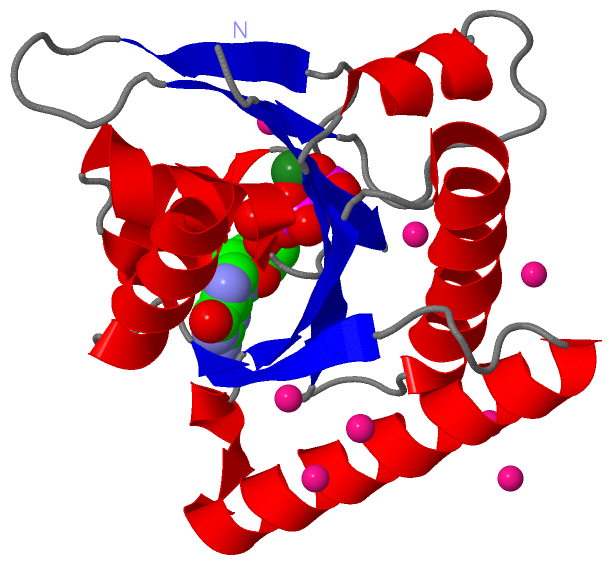
Image Asymmetric Unit
Asymmetric Unit  (Jmol Viewer)
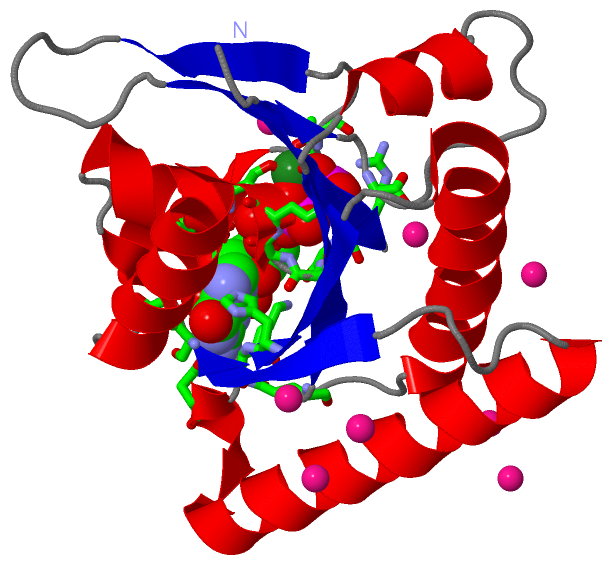
Image Asym. Unit - sites
Asym. Unit - sites  (Jmol Viewer)
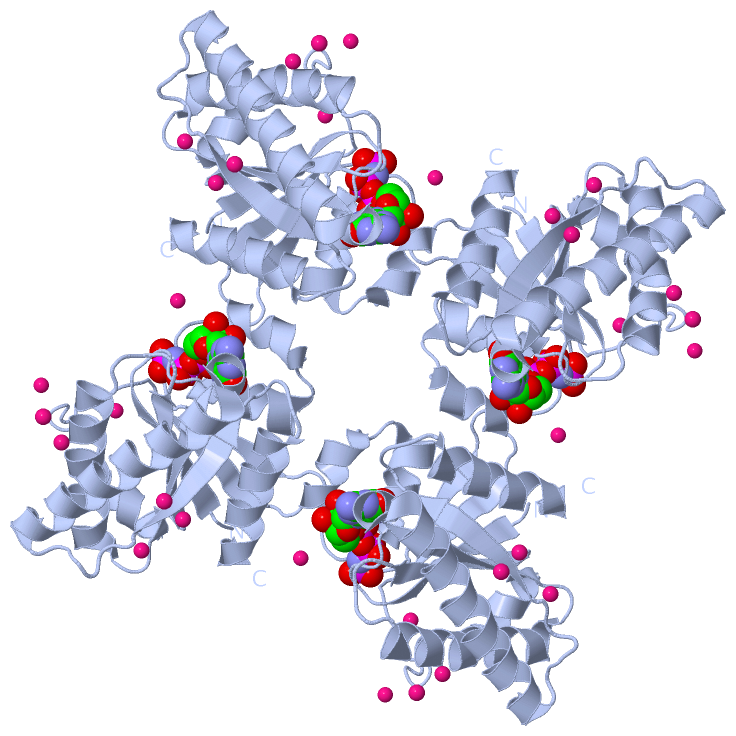
Image Biological Unit 1
Biological Unit 1  (Jmol Viewer)
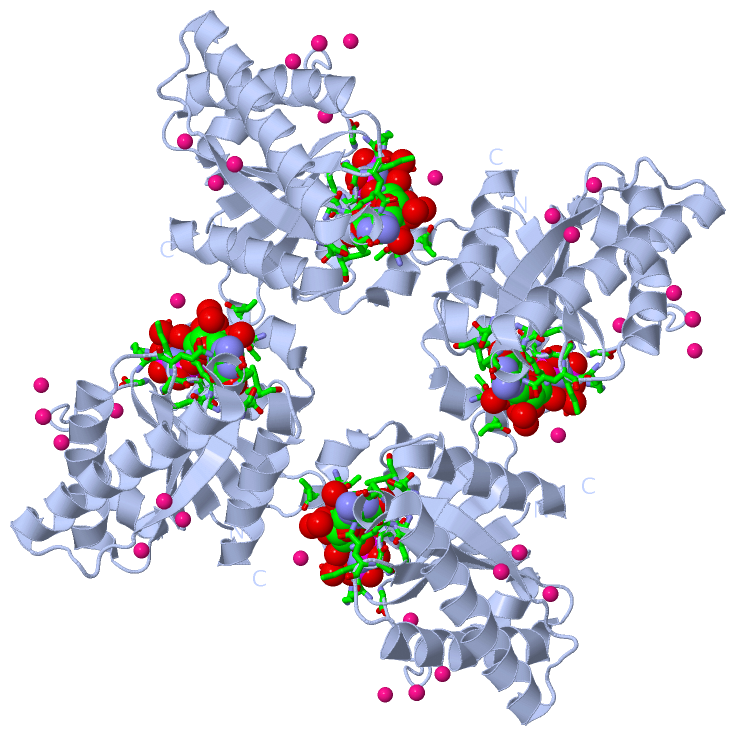
Image Biol. Unit 1 - sites
Biol. Unit 1 - sites  (Jmol Viewer)

(-) Description

Title :  CRYSTAL STRUCTURE OF THE NUCLEOTIDE-BINDING DOMAIN OF RAS-RELATED GTP-BINDING PROTEIN C
 
Authors :  L. Nedyalkova, W. Tempel, Y. Tong, L. Crombet, N. Zhong, X. Guan, C. H. Arrowsmith, A. M. Edwards, C. Bountra, J. Weigelt, A. Bochkarev, H. Park, Structural Genomics Consortium (Sgc)
Date :  29 Jan 10  (Deposition) - 09 Feb 10  (Release) - 09 Feb 10  (Revision)
Method :  X-RAY DIFFRACTION
Resolution :  1.40
Chains :  Asym. Unit :  A
Biol. Unit 1:  A  (4x)
Keywords :  Structural Genomics Consortium, Sgc, Cytoplasm, Gtp-Binding, Nucleotide-Binding, Nucleus, Phosphoprotein (Keyword Search: [Gene Ontology, PubMed, Web (Google)] )
 
Reference :  L. Nedyalkova, W. Tempel, Y. Tong, L. Crombet, N. Zhong, X. Guan, C. H. Arrowsmith, A. M. Edwards, C. Bountra, J. Weigelt, A. Bochkarev, H. Park
Crystal Structure Of The Nucleotide-Binding Domain Of Ras-Related Gtp-Binding Protein C
To Be Published
PubMed: search

(-) Compounds

Molecule 1 - RAS-RELATED GTP-BINDING PROTEIN C
    Chains: A
    Engineered: YES
    Expression System: ESCHERICHIA COLI
    Expression System Plasmid: PET28-MHL
    Expression System Strain: BL21-V2R-PRARE2
    Expression System Taxid: 511693
    Expression System Vector Type: PLASMID
    Gene: RRAGC
    Organism Common: HUMAN
    Organism Scientific: HOMO SAPIENS
    Organism Taxid: 9606
    Synonym: RAG C, RAGC, GTPASE-INTERACTING PROTEIN 2, TIB929

 Structural Features

(-) Chains, Units

  1
Asymmetric Unit : A
Biological Unit 1 (4x): A

Summary Information (see also Sequences/Alignments below)

(-) Ligands, Modified Residues, Ions  (3, 11)

Asymmetric Unit (3, 11)
No.NameCountTypeFull Name
1GNP1Ligand/IonPHOSPHOAMINOPHOSPHONIC ACID-GUANYLATE ESTER
2MG1Ligand/IonMAGNESIUM ION
3UNX9Ligand/IonUNKNOWN ATOM OR ION
Biological Unit 1 (2, 40)
No.NameCountTypeFull Name
1GNP4Ligand/IonPHOSPHOAMINOPHOSPHONIC ACID-GUANYLATE ESTER
2MG-1Ligand/IonMAGNESIUM ION
3UNX36Ligand/IonUNKNOWN ATOM OR ION

(-) Sites  (2, 2)

Asymmetric Unit (2, 2)
No.NameEvidenceResiduesDescription
1AC1SOFTWAREHOH A:27 , HOH A:28 , HOH A:38 , HOH A:41 , ARG A:70 , ARG A:71 , SER A:72 , GLY A:73 , LYS A:74 , SER A:75 , SER A:76 , THR A:90 , LEU A:91 , SER A:95 , THR A:96 , GLY A:119 , GLN A:147 , HIS A:178 , LYS A:179 , ASP A:181 , SER A:219 , ILE A:220 , HOH A:243 , HOH A:247 , HOH A:258 , HOH A:285 , MG A:502BINDING SITE FOR RESIDUE GNP A 501
2AC2SOFTWAREHOH A:41 , SER A:75 , THR A:96 , HOH A:243 , GNP A:501BINDING SITE FOR RESIDUE MG A 502

(-) SS Bonds  (0, 0)

(no "SS Bond" information available for 3LLU)

(-) Cis Peptide Bonds  (0, 0)

(no "Cis Peptide Bond" information available for 3LLU)

 Sequence-Structure Mapping

(-) SAPs(SNPs)/Variants  (1, 1)

Asymmetric Unit (1, 1)
  dbSNPPDB
No.SourceVariant IDVariantUniProt IDStatusIDChainVariant
1UniProtVAR_076511S75YRRAGC_HUMANUnclassified  ---AS75Y

  SNP/SAP Summary Statistics (UniProtKB/Swiss-Prot)
Biological Unit 1 (1, 4)
  dbSNPPDB
No.SourceVariant IDVariantUniProt IDStatusIDChainVariant
1UniProtVAR_076511S75YRRAGC_HUMANUnclassified  ---AS75Y

  SNP/SAP Summary Statistics (UniProtKB/Swiss-Prot)

(-) PROSITE Motifs  (0, 0)

(no "PROSITE Motif" information available for 3LLU)

(-) Exons   (0, 0)

(no "Exon" information available for 3LLU)

(-) Sequences/Alignments

Asymmetric Unit
   Reformat: Number of residues per line =  ('0' or empty: single-line sequence representation)
  Number of residues per labelling interval =   
  UniProt sequence: complete  aligned part    
   Show mapping: SCOP domains CATH domains Pfam domains Secondary structure (by author)
SAPs(SNPs) PROSITE motifs Exons
(details for a mapped element are shown in a popup box when the mouse pointer rests over it)
Chain A from PDB  Type:PROTEIN  Length:177
 aligned with RRAGC_HUMAN | Q9HB90 from UniProtKB/Swiss-Prot  Length:399

    Alignment length:177
                                    70        80        90       100       110       120       130       140       150       160       170       180       190       200       210       220       230       
          RRAGC_HUMAN    61 KPRILLMGLRRSGKSSIQKVVFHKMSPNETLFLESTNKIYKDDISNSSFVNFQIWDFPGQMDFFDPTFDYEMIFRGTGALIYVIDAQDDYMEALTRLHITVSKAYKVNPDMNFEVFIHKVDGLSDDHKIETQRDIHQRANDDLADAGLEKLHLSFYLTSIYDHSIFEAFSKVVQKLI 237
               SCOP domains --------------------------------------------------------------------------------------------------------------------------------------------------------------------------------- SCOP domains
               CATH domains --------------------------------------------------------------------------------------------------------------------------------------------------------------------------------- CATH domains
               Pfam domains --Gtr1_RagA-3lluA01 A:63-237                                                                                                                                                      Pfam domains
         Sec.struct. author ..eeeeee....hhhhhhhhhhh..hhhhhhhh......eeeee.......eeeee............hhhhhhhh..eeeeeee....hhhhhhhhhhhhhhhhhhh...eeeeeee.hhhhhhhhhhhhhhhhhhhhhhhhhhh......eeeeee....hhhhhhhhhhhhhh. Sec.struct. author
                 SAPs(SNPs) --------------Y------------------------------------------------------------------------------------------------------------------------------------------------------------------ SAPs(SNPs)
                    PROSITE --------------------------------------------------------------------------------------------------------------------------------------------------------------------------------- PROSITE
                 Transcript --------------------------------------------------------------------------------------------------------------------------------------------------------------------------------- Transcript
                 3llu A  61 KPRILLMGLRRSGKSSIQKVVFHKMSPNETLFLESTNKIYKDDISNSSFVNFQIWDFPGQMDFFDPTFDYEMIFRGTGALIYVIDAQDDYMEALTRLHITVSKAYKVNPDMNFEVFIHKVDGLSDDHKIETQRDIHQRANDDLADAGLEKLHLSFYLTSIYDHSIFEAFSKVVQKLI 237
                                    70        80        90       100       110       120       130       140       150       160       170       180       190       200       210       220       230       

   Legend:   → Mismatch (orange background)
  - → Gap (green background, '-', border residues have a numbering label)
    → Modified Residue (blue background, lower-case, 'x' indicates undefined single-letter code, labelled with number + name)
  x → Chemical Group (purple background, 'x', labelled with number + name, e.g. ACE or NH2)
  extra numbering lines below/above indicate numbering irregularities and modified residue names etc., number ends below/above '|'

 Classification and Annotation

(-) SCOP Domains  (0, 0)

(no "SCOP Domain" information available for 3LLU)

(-) CATH Domains  (0, 0)

(no "CATH Domain" information available for 3LLU)

(-) Pfam Domains  (1, 1)

Asymmetric Unit

(-) Gene Ontology  (27, 27)

Asymmetric Unit(hide GO term definitions)
Chain A   (RRAGC_HUMAN | Q9HB90)
molecular function
    GO:0019003    GDP binding    Interacting selectively and non-covalently with GDP, guanosine 5'-diphosphate.
    GO:0005525    GTP binding    Interacting selectively and non-covalently with GTP, guanosine triphosphate.
    GO:0003924    GTPase activity    Catalysis of the reaction: GTP + H2O = GDP + phosphate.
    GO:0000287    magnesium ion binding    Interacting selectively and non-covalently with magnesium (Mg) ions.
    GO:0000166    nucleotide binding    Interacting selectively and non-covalently with a nucleotide, any compound consisting of a nucleoside that is esterified with (ortho)phosphate or an oligophosphate at any hydroxyl group on the ribose or deoxyribose.
    GO:0005515    protein binding    Interacting selectively and non-covalently with any protein or protein complex (a complex of two or more proteins that may include other nonprotein molecules).
    GO:0046982    protein heterodimerization activity    Interacting selectively and non-covalently with a nonidentical protein to form a heterodimer.
biological process
    GO:0008380    RNA splicing    The process of removing sections of the primary RNA transcript to remove sequences not present in the mature form of the RNA and joining the remaining sections to form the mature form of the RNA.
    GO:0006915    apoptotic process    A programmed cell death process which begins when a cell receives an internal (e.g. DNA damage) or external signal (e.g. an extracellular death ligand), and proceeds through a series of biochemical events (signaling pathway phase) which trigger an execution phase. The execution phase is the last step of an apoptotic process, and is typically characterized by rounding-up of the cell, retraction of pseudopodes, reduction of cellular volume (pyknosis), chromatin condensation, nuclear fragmentation (karyorrhexis), plasma membrane blebbing and fragmentation of the cell into apoptotic bodies. When the execution phase is completed, the cell has died.
    GO:0007050    cell cycle arrest    A regulatory process that halts progression through the cell cycle during one of the normal phases (G1, S, G2, M).
    GO:0016049    cell growth    The process in which a cell irreversibly increases in size over time by accretion and biosynthetic production of matter similar to that already present.
    GO:0034613    cellular protein localization    Any process in which a protein is transported to, and/or maintained in, a specific location at the level of a cell. Localization at the cellular level encompasses movement within the cell, from within the cell to the cell surface, or from one location to another at the surface of a cell.
    GO:0034198    cellular response to amino acid starvation    Any process that results in a change in state or activity of a cell (in terms of movement, secretion, enzyme production, gene expression, etc.) as a result of deprivation of amino acids.
    GO:0071230    cellular response to amino acid stimulus    Any process that results in a change in state or activity of a cell (in terms of movement, secretion, enzyme production, gene expression, etc.) as a result of an amino acid stimulus. An amino acid is a carboxylic acids containing one or more amino groups.
    GO:0016236    macroautophagy    The major inducible pathway for the general turnover of cytoplasmic constituents in eukaryotic cells, it is also responsible for the degradation of active cytoplasmic enzymes and organelles during nutrient starvation. Macroautophagy involves the formation of double-membrane-bounded autophagosomes which enclose the cytoplasmic constituent targeted for degradation in a membrane-bounded structure. Autophagosomes then fuse with a lysosome (or vacuole) releasing single-membrane-bounded autophagic bodies that are then degraded within the lysosome (or vacuole). Though once thought to be a purely non-selective process, it appears that some types of macroautophagy, e.g. macropexophagy, macromitophagy, may involve selective targeting of the targets to be degraded.
    GO:0032008    positive regulation of TOR signaling    Any process that activates or increases the frequency, rate or extent of TOR signaling.
    GO:0032006    regulation of TOR signaling    Any process that modulates the frequency, rate or extent of TOR signaling.
    GO:0010506    regulation of autophagy    Any process that modulates the frequency, rate or extent of autophagy. Autophagy is the process in which cells digest parts of their own cytoplasm.
    GO:0007264    small GTPase mediated signal transduction    Any series of molecular signals in which a small monomeric GTPase relays one or more of the signals.
    GO:0006351    transcription, DNA-templated    The cellular synthesis of RNA on a template of DNA.
cellular component
    GO:0034448    EGO complex    A vacuolar membrane-associated protein complex that is required for activation of microautophagy during exit from rapamycin-induced growth arrest. In budding yeast, S. cerevisiae, this complex includes Gtr1p, Gtr2p, Meh1p, and Slm4p.
    GO:1990131    Gtr1-Gtr2 GTPase complex    A heterodimer GTPase complex. In S. cerevisiae, this complex contains Gtr1p and Gtr2p proteins.
    GO:0005737    cytoplasm    All of the contents of a cell excluding the plasma membrane and nucleus, but including other subcellular structures.
    GO:0005829    cytosol    The part of the cytoplasm that does not contain organelles but which does contain other particulate matter, such as protein complexes.
    GO:0043231    intracellular membrane-bounded organelle    Organized structure of distinctive morphology and function, bounded by a single or double lipid bilayer membrane and occurring within the cell. Includes the nucleus, mitochondria, plastids, vacuoles, and vesicles. Excludes the plasma membrane.
    GO:0005764    lysosome    A small lytic vacuole that has cell cycle-independent morphology and is found in most animal cells and that contains a variety of hydrolases, most of which have their maximal activities in the pH range 5-6. The contained enzymes display latency if properly isolated. About 40 different lysosomal hydrolases are known and lysosomes have a great variety of morphologies and functions.
    GO:0005634    nucleus    A membrane-bounded organelle of eukaryotic cells in which chromosomes are housed and replicated. In most cells, the nucleus contains all of the cell's chromosomes except the organellar chromosomes, and is the site of RNA synthesis and processing. In some species, or in specialized cell types, RNA metabolism or DNA replication may be absent.

 Visualization

(-) Interactive Views

Asymmetric Unit
  Complete Structure
    Jena3D(integrated viewing of ligand, site, SAP, PROSITE, SCOP information)
    WebMol | AstexViewer[tm]@PDBe
(Java Applets, require no local installation except for Java; loading may be slow)
    STRAP
(Java WebStart application, automatic local installation, requires Java; full application with system access!)
    RasMol
(require local installation)
    Molscript (VRML)
(requires installation of a VRML viewer; select preferred view via VRML and generate a mono or stereo PDF format file)
 
  Ligands, Modified Residues, Ions
    GNP  [ RasMol | Jena3D ]  +environment [ RasMol | Jena3D ]
    MG  [ RasMol | Jena3D ]  +environment [ RasMol | Jena3D ]
    UNX  [ RasMol | Jena3D ]  +environment [ RasMol | Jena3D ]
 
  Sites
    AC1  [ RasMol ]  +environment [ RasMol ]
    AC2  [ RasMol ]  +environment [ RasMol ]
 
  Cis Peptide Bonds
(no "Cis Peptide Bonds" information available for 3llu)
 
Biological Unit
  Complete Structure
    Biological Unit 1  [ Jena3D ]

(-) Still Images

Jmol
  protein: cartoon or spacefill or dots and stick; nucleic acid: cartoon and stick; ligands: spacefill; active site: stick
Molscript
  protein, nucleic acid: cartoon; ligands: spacefill; active site: ball and stick

 Databases and Analysis Tools

(-) Databases

Access by PDB/NDB ID
  3llu
    Family and Domain Information: ProDom | SYSTERS
    General Structural Information: GlycoscienceDB | MMDB | NDB | OCA | PDB | PDBe | PDBj | PDBsum | PDBWiki | PQS | PROTEOPEDIA
    Orientation in Membranes: OPM
    Protein Surface: SURFACE
    Secondary Structure: DSSP (structure derived) | HSSP (homology derived)
    Structural Genomics: GeneCensus
    Structural Neighbours: CE | VAST
    Structure Classification: CATH | Dali | SCOP
    Validation and Original Data: BMRB Data View | BMRB Restraints Grid | EDS | PROCHECK | RECOORD | WHAT_CHECK
 
Access by UniProt ID/Accession number
  RRAGC_HUMAN | Q9HB90
    Comparative Protein Structure Models: ModBase
    Genomic Information: Ensembl
    Protein-protein Interaction: DIP
    Sequence, Family and Domain Information: InterPro | Pfam | SMART | UniProtKB/SwissProt
 
Access by Enzyme Classificator   (EC Number)
  (no 'Enzyme Classificator' available)
    General Enzyme Information: BRENDA | EC-PDB | Enzyme | IntEnz
    Pathway: KEGG | MetaCyc
 
Access by Disease Identifier   (MIM ID)
  (no 'MIM ID' available)
    Disease Information: OMIM
 
Access by GenAge ID
  (no 'GenAge ID' available)
    Age Related Information: GenAge

(-) Analysis Tools

Access by PDB/NDB ID
    Domain Information: XDom
    Interatomic Contacts of Structural Units: CSU
    Ligand-protein Contacts: LPC
    Protein Cavities: castP
    Sequence and Secondary Structure: PDBCartoon
    Structure Alignment: STRAP(Java WebStart application, automatic local installation, requires Java; full application with system access!)
    Structure and Sequence Browser: STING
 
Access by UniProt ID/Accession number
  RRAGC_HUMAN | Q9HB90
    Protein Disorder Prediction: DisEMBL | FoldIndex | GLOBPLOT (for more information see DisProt)

 Related Entries

(-) Entries Sharing at Least One Protein Chain (UniProt ID)

(no "Entries Sharing at Least One Protein Chain" available for 3LLU)

(-) Related Entries Specified in the PDB File

(no "Related Entries Specified in the PDB File" available for 3LLU)