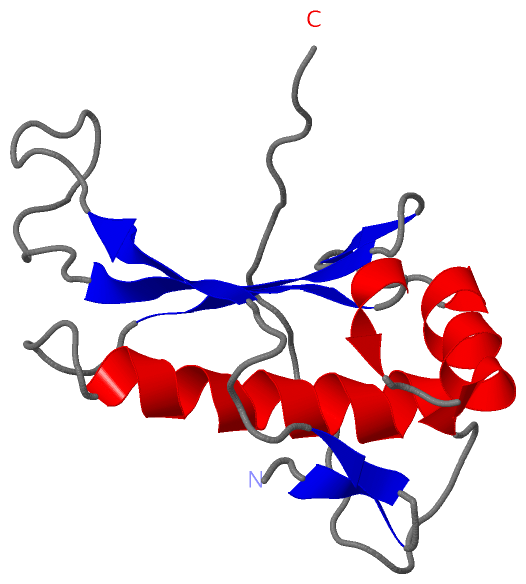
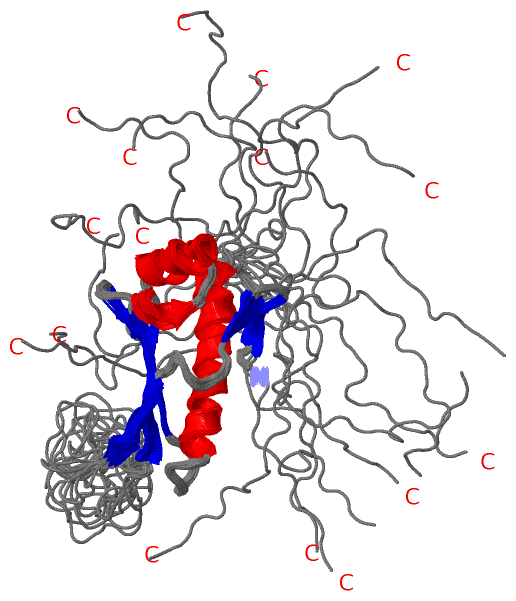
| molecular function |
|---|
| | GO:0004045 | | aminoacyl-tRNA hydrolase activity | | Catalysis of the reaction: N-substituted aminoacyl-tRNA + H2O = N-substituted amino acid + tRNA. |
| | GO:0016787 | | hydrolase activity | | Catalysis of the hydrolysis of various bonds, e.g. C-O, C-N, C-C, phosphoric anhydride bonds, etc. Hydrolase is the systematic name for any enzyme of EC class 3. |
| | GO:0043022 | | ribosome binding | | Interacting selectively and non-covalently with any part of a ribosome. |
| | GO:0003747 | | translation release factor activity | | Involved in catalyzing the release of a nascent polypeptide chain from a ribosome. |
| | GO:0016150 | | translation release factor activity, codon nonspecific | | A translation release factor that is not specific to particular codons; binds to guanine nucleotides. |
| | GO:0016149 | | translation release factor activity, codon specific | | A translation release factor that is specific for one or more particular termination codons; acts at the ribosomal A-site and require polypeptidyl-tRNA at the P-site. |
| biological process |
|---|
| | GO:0006417 | | regulation of translation | | Any process that modulates the frequency, rate or extent of the chemical reactions and pathways resulting in the formation of proteins by the translation of mRNA or circRNA. |
| | GO:0072344 | | rescue of stalled ribosome | | A process of translational elongation that takes place when a ribosome has stalled during translation, and results in freeing the ribosome from the stalled translation complex. |
| | GO:0006415 | | translational termination | | The process resulting in the release of a polypeptide chain from the ribosome, usually in response to a termination codon (UAA, UAG, or UGA in the universal genetic code). |
| cellular component |
|---|
| | GO:0005737 | | cytoplasm | | All of the contents of a cell excluding the plasma membrane and nucleus, but including other subcellular structures. |

 Description