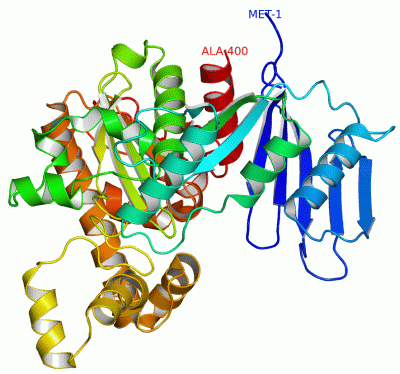
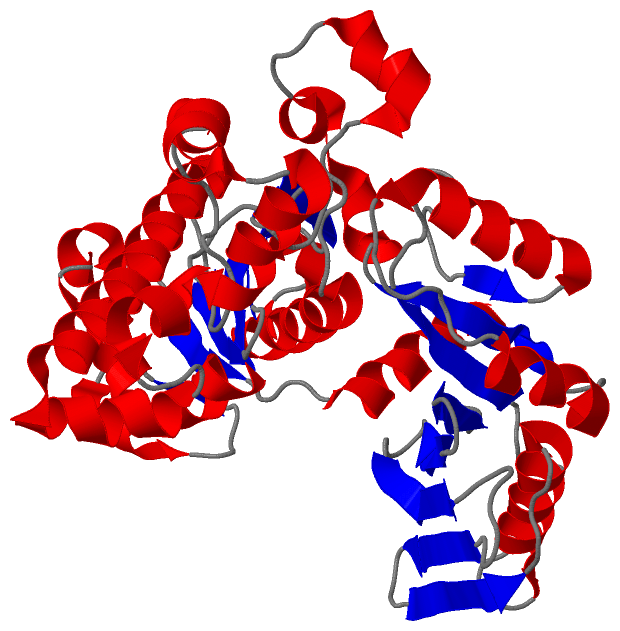
Theoretical Model(hide GO term definitions)
Chain A ( ACKA_ECO57 | P0A6A5)
| molecular function |
|---|
| | GO:0005524 | | ATP binding | | Interacting selectively and non-covalently with ATP, adenosine 5'-triphosphate, a universally important coenzyme and enzyme regulator. |
| | GO:0008776 | | acetate kinase activity | | Catalysis of the reaction: ATP + acetate = ADP + acetyl phosphate. |
| | GO:0016301 | | kinase activity | | Catalysis of the transfer of a phosphate group, usually from ATP, to a substrate molecule. |
| | GO:0000287 | | magnesium ion binding | | Interacting selectively and non-covalently with magnesium (Mg) ions. |
| | GO:0046872 | | metal ion binding | | Interacting selectively and non-covalently with any metal ion. |
| | GO:0000166 | | nucleotide binding | | Interacting selectively and non-covalently with a nucleotide, any compound consisting of a nucleoside that is esterified with (ortho)phosphate or an oligophosphate at any hydroxyl group on the ribose or deoxyribose. |
| | GO:0016774 | | phosphotransferase activity, carboxyl group as acceptor | | Catalysis of the transfer of a phosphorus-containing group from one compound (donor) to a carboxyl group (acceptor). |
| | GO:0016740 | | transferase activity | | Catalysis of the transfer of a group, e.g. a methyl group, glycosyl group, acyl group, phosphorus-containing, or other groups, from one compound (generally regarded as the donor) to another compound (generally regarded as the acceptor). Transferase is the systematic name for any enzyme of EC class 2. |
| biological process |
|---|
| | GO:0006085 | | acetyl-CoA biosynthetic process | | The chemical reactions and pathways resulting in the formation of acetyl-CoA, a derivative of coenzyme A in which the sulfhydryl group is acetylated. |
| | GO:0008152 | | metabolic process | | The chemical reactions and pathways, including anabolism and catabolism, by which living organisms transform chemical substances. Metabolic processes typically transform small molecules, but also include macromolecular processes such as DNA repair and replication, and protein synthesis and degradation. |
| | GO:0006082 | | organic acid metabolic process | | The chemical reactions and pathways involving organic acids, any acidic compound containing carbon in covalent linkage. |
| | GO:0016310 | | phosphorylation | | The process of introducing a phosphate group into a molecule, usually with the formation of a phosphoric ester, a phosphoric anhydride or a phosphoric amide. |
| cellular component |
|---|
| | GO:0005737 | | cytoplasm | | All of the contents of a cell excluding the plasma membrane and nucleus, but including other subcellular structures. |
| | GO:0005622 | | intracellular | | The living contents of a cell; the matter contained within (but not including) the plasma membrane, usually taken to exclude large vacuoles and masses of secretory or ingested material. In eukaryotes it includes the nucleus and cytoplasm. |
Chain A ( ACKA_ECOLI | P0A6A3)
| molecular function |
|---|
| | GO:0005524 | | ATP binding | | Interacting selectively and non-covalently with ATP, adenosine 5'-triphosphate, a universally important coenzyme and enzyme regulator. |
| | GO:0008776 | | acetate kinase activity | | Catalysis of the reaction: ATP + acetate = ADP + acetyl phosphate. |
| | GO:0016301 | | kinase activity | | Catalysis of the transfer of a phosphate group, usually from ATP, to a substrate molecule. |
| | GO:0000287 | | magnesium ion binding | | Interacting selectively and non-covalently with magnesium (Mg) ions. |
| | GO:0046872 | | metal ion binding | | Interacting selectively and non-covalently with any metal ion. |
| | GO:0000166 | | nucleotide binding | | Interacting selectively and non-covalently with a nucleotide, any compound consisting of a nucleoside that is esterified with (ortho)phosphate or an oligophosphate at any hydroxyl group on the ribose or deoxyribose. |
| | GO:0016774 | | phosphotransferase activity, carboxyl group as acceptor | | Catalysis of the transfer of a phosphorus-containing group from one compound (donor) to a carboxyl group (acceptor). |
| | GO:0016740 | | transferase activity | | Catalysis of the transfer of a group, e.g. a methyl group, glycosyl group, acyl group, phosphorus-containing, or other groups, from one compound (generally regarded as the donor) to another compound (generally regarded as the acceptor). Transferase is the systematic name for any enzyme of EC class 2. |
| | GO:0008270 | | zinc ion binding | | Interacting selectively and non-covalently with zinc (Zn) ions. |
| biological process |
|---|
| | GO:0019413 | | acetate biosynthetic process | | The chemical reactions and pathways resulting in the formation of acetate, the anion of acetic acid. |
| | GO:0006083 | | acetate metabolic process | | The chemical reactions and pathways involving acetate, the anion of acetic acid. |
| | GO:0006085 | | acetyl-CoA biosynthetic process | | The chemical reactions and pathways resulting in the formation of acetyl-CoA, a derivative of coenzyme A in which the sulfhydryl group is acetylated. |
| | GO:0008152 | | metabolic process | | The chemical reactions and pathways, including anabolism and catabolism, by which living organisms transform chemical substances. Metabolic processes typically transform small molecules, but also include macromolecular processes such as DNA repair and replication, and protein synthesis and degradation. |
| | GO:0006082 | | organic acid metabolic process | | The chemical reactions and pathways involving organic acids, any acidic compound containing carbon in covalent linkage. |
| | GO:0016310 | | phosphorylation | | The process of introducing a phosphate group into a molecule, usually with the formation of a phosphoric ester, a phosphoric anhydride or a phosphoric amide. |
| | GO:0019542 | | propionate biosynthetic process | | The chemical reactions and pathways resulting in the formation of propionate, the anion derived from propionic acid. |
| | GO:0044011 | | single-species biofilm formation on inanimate substrate | | A process in which microorganisms of the same species attach to and grow on an inanimate surface such as a rock or pipe, and produce extracellular polymers that facilitate attachment and matrix formation, resulting in an alteration in the phenotype of the organisms with respect to growth rate and gene transcription. |
| cellular component |
|---|
| | GO:0005737 | | cytoplasm | | All of the contents of a cell excluding the plasma membrane and nucleus, but including other subcellular structures. |
| | GO:0005829 | | cytosol | | The part of the cytoplasm that does not contain organelles but which does contain other particulate matter, such as protein complexes. |
| | GO:0005622 | | intracellular | | The living contents of a cell; the matter contained within (but not including) the plasma membrane, usually taken to exclude large vacuoles and masses of secretory or ingested material. In eukaryotes it includes the nucleus and cytoplasm. |
| | GO:0016020 | | membrane | | A lipid bilayer along with all the proteins and protein complexes embedded in it an attached to it. |
Chain A ( ACKA_ECOL6 | P0A6A4)
| molecular function |
|---|
| | GO:0005524 | | ATP binding | | Interacting selectively and non-covalently with ATP, adenosine 5'-triphosphate, a universally important coenzyme and enzyme regulator. |
| | GO:0008776 | | acetate kinase activity | | Catalysis of the reaction: ATP + acetate = ADP + acetyl phosphate. |
| | GO:0016301 | | kinase activity | | Catalysis of the transfer of a phosphate group, usually from ATP, to a substrate molecule. |
| | GO:0000287 | | magnesium ion binding | | Interacting selectively and non-covalently with magnesium (Mg) ions. |
| | GO:0046872 | | metal ion binding | | Interacting selectively and non-covalently with any metal ion. |
| | GO:0000166 | | nucleotide binding | | Interacting selectively and non-covalently with a nucleotide, any compound consisting of a nucleoside that is esterified with (ortho)phosphate or an oligophosphate at any hydroxyl group on the ribose or deoxyribose. |
| | GO:0016774 | | phosphotransferase activity, carboxyl group as acceptor | | Catalysis of the transfer of a phosphorus-containing group from one compound (donor) to a carboxyl group (acceptor). |
| | GO:0016740 | | transferase activity | | Catalysis of the transfer of a group, e.g. a methyl group, glycosyl group, acyl group, phosphorus-containing, or other groups, from one compound (generally regarded as the donor) to another compound (generally regarded as the acceptor). Transferase is the systematic name for any enzyme of EC class 2. |
| biological process |
|---|
| | GO:0006085 | | acetyl-CoA biosynthetic process | | The chemical reactions and pathways resulting in the formation of acetyl-CoA, a derivative of coenzyme A in which the sulfhydryl group is acetylated. |
| | GO:0008152 | | metabolic process | | The chemical reactions and pathways, including anabolism and catabolism, by which living organisms transform chemical substances. Metabolic processes typically transform small molecules, but also include macromolecular processes such as DNA repair and replication, and protein synthesis and degradation. |
| | GO:0006082 | | organic acid metabolic process | | The chemical reactions and pathways involving organic acids, any acidic compound containing carbon in covalent linkage. |
| | GO:0016310 | | phosphorylation | | The process of introducing a phosphate group into a molecule, usually with the formation of a phosphoric ester, a phosphoric anhydride or a phosphoric amide. |
| cellular component |
|---|
| | GO:0005737 | | cytoplasm | | All of the contents of a cell excluding the plasma membrane and nucleus, but including other subcellular structures. |
| | GO:0005622 | | intracellular | | The living contents of a cell; the matter contained within (but not including) the plasma membrane, usually taken to exclude large vacuoles and masses of secretory or ingested material. In eukaryotes it includes the nucleus and cytoplasm. |
|

 Description